
Environmental Defence, PERL and Donnelly Law Fundraiser for Mount Nemo a Big Succes
On February 23, 2012, PERL and Donnelly Law hosted an evening packed with food and live entertainment to raise funds, awareness and support for the protection of Mount Nemo in Burlington, Ontario.
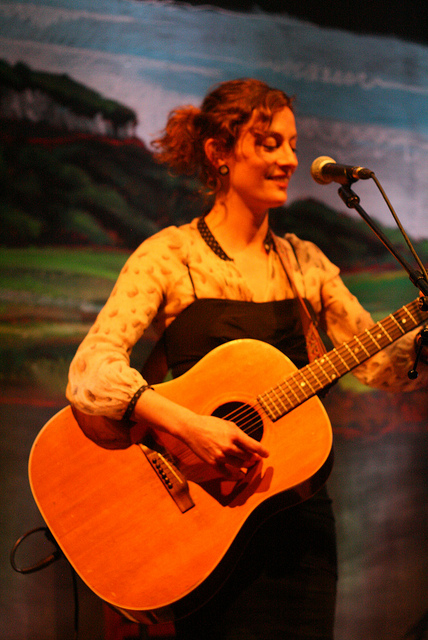
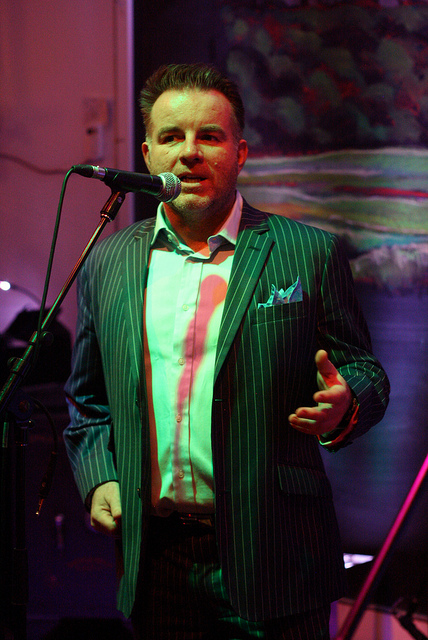
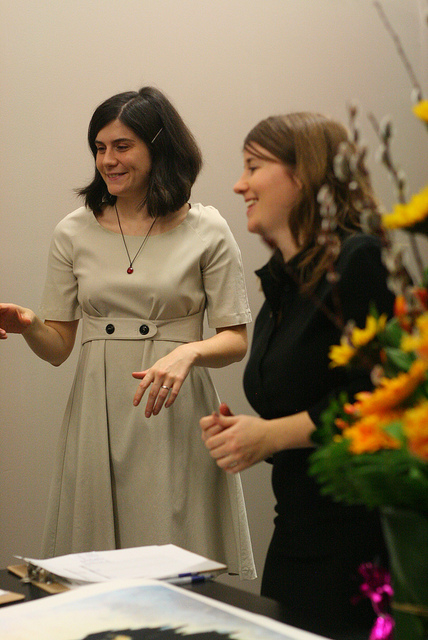
Over 100 people attended and enjoyed live performances by critically-acclaimed Canadian artists including Sarah Harmer, Ron Sexsmith, Luther Wright and Colleen Hixenbaugh. Special thanks to Environmental Defence who also co-hosted the event and provided invaluable support.
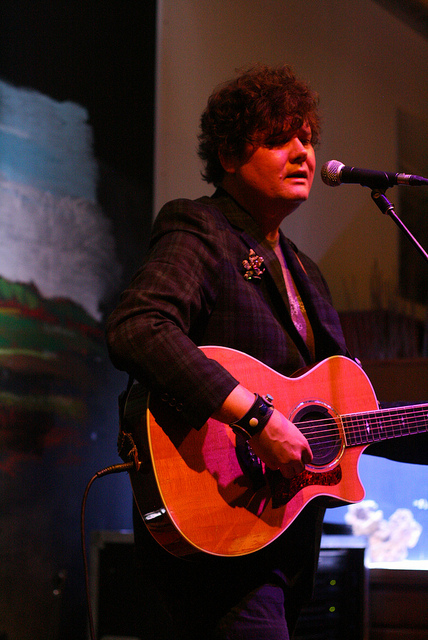
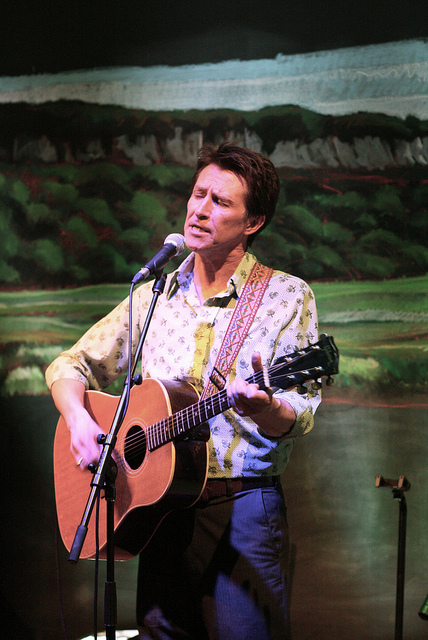
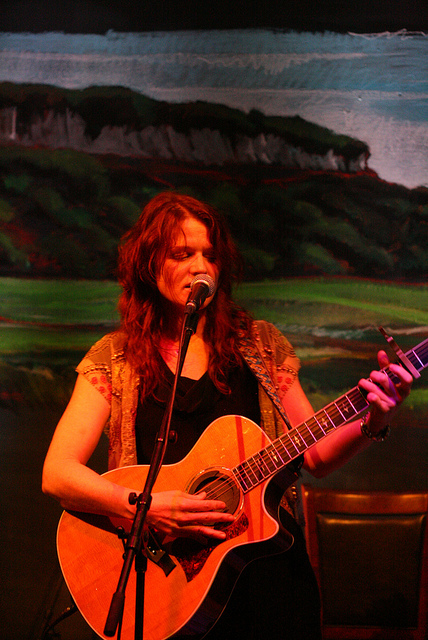
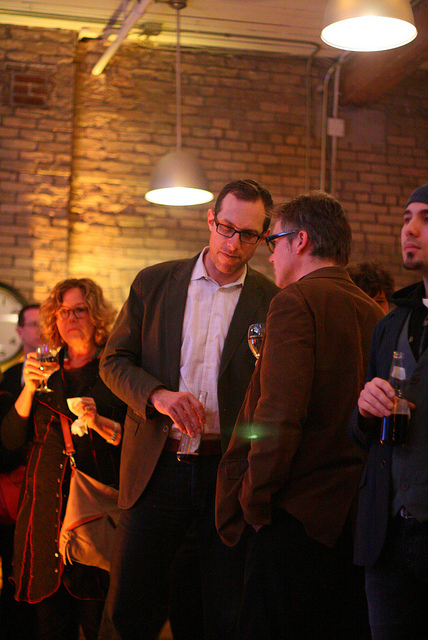
Delicious local and organic food was created by the magicians of The Commissary, Leslieville's newest and funkiest bistro. Rodney Clark provided the ocean's finest oysters from Rodney's Oyster House. Beer was generously donated by Amsterdam Brewing Co. and VQA wine provided by Featherstone Estate Winery. Special thanks to Carlaw Media Group for donating the space.
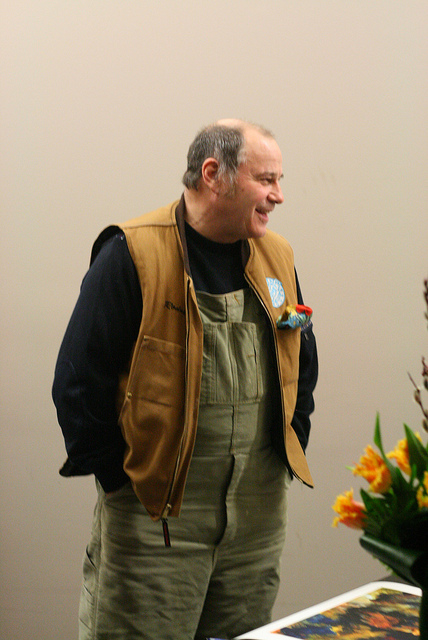
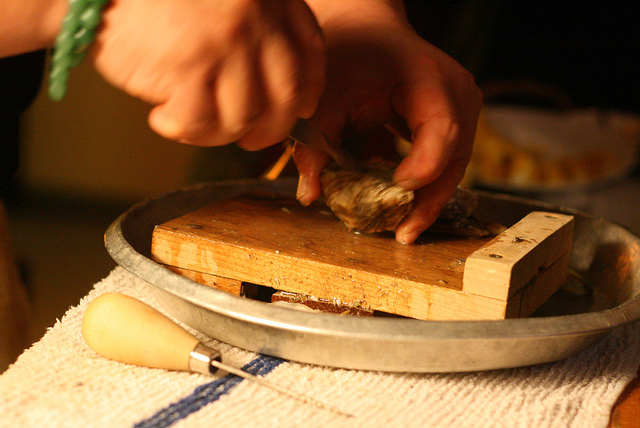
Artist Stewart Jones provided the beautiful chalk rendering of Mount Nemo that transformed the loft office into a music studio. Promotion and pizzazz provided by Matt Stone Presents.
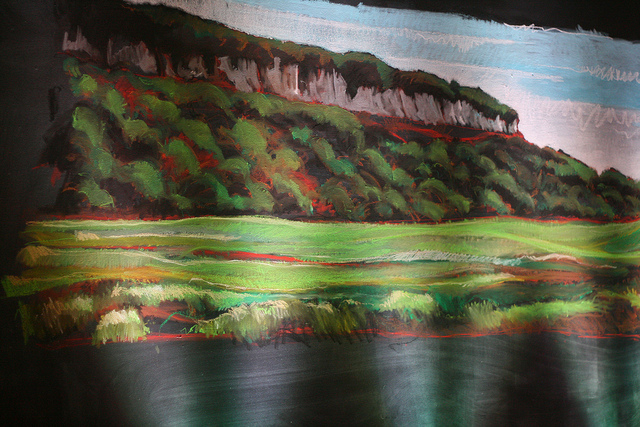
Thank you to all the attendees, organizers and supporters for your continued efforts and support.
La Nation Huronne Wendat et l'Université de Toronto Signent un Protocole d'Entente Visant le Rapatriement d'Ossements Humains et d'Artéfacts Ancestraux Provenant de l'Ontario
Wendake, le 29 novembre 2011 — Le Grand Chef Konrad Sioui, au nom de la Nation Huronne Wendat a signé aujourd'hui, avec l'Université de Toronto, un protocole d'entente assurant le rapatriement de restes squelettiques humains et d'artéfacts provenant de sites archéologiques en Ontario.

«Au milieu du vingtième siècle, l'Université de Toronto a pris part à des fouilles sur des sites archéologiques du sud de l'Ontario dans lesquels des restes squelettiques humains ont été trouvés, exhumés et transportés ultimement à l'Université. II s'est avéré que plusieurs ossements et artéfacts proviennent des ancêtres de la Nation Huronne Wendat, qui ont occupé une vaste portion du sud de l'Ontario pendant plusieurs siècles. En raison de guerres européennes et d'épidémies, la Nation Huronne Wendat a été forcée de quitter la partie sud de son territoire ancestral et de retourner plus haut sur la partie nord de son territoire national sur les rives de leur fleuve essentiel, le Saint-Laurent, près de Stadaconé (Ville de Québec) à la Seigneurie de Sillery où Wendake est maintenant situé. Les Hurons Wendat, les archéologues et les historiens ont identifié et documenté des centaines de sites Hurons Wendat en Ontario et au Québec, à travers le grand Wendake. Des douzaines de vastes villages agricoles cosmopolites semi-permanents (occupés par des milliers de gens) et leurs sites d'enterrements attenants ont été découverts, représentant un riche patrimoine culturel» a déclaré le Grand Chef Sioui.
L'Université de Toronto a complété en grande partie un inventaire et l'analyse reste à être complétée. La Nation Huronne Wendat recherche un rapatriement total des restes humains au cours de l'été de 2012 et les parties s'adjoindront la coopération de la Fiducie du Patrimoine ontarien et du Gouvernement de l'Ontario en ce qui a trait à toute composante du projet.
Le professeur Cheryl Regher, en présence de ses collègues de l'Université de Toronto et de Mississauga, a déclaré que la signature de cette entente historique marque une étape importante dans une nouvelle relation entre leurs institutions et la Nation huronne-wendat. Une première au Canada qui, selon elle, mérite d'être connue a l'échelle internationale.
Le Conseil de la Nation huronne-wendat salue le travail acharné du Chef Gaëtan Sioui, responsable du dossier, de Me David Donnelly, de monsieur Luc Laine et de madame Heather Bastien grâce à qui ce protocole a été réalisé. Le Conseil de la Nation huronne-wendat prévoit le ré-enterrement des restes de ces milliers de nos ancêtres au mois de juillet 2012, au même moment ou aura lieu la rencontre annuelle des Chefs de l'Assemblée des Premières Nations du Canada à Toronto.
Renseignements :
Melanie Vincent (418) 580-4442
___________________________________________________
The University of Toronto signs a Memorandum of Understanding with the Huron-Wendat Nation
The University of Toronto has signed a Memorandum of Understanding allowing for the repatriation of remains and artifacts to the Huron Wendat Nation. This MoU was signed at a ceremony in Wendake, near Quebec City on No. 29.
The University of Toronto sits on land that was the home of the Huron Wendat until the late 17th century. Primarily during the middle part of the last century, faculty, staff and students of the University participated in archaeological excavations of many sites in southern Ontario, sites that were the homes of Huron Wendat ancestors. As a result, today the university holds many remains and artifacts gathered from those locations.
While the approaches followed in those excavations conformed with the attitudes of academia and society at the time, those attitudes have changed. The Memorandum of Understanding allows for the repatriation of those remains and artifacts in a culturally and spiritually appropriate way as determined by the Huron Wendat people. The actual transfer of the remains will occur when the Huron Wendat Nation has secured a final resting place for the remains and artifacts, but the signing of the Memorandum of Understanding is an important step in the process. The Memorandum of Understanding further establishes a process of cooperation between the University of Toronto and the Huron-Wendat Nation for the continued development of knowledge regarding the history of their people. The university is grateful to the Huron-Wendat Nation for its commitment to preservation of knowledge and further research.
The agreement was signed on behalf of the university by Professor Cheryl Regehr, vice-provost (academic programs) and by Grand Chief Konrad Sioui, on behalf of the Huron Wendat Nation. Also present at the signing were Professor Meric Gertler, dean of the Faculty of Arts and Science; Professor Amy Mullin, dean of the University of Toronto Mississauga, Professor Susan Pfeiffer of the Department of Anthropologyand Steve Moate, legal counsel to the university.
UofT News: http://www.news.toronto.edu/university-toronto-signs-memorandum-understanding-huron-wendat-nation
Ethan Hawke Joins Fight to Protect Gulf of St. Lawrence from Oil and Gas Drilling
November 23, 2011 – The battle to protect the Gulf of St. Lawrence from oil and gas development received a major boost this week when American actor, writer and director Ethan Hawke benevolently lent his support to the cause. Mr. Hawke, a landowner along the Gulf in Nova Scotia, was approached by coastal landowners, fishermen, Mi’kmaq leaders and concerned citizens who felt their voices were not being heard. Mr. Hawke joins a growing list of celebrities including Dr. David Suzuki, author Farley Mowat, actor and director Jason Priestley, and music composer Philip Glass who have also spoken out in support of a moratorium on offshore oil and gas development in the Gulf of St. Lawrence. “The Gulf of St. Lawrence is truly unique in its beauty, culture and biodiversity; I feel it is important to support my east coast neighbours in their demand for a moratorium,” explains Mr. Hawke. “We should take every measure possible to avoid making the same mistakes that were made with the Gulf of Mexico and preserve these precious renewable marine resources for future generations. The time has come to take action on this important issue before it is too late.”
The David Suzuki Foundation, in collaboration with Save Our Seas and Shores Coalition and with the support of Mr. Hawke, is asking Canadian citizens to take action by demanding a moratorium on offshore oil and gas drilling in the Gulf.
“Thousands of First Nations, Quebecois, Acadian and Gaelic coastal communities have historic precedence in these waters and have great interest in wanting to protect the Gulf’s multi-billion dollar renewable fishery and tourism industries,” affirms Mary Gorman, spokesperson for Save our Seas and Shores Coalition. “It would be foolish to consider risking a renewable global marine food supply that has sustained us for centuries, only to exploit unnecessary fossil fuels.”
Both Quebec and Newfoundland are currently exploring the possibility of drilling oil and gas in the Gulf of St. Lawrence. The province of Quebec, now under provincial moratorium, is in the process of conducting public consultations to assess the risk factors involved with oil and gas exploitation in the Gulf. The situation in Newfoundland has become increasingly alarming, with the province currently poised to move forward with an exploratory drilling at the controversial Old Harry prospect, located only 6km from Quebec’s jurisdiction, as early as next year. Similar attempts made by Nova Scotia to exploit the Gulf were halted a decade ago.
“The Gulf of St. Lawrence is a single body of water that should not be divided by man-made borders,” states Dr. Jean-Patrick Toussaint of the David Suzuki Foundation. “The Gulf is home to more than 2,200 marine species which spawn, nurse and migrate there year-round. Exploratory drilling could seriously impact the feeding and migration of fish like Atlantic salmon, herring, mackerel and cod as well as marine mammals like the endangered blue whale.”
Earlier this summer, numerous coastal communities and environmental groups asked federal Minister of the Environment Peter Kent to take leadership in overseeing the environmental implications and risks of permitting oil and gas drilling in the Gulf. However, the federal government ultimately delegated this responsibility to an unelected offshore provincial petroleum board.
“We are delighted and grateful to have Ethan Hawke graciously accept to support the battle to protect our Gulf,” adds Ms. Gorman. “We hope that his public support will help draw greater attention to an issue that could potentially impact the coastlines and economy of all five provinces bordering the Gulf, and which requires critical action.”
Concerned individuals and groups can sign the petition to demand a moratorium on oil and gas drilling in the Gulf of St. Lawrence by visiting the David Suzuki website: http://action.davidsuzuki.org/st-lawrence
- 30 - For more information, please contact: Manon Dubois, Communications Specialist David Suzuki Foundation mdubois@davidsuzuki.org, 514.679.0821 Mary Gorman Save Our Seas and Shores Coalition mjgorman@ns.sympatico.ca, 902.926.2128
Harmer and PERL Rock “Public Day” at Mount Nemo Quarry Hearing
Community concerns dominate Nelson Aggregates Burlington hearing
Burlington, ON – Canadian singer-songwriter Sarah Harmer, Roger Goulet, executive director, Protecting Escarpment Rural Land (PERL), concerned local residents and representatives of environmental groups testified today against the proposed 23-million tonne Nelson Aggregate quarry licence application.
“In the midst of a public review, Nelson Aggregate with a host of ecological and hydrogeology experts on retainer, dredged and drained Provincially Significant Wetlands, and unsuccessfully transplanted endangered trees from their habitat,” said Harmer, co-Founder of PERL and songwriter of the iconic Canadian hit, Escarpment Blues. “There is a real element of trust and confidence that is missing here.”
“Mount Nemo is the wrong place for another destructive, below water table quarry. The environmentally sensitive features and functions of the Mount Nemo plateau must be formally recognized and re-designated accordingly, using the latest science, current regulations and standards, and applying the Precautionary Principle,” said Goulet, executive director of PERL.
“It is inconceivable that anyone would think of quarrying this UNESCO World Biosphere Reserve. Who would consider quarrying the Great Wall of China?” Isabelle Harmer testified, a 41 year resident of Mount Nemo.
“Extracting the aggregate will destroy the ability of Mount Nemo to continue to be a fresh water collector in the future. The result could be catastrophic for future generations in short supply of fresh water to drink,” said Bob Patrick, President of Coalition on the Niagara Escarpment.
Numerous residents around the quarry complained large blasts had cracked the walls of their homes. They also stated that dust from the quarry was everywhere including their roads and properties and that the constant drones of heavy trucks often disturbed early morning sleep.
Harmer and other witnesses called on the province to heed the call of the Environmental Commissioner to establish a conservation plan for protecting and siting strategy for locating new aggregate pits and quarries, leading to too many random and localized fights over new quarries.
The hearing is scheduled to finish on December 14, 2011.
ABOUT ENVIRONMENTAL DEFENCE (environmentaldefence.ca): We are Canada's most effective environmental action organization. We challenge, and inspire change in government, business and people to ensure a greener, healthier and prosperous life for all.
ABOUT PERL: Protecting Escarpment Rural Land is involved in a number of initiatives to help protect the Niagara Escarpment for future generations. PERL retained Order of Canada architect Douglas Cardinal to help it devise a “Vision for Mount Nemo” that would allow Nemo’s industrial past to be transformed into a sustainable, ecological future.
-30-
For more information or to arrange an interview, please contact: Stephanie Kohls, Environmental Defence, (416) 323-9521, ext. 232 or (647) 280-9521(cell), skohls@environmentaldefence.ca
OMB Hears from Conservation Biology Expert at Nelson Quarry Hearing
Dr. Reed Noss Leader in Oak Ridges Moraine Fight and Greenbelt Creation
OMB Hears from Conservation Biology Expert at Nelson Quarry Hearing: Dr. Reed Noss Leader in Oak Ridges Moraine Fight and Greenbelt Creation
Burlington, ON—Dr. Reed Noss, the past President of the Society for Conservation Biology and world leading author on the science and planning of wildlife corridors, testified on October 18, 2011 that the Niagara Escarpment is globally significant and expressed concerns that development is significantly fragmenting its landscape, including the Mount Nemo area.
The proposed Nelson Aggregates Inc. 43 hectare, 23-million tonne quarry in Burlington is opposed by Environmental Defence and Protecting Escarpment Rural Land (“PERL”).
“Of all the Biosphere Reserves I’ve spent time in, the Niagara Escarpment is the most modified, which is why I’m concerned that we’re reaching or have reached a threshold that jeopardizes the species that require sufficient connectivity across the Mount Nemo Plateau,” Noss testified.
Noss said he was “disappointed” in UNESCO for not working closer with the Niagara Escarpment Commission (NEC) to better identify necessary protection areas like conservation “core” areas, connection corridors, buffers and vital life-giving water supplies.
“What a great day it was for the Escarpment to hear from the professor that helped save the Oak Ridges Moraine that it’s time to save Mount Nemo, before it’s too late,” said Dr. Rick Smith, Executive Director, Environmental Defence.
“Whether it’s former Premier Bill Davis or Dr. Noss, there’s a growing consensus that the Niagara Escarpment Plan is long overdue for a serious update to bring it in line with current ecological thinking,” said Sarah Harmer, co-founder of PERL.
According to Noss, southern Ontario is “topographically challenged,” meaning relatively flat, which limits the biodiversity of species that occur. The Escarpment, its cliff faces, wetlands, and forests gives species an advantage to adapt to climate change. In other words, the Niagara Escarpment offers an opportunity for a climate corridor.
Noss was critical of the Nelson Aggregate ecological assessment for not being adequate, which included “numerous uncertainties,” and for not using proper scientific methodologies. He also stated that the Nelson Aggregate Adaptive Management Plan (AMP) does not follow standard protocols for an AMP.
Dr. Noss is not alone in this opinion. The expert planning and biology staff members from Conservation Halton, Region of Halton and the City of Burlington have all expressed serious concerns relating to the loss of provincially significant wetlands and significant woodlands; species at risk including the Jefferson Salamander, the Butternut and the Bobolink; changes in flow contribution to downstream watercourses and associated impacts on fisheries; uncertainty relating to assurance of long term flow contribution to the downstream watercourses; protection of private wells; the adequacy of the AMPs; and issues related to climate change and the rehabilitation plan.
ABOUT ENVIRONMENTAL DEFENCE (www.environmentaldefence.ca): We are Canada's most effective environmental action organization. We challenge, and inspire change in government, business and people to ensure a greener, healthier and prosperous life for all.
ABOUT PERL: Protecting Escarpment Rural Land is involved in a number of initiatives to help protect the Niagara Escarpment for future generations. PERL retained Order of Canada architect Douglas Cardinal to help it devise a “Vision for Mount Nemo” that would allow Nemo’s industrial past to be transformed into a sustainable, ecological future.
-30-
For more information or to arrange an interview, please contact: Stephanie Kohls, Environmental Defence, 416-323-9521 ext. 232; 647-280-9521 (cell),skohls@environmentaldefence.ca
Studying old bones — preservation or perversion?

Mary Ormsby, Feature Writer, Toronto Star
A cross-border battle is brewing over 500-year-old bones belonging to some of Ontario’s original inhabitants — a case descendents describe as academic grave robbing.
The Huron-Wendat Nation is demanding that Louisiana State University return the “stolen” remains of about 200 people. They say researchers improperly gathered the bones from an Ontario ossuary to use for unauthorized student research.
“It’s a feeling of loss — and I get angry a little bit too because (remains) have no business being in universities or museums,” says retired translator Heather Bastien of Wendake, Que., whose prehistoric ancestors first hunted, fished and farmed in southern Ontario 15,000 years ago.
The unusual dispute raises questions about the best way for academics to be culturally sensitive — particularly when studying human remains — in a CSI generation that considers bones a DNA treasure trove of clues to scientific, historic, medical and, sometimes, criminal puzzles.
Bastien, 79, is a Wendake Council representative who has been active in asserting Huron-Wendat rights in Ontario. Some of those rights, outlined in a series of Supreme Court of Canada decisions, mean First Nations people must be consulted before development begins in historic areas that might reveal burial grounds. If Huron-Wendat burial ossuaries (mass bone repositories) are accidentally disturbed — as has happened around the GTA — the nation must be notified immediately.
Bastien says a long-held belief in Ontario that Huron-Wendat were “extinct” — the group migrated to Quebec 350 years ago — has meant few tried vigorously to find them after their graves were unearthed.
That may have happened 21 years ago.
Archaeologist Heather McKillop is the LSU professor who oversaw the excavation and eventual export of bones from the Poole-Rose ossuary near Cobourg to Baton Rouge, La., where she teaches. She was given permission to do so by the native community geographically closest to the ossuary, the Alderville First Nation, which is not Huron-Wendat.
McKillop could not be reached by the Star despite several attempts over the past two weeks and a spokesperson for LSU said the school would not be able to comment. However, McKillop and co-author Lawrence Jackson described the Poole-Rose ossuary as fitting the Huron’s centuries-old Feast of the Dead burial-pit pattern in their 1991 report in the Ontario Archeological Society’s newsletter.
McKillop, described as a Canadian/American academic who studied at Trent University, has overseen student research on the ossuary remains until at least last year.
It’s not uncommon for universities and museums to have old bones.
The University of Toronto, for instance, has thousands of First Nations bones, most of which are Huron-Wendat, from archeological digs from the 1940s through the 1970s. Several years of repatriation negotiations are nearing a conclusion but details are confidential, according to a university spokesperson.
Helen Robbins, a social anthropologist and repatriation director at the Chicago Field Museum, said a scientific middle ground might be reached more often if academics and indigenous people were more “open and honest” with each other.
“There can be benefits with indigenous people getting more access to museums, learning about museums as well as museums learning more about the tribe they have the human remains of — and may have been sitting there for 100 years,’’ says Robbins, who has no connection to the Huron-Wendat /LSU matter.
Prior to European contact, the Huron-Wendat population swelled to about 40,000. They lived in an area from the southern horn of Georgian Bay to the northerly shore of Lake Ontario, and from west of Toronto to Cornwall and Prescott in the east.
Diseases brought by white settlers, including smallpox, devastated the once-mighty confederacy in the 17th century. A group of native survivors eventually migrated to Quebec in the mid-1600s, in part to escape conflict with other nations.
Today, Bastien said there are 3,000 Huron-Wendat in Canada and about 6,000 in the United States.
The Poole-Rose ossuary was carbon dated to about 1550. In typical ancestral Huron practice, many skeletons were de-fleshed and dismembered post-mortem. The measurement and comparison of cut marks on severed bones were among the studies conducted by McKillop’s graduate students.
When the ossuary was discovered by building contractors in 1990, it appears provincial law for investigating an unmarked gravesite was followed.
For remains deemed very old and aboriginal, there are two choices under the Ontario Cemeteries Act: One is to contact the closest First Nations group, which in this case was the Alderville First Nation. The second option is to consult with the most likely people descended from the dead.
Alderville’s then-chief Nora Bothwell and her council gave McKillop permission to excavate, export and study the remains. Bothwell told the Star the bones were expected to be repatriated and that she hadn’t initially known the skeletons were Huron-Wendat.
But McKillop “was likely aware at that time, or ought to have been aware, that the skeletons were ancestral Huron-Wendat,” claims a Sept. 16 letter sent to McKillop, LSU chancellor Michael Martin and provincial Tourism and Culture Minister Michael Chan. It was sent by Toronto lawyer David Donnelly, who represents the Quebec-based nation.
The letter states “this removal and subsequent experimentation was done without consultation with the Huron-Wendat First Nation” and there is no agreement between the school and the nation to “perform these unethical experiments.”
In an interview, Donnelly called the Ontario Cemeteries Act “antiquated and racist.”
“The fact is that for sensitive cultural heritage matters, the Ontario Cemeteries Act still treats aboriginal nations as being all alike. A statute that literally says talking to the closest Indian will do is despicable and illegal.”
Bastien hopes LSU officials will deliver the ancestral bones to Canada so they — and restless Huron souls — can be “returned to the earth” with a calming traditional ritual. A smudging ceremony with tobacco and sage will be performed by elders. Remains are then interred with beaver pelts, artifacts and “the three sisters” — corn, beans and squash.
“It is a special ceremony to quiet their souls,’’ Bastien says. “They’ve been roaming around for so long with no place to stay.”
The Feast of the Dead
Ancient Huron-Wendat ossuaries can contain the remains of hundreds who were honoured by the Feast of the Dead, a socially and spiritually important celebration held every 10 to 12 years.
Bones of those who died over that period were removed from raised wooden structures where they were originally laid to rest and prepared for burial. Dried flesh was stripped from the bones and burned, with skeletons disarticulated (severed at joints) and placed on beaver pelts. The ritual also signalled a village was packing up to move to another area.
French Jesuit priest Jean de Brébeuf, who lived and worked among the Huron-Wendat in the 17th century, wrote a detailed, eyewitness account about the Feast of the Dead in 1636.
“The decision having been made, as all the bodies are to be transported to the Village where is the common grave, each family sees to its dead but with a care and affection that cannot be described,’’ wrote de Brébeuf, in part, according to Martyrs’ Shrine archivist Steve Catlin.
“If they have dead relatives in any part of the Country, they spare no trouble to go for them; they take them from the Cemeteries, bear them on their shoulders and cover them with the finest robes they have.”
The Huron-Wendat believe buried bones are sacred because a person’s soul rests with the remains, while a second soul soars skyward.
__
Toronto Star: http://www.thestar.com/news/article/1066828--studying-old-bones-preservation-or-perversion
Grave injustice: Aboriginal group decides not to build on possible Catholic graveyard
Feature Writer, Toronto Star

Joe Hester, Executive Director of Anishnawbe Health Toronto, right, along with Dr. Chandrakant Shah, left, and Jacques Huot President of the Board Orphan's Greenspace .This small dog park on Power St. was a parcel of land the city was going to sell the Health Centre to build a new facility, but the deal fell through. The land in question is believed by some to contain hundreds of remains from an early grave site.
RICK EGLINTON/TORONTO STAR
A Toronto aboriginal health care group — desperate to find the perfect property for a new facility — is forfeiting a prized downtown piece of land on moral grounds because of concerns the land may be a Roman Catholic graveyard.
“The irony is not lost on us — due respect where none is given,” says Joe Hester, Anishnawbe Health Toronto’s executive director, noting business rarely halts when aboriginal remains are unearthed by bulldozers clearing ground for subdivisions and roads.
“I think often times, when (aboriginal) burial sites are found, there’s development already in progress and to a large degree, that development continues and our people are an after-thought. Here, we get some information and we respect that. It’s a burial site.”
The decision to leave the bones — and more importantly, the souls of the dead — undisturbed at 51 Power St. is in keeping with native beliefs. It also means another frustrating delay in a decade-long quest to better serve the 85,000 aboriginal men, women and children living in the GTA, a group whose overall health is two to three times lower than the general Canadian population.
Broken promises, empty “cheerleading” support pledges, lost files, government personnel shuffles, funding setbacks tied to changing application rules and an overall lack of political will to support the GTA’s only aboriginal primary care server has been crushing over the years, Hester says.
“It’s a depressing state to be in,’’ says Hester, a Cree with ancestral roots in the James Bay area.
AHT, which has spent more than $200,000 of its own money in responding to Ministry of Health and Long-Term Care requests for its new facility plans, is now considering its legal options.
“Forfeiting the Power St. site for moral reasons, regrettably, makes legal action more likely, either defending a compliance action or pressing a claim for land,” Toronto lawyer David Donnelly wrote in an email, describing the 51 Power St. situation as “stranger than fiction.”
AHT is an accredited community health centre funded through the Toronto Central Local Health Integration Network, mandated by the Aboriginal Community of the Greater Toronto Area to deliver primary health care and traditional healing services.
Care at the three AHT locations (two off Sherbourne St., one on Vaughan Rd.) to one day be amalgamated include: Use of western medicines; pre-and-post natal care; mental health services and child and youth dentistry. Client visits have grown by 8 per cent since 2009, with projected increases of 5 per cent annually — a growth Hester says AHT clinics cannot handle without a larger, state-of-the-art building.
Hester said his group was encouraged by Build Toronto, which handles the sale of surplus city properties, to seriously consider the Power St. property — but were unaware of the heavy historical burial use in that area. It’s a 1/3-hectare parcel south of the Don Valley Parkway’s Richmond St. off-ramp near Parliament St.
AHT was so interested in the site, it hired an architectural firm to draw preliminary sketches of a turtle-shaped, three-storey clinic with a sweat lodge, parking and outdoor landscaping. Douglas Cardinal, a world-renowned architect of Métis and Blackfoot heritage and an Officer of the Order of Canada, was on board to build it as an iconic aboriginal structure the city could enjoy as art.
However, a July 22 phone call from Toronto city councillor Pam McConnell’s office warned AHT executives that the grassy wedge may contain human remains.
The lot is just metres southwest of St. Paul Basilica’s enormous 19th century cemetery where about 3,000 people, possibly more, were interred by the basilica— a third of them Irish typhus victims from 1847, famine immigrants who may have been hastily buried in trenches, not coffins. It was Toronto’s first Catholic cemetery.
McConnell, on vacation, explains in an email that she learned about “the likelihood of remains at this site” from the city’s Heritage Preservation Services when part of that wedge of land was being considered for an off-leash dog park.
“This site sits just south of St. Paul’s church (at 83 Power St.), and early records indicate that the cemetery may have extended south. This is why the whole area is not for the dogs (a small chunk of 51 Power Street to the east is untouched) so as to protect the possible remains. St. Paul’s schoolyard likely has remains as does the land used for the (DVP) overpass,” McConnell writes.
The councillor said she’d request a full archeological review before contemplating any future construction on this site.
In the meantime, dogs romp freely. The fenced area at 51 Power St. is an official city of Toronto off-leash park called Orphans Greenspace where pets can relieve themselves in leafy comfort.
Build Toronto’s senior vice president of development, Don Logie, said there is no evidence human remains exist under the grassy parcel.
The Power St. plot passed initial mandatory archeological testing. When the dog park fence was being built, it also passed a study around the perimeter, monitored by an archaeologist, when fence posts were sunk in 125 centimetres of soil.
No bones were found when post holes were dug out, but one city official said it doesn’t mean the area is free of remains. Old maps indicate St. Paul’s cemetery was never fenced off so the true extent of graveyard boundaries, more than a century later, are unknown.
Ontario is home to the most aboriginal people in Canada, with 242,490 of the 1,172,785 total — about 21 per cent — living in this province, according to figures in the AHT’s recent board of directors report. The report was written by staff physician Dr. Chandrakant Shah, professor emeritus at the University of Toronto’s Dalla Lana School of Public Health.
The country’s aboriginal population consists of three groups: Status and non-status First Nations people, Metis and Inuit. There’s also a dramatic demographic shift occurring within this population, with greater numbers leaving reserves in search of jobs, schooling and opportunity.
Shah writes that almost 78 per cent of all aboriginal people reside in rural and urban communities, up from about 50 per cent 10 years ago.
A key point: Provision of health care for aboriginal people living in First Nations territories is a federal responsibility. When they move out of their communities, it becomes a provincial matter — an increasing obligation with the rapid in-migration to urban centres.
Yet it’s an obligation Hester says provincial governments don’t understand, since the aboriginal “healing path” addresses the body, mind, spirit and emotion in harmony to restore an individual’s “identity.” Modern, non-native medicine does not take this holistic approach and doesn’t meet the needs of aboriginal patients, Shah said.
Shah writes in his report that aboriginal patients have complained about culturally insensitive health care they receive and at times, experience subtle and overt racism in non-native health care settings.
In the GTA, accommodating a burgeoning aboriginal population base with health care is hitting critical mass.
At Hester’s Queen and Sherbourne location, for instance, not all examination rooms have hand-washing sinks. The building’s computer server, which holds patients’ e-records, is jammed under a set of stairs — Harry Potter style — with no climate controls, protected only by fine wire mesh. The facility, across from Moss Park arena, is spotless. But as a clinic within a converted bank building, rooms are so cramped, specialists sit on examination tables, boxes and floors during consultation meetings.
AHT was identified as a priority for capital funding in a 2006 letter from then-deputy health minister Ron Sapsford. That money has not materialized, says Hester, whose group has been fundraising for years and don’t “come hat-in-hand” to the province.
A spokesperson from provincial health minister Deb Matthews’ office said AHT remains “a priority” for funding. The ministry is currently reviewing AHT’s July 8 proposal for capital assistance.
“The ministry plans to respond as soon as possible, within the month, in recognition of the fact (the fight for funding) has been a long process and that folks are looking for next steps on a really important project that absolutely is a priority,’’ says Matthews’ media aide Paris Meilleur.
Jacques Huot, president of AHT’s board of directors, is unimpressed.
“There’s no list, there’s no priority,’’ said Huot, who met with the ministry’s deputy minister Saad Rafi this week.
“We’ve been on a so-called priority list for six years. . .They keep telling us there’s no money available (and) we could be at this forever. Given the condition of our facilities, we just can’t afford to wait.”
In a July 26 letter to Ontario Premier Dalton McGuinty, Huot wrote that he fears the cramped, outdated clinics will be shut down. He asked McGuinty to expedite the funding process.
“We fear that years of anecdotal information will lead to the conclusion that current conditions are untenable and that Anishnawbe Health Toronto run the risk of being the subject of a complaint, being cited by the (ministry) and closed,” Huot wrote.
“During an exhaustive 10-year search, we have identified several ideal sites but every time our efforts have been thwarted by the lack of a simple funding commitment by (the ministry). We’ve been assured this commitment is forthcoming but (it) never arrives.”
Huot added AHT was not originally slated for delivering health care services and now, it’s operating at levels of “unacceptable risk” in areas of infection prevention and control, patient privacy, patient safety and standards of confidentiality.
“This is very unfortunate,” says Shah, who’s worked at the Queen St. clinic for 15 years. “Good intentions are not good enough anymore. I want to see action. I’m 75 years old and before I go to my grave, I want to see action.”
---
Toronto Star online: http://www.thestar.com/printarticle/1035491
Momentum Continues to Grow for Socially and Environmentally Responsible Aggregates (SERA)
Release of Draft Aggregate Standards Draws Broad Spectrum of Support TORONTO, June 7, 2011 /CNW/ - The Canada Green Building Council, the Mayor of Oakville, and Mattamy Development Corporation are just three of many eminent groups speaking out in support of the Draft SERA Standards that were released last week.
On June 1, 2011 the Draft SERA Standards were launched as a starting point in developing a world-class voluntary environmental and social certification system for Ontario's aggregate industry. While the draft standards may have initially arisen out of negotiations between Holcim Inc. and Environmental Defence, according to Michael Fenn, SERA's Interim Chair, "It is SERA's responsibility now to carry the standards forward. Our number one job is to ensure that a broader group of industry, community, environmental and First Nations interests have a say in fleshing them out and finalizing them".
In addition to engaging key stakeholders in finalizing the standards, SERA will also be soliciting input on the design of an independent auditing system that will be used to assess compliance against the standards. According to Lorne Johnson, the new Executive Director of SERA, "Having tough but achievable standards is only half the battle for us. To be truly credible, SERA is going to need a rigorous and independent auditing system with audit teams that are fully arms-length from the aggregate operations they are assessing".
Yesterday BRE Global, an independent and impartial, research-based consultancy, testing and training organization announced its agreement with SERA to support the ongoing development Coinstar point of a Canadian responsible sourcing standard for aggregates. Support for the SERA certification system continues today from industry and environmental leaders across Ontario.
What others are saying about SERA:
Gary Gregoris, Senior VP, Mattamy Development Corporation
"Mattamy Homes supports construction industry initiatives that contribute to a more sustainable future and healthier planet. The collaborative effort between Environmental Defence and Holcim Canada to create standards for responsibly sourced aggregate shows leadership within the industry in addressing environmental impacts. We support the direction of the initiative and look forward to working with SERA moving forward."
Silvio DeGasperis, TACC Construction Ltd.
It is great to see the industry come together with environmental NGOs and other stakeholders to put something concrete in place. These standards are finally breaking the status quo and pushing the industry to look at the way we do business and make sure it is sustainable for the long-term.
Gord Miller, Environmental Commissioner of Ontario
"Over the years my annual reports have emphasized that Ontario's process to approve and regulate aggregate operations needs improvement. With the formation of SERA and the Draft SERA Standards I am encouraged to see traditional adversaries working together to develop an independently auditable certification system that has the power to change the way we think about aggregates."
Rob Burton, Mayor, Oakville
"Oakville has been pleased to be recognized for its environmental leadership in natural heritage protection and progressive land use planning. SERA could play a significant role in reducing the ecological footprint of the aggregate industry and making Oakville a green building centre."
Linda Jeffrey, MPP and Minister of Natural Resources
"It is a positive step forward for Ontarians when the business community and environmental organizations come together to work towards a common solution. The efforts by Holcim Canada and Environmental Defence clearly underscore the importance, for the balance between economic prosperity and long term sustainability of our environment and natural resources. Your initiative will be a nice complement to the rigorous regulatory framework under the Aggregate Resources Act which is administered by my Ministry."
Peter Tabuns, MPP and Ontario NDP Environment Critic
"The aggregate debate is like the other environmental debates and conflicts that our society deals with. Bringing together historic adversaries to find a solution makes sense. SERA sets the stage for finding that solution in the aggregate debate and I hope it is successful."
Steve Parish, Mayor, Ajax
"SERA is a real step forward for the aggregate debate in Ontario. Any time traditional adversaries come together and try to cooperate on a world-class solution, this has to be good news. And those who purchase aggregate will be the beneficiary of the SERA effort in that they will have access to a greener, independently certified, product."
Michael McSweeney, President, Cement Association of Canada
"While a reliable long-term supply of aggregates is essential to the country's infrastructure and the cement and concrete industry's viability, the protection of the environment and quality of life for our communities is also of paramount importance. SERA and its standards will provide our industry with a roadmap for meeting or exceeding world-class social and environmental management practice and, as the standards become broadly adopted, provide the public with tangible assurance that we are doing so. We commend our member Holcim Canada, Environmental Defence, and SERA's other founding board members for their leadership in taking this momentous step forward."
Janet Sumner, Executive Director, CPAWS-Wildlands League
"It's all about choice and how to chart a good environmental outcome. Third-party verified environmental and social standards have historically been very successful in offering the private sector and civil society a market-based alternative to navigate controversial resource development questions. SERA's launch of the draft aggregate standards last week is a great first start. We wish SERA the best of luck as it now engages a broader group of interests in helping ensure the standards deliver workable solutions for all stakeholders."
Neill Lanz, Vice President, Clearview Community Coalition
"Having just been through a extensive Ontario Municipal Board hearing, at great expense for both our community group and the proponent, I'm thrilled to see the Draft standards. If the standards translate into even one community group and one proponent avoiding what we just went through, then that is already a big win for everyone."
Stewart Hardacre, President and CEO, Habitat for Humanity Canada
Habitat for Humanity Canada has a philosophy of transforming communities through leadership and collaboration and the new SERA standards embody a similar approach. We are trying to build communities as sustainably as possible, and working with partners like Holcim Canada that are sourcing materials in an environmentally responsible manner is important to us and the communities we build.
Dr. Jacqueline Glass, APRES Responsible Sourcing Network Manager, Loughborough University -
"Being able to reassure customers that the materials they have chosen have been sourced responsibly is a benchmark for any business that wants its sustainability credentials to be taken seriously. This new collaboration, Socially and Environmentally Responsible Aggregates (SERA), between Holcim and Environmental Defence marks a watershed and will undoubtedly propel many organisations in Canada to take stock of their environmental and social practices. By introducing a new standard on responsible sourcing of aggregates, this initiative will raise awareness of sustainability, but will also transform how companies in this sector engage with their communities. This approach brings fresh thinking and hope for a positive future."
Thomas Esakin, Executive Director, Canadian Institute for Environmental Law and Policy
"SERA is a welcome advancement for the responsible sourcing of aggregate materials. In March 2011 CIELAP released a report titled Aggregate Extraction in Ontario: A Strategy for the Future that called for change and improvements on a range of aggregate issues. We are encouraged that the draft SERA standards directly tackle a number of these important issues"
Harvey Jones, President, Grey Matters
"Grey Matters is thrilled by the announcement of the SERA standards. The siting of pits and quarries in Ontario has been one of the largest issue of concern for citizens across the Province for years. Clearly, a more thoughtful approach to resource management is needed. Bravo to Environmental Defence and Holcim for bringing both sides to the table and for creating such a progressive and thoughtful initiative."
Paul Ostrander, President and CEO, Holcim Canada
"Aggregate is an important resource that is vital for building the country's infrastructure. SERA will help the aggregate industry to meet the demand for aggregates while meeting community needs and demonstrating measurable efforts to address the social and environmental impacts of pits and quarries."
Graham Flint, Chairman, Friends of Rural Communities and the Environment (FORCE)
"This is a pleasant surprise! Enhanced evaluation of aggregate sites and operations, as well as moving beyond minimum regulatory compliance are important principles and directions. We look forward to examining the details in the draft SERA standard and to understanding the stakeholder consultation process for involvement and improvement. At first glance though, there seem to be some good elements. The authors are to be congratulated for launching this initiative."
Thomas Mueller, President and CEO, Canada Green Building Council
"We hope that the SERA certification system and management standard will change the way the cement industry sources construction materials across Canada. Adoption of this system will help protect our natural environment from the impacts of resource extraction and involve local communities in the development of long-term management plans."
Derek Hughes, Responsible Sourcing Scheme Manager, BRE Global
"A clear and far-sighted initiative such as SERA demonstrates that Canada, through the activities of Holcim (Canada) Inc. and Environmental Defence, intends to be at the forefront of activities to develop an exciting new sustainability tool bringing significant benefits to a wide range of stakeholders within both industry and society."
Rodney Wilts, Partner, BuildGreen Solutions
"Following an exhaustive online review BuildGreen Solutions is confident to say that we could find nothing that came close to rivaling the draft SERA standards in terms of rigour or comprehensiveness related to aggregate extraction."
Penny Richardson, President, The Coalition of Concerned Citizens of Caledon
"The Coalition of Concerned Citizens of Caledon welcomes the improved industry standards that SERA proposes. This is a real step forward in encouraging long-term planning in the aggregates sector. We are looking forward to exchanging ideas with the SERA Founding Board to ensure that the needs of our community are met."
Jamie Kirkpatrick, Campaigner, Toronto Environmental Alliance
"Toronto Environmental Alliance sees the Draft SERA Standards as a big step forward in the protection of the GTA countryside. TEA, through our Dig Conservation, Not Holes campaign, has been looking for innovative approaches of this nature and we commend Environmental Defence and Holcim for this new approach."
Peter Kendall, Executive Director, Schad Foundation
"The Schad Foundation has a history of supporting projects that protect and restore our natural environment. We are proud to support innovative projects like SERA which will significantly protect and restore wildlife habitat in our most vulnerable areas."
Maia Becker, Vice President, Forest Stewardship Council Canada
"The development of a world-class SERA standard and certification system will provide builders with the tools they need to select environmentally and socially responsible construction materials."
Timothy Gray, Program Director, Ivey Foundation
"The no-go and net-gain approaches proposed by SERA are a huge step forward for both the aggregate industry and other developments in settled landscapes."
About SERA (www.seracanada.ca)
Socially and Environmentally Responsible Aggregates (SERA) is a not-for-profit organization that aims to create, administer and promote widespread support for certification of responsibly sourced construction materials. Its initial focus is on establishing a voluntary certification system to promote responsibly sourced aggregate materials in Ontario, offering operators an innovative way to demonstrate their efforts to recognize the social and environmental expectations of the local community.
__
CNW: http://www.newswire.ca/en/releases/archive/June2011/07/c3549.html
New Path Towards Sustainable and Responsibly Sourced Aggregates Applauded
The establishment of a not-for-profit organization bringing together industry, communities, environmental groups and First Nations organizations to create world-class certification standards raises the bar and signals a new era of collaboration. OTTAWA, June 6, 2011 /CNW/ - The Cement Association of Canada applauded Holcim Canada and Environmental Defence today for their visionary collaboration in establishing the not-for-profit organization Socially and Environmentally Responsible Aggregates ("SERA") previously announced on June 1, 2011 and, in so doing, charting a new course for sustainable and environmentally responsible aggregate extraction and consumption.
SERA will create world-class voluntary certification standards for responsibly sourced aggregates and promote their widespread adoption, initially focusing its efforts in Ontario. As it moves forward, it will actively engage with a broader group of aggregate operators, community and environmental groups and First Nations organizations to create the standards, providing an innovative forum for addressing the social and environmental expectations of local communities.
"While a reliable long-term supply of aggregates is essential to the country's infrastructure and the cement and concrete industry's viability, the protection of the environment and quality of life for our communities is also of paramount importance," said Cement Association of Canada President and CEO, Michael McSweeney. "SERA and its standards will provide our industry with a roadmap for meeting or exceeding world-class social and environmental management practice and, as the standards become broadly adopted, provide the public with tangible assurance that we are doing so. We commend our member Holcim Canada, Environmental Defence, and SERA's other founding board members for their leadership in taking this momentous step forward."
The SERA Standards are expected to have a transformative effect on the management of aggregate materials by contributing to the achievement of:
- A reliable long-term supply of aggregate materials that will be socially and environmentally responsibly sourced;
- The protection of our landscape's most ecologically and hydrologically important natural areas;
- The meaningful engagement with local communities and First Nations groups before extraction is licensed and throughout the lifecycle of operations;
- A defined time limit for extraction and phase out plans that incorporate communities' interests;
- The ability of government and private purchasers to leverage their buying power and request responsibly sourced aggregate materials to meet the requirements of new, green building standards and policies; and
- A market-based tool for government regulators that recognizes sites that address the social, environmental and water expectations of the local community.
About the Cement Association of Canada The Cement Association of Canada (CAC) is the voice of Canada's cement manufacturing industry, a vital contributor to the country's economy and infrastructure. The industry provides a reliable, domestic supply of cement required to build Canada's critical infrastructure including our network of roads and bridges, homes and buildings, waterworks and dams. The CAC and its members are committed to the environmentally responsible manufacturing of cement and concrete products. CAC's members are CalPortland, Ciment Québec, ESSROC Italcementi Group, Federal White Cement Ltd., Holcim Canada, Lafarge Canada, Lehigh Hanson Canada and St Marys Cement Group — companies whose parent corporations belong to the World Business Council for Sustainable Development's Cement Sustainability Initiative. The cement and concrete industry contributes more than $8 billion in annual sales and over 27,000 direct and indirect jobs to the Canadian economy. For more information, please visit www.cement.ca.
--
CNW: http://www.newswire.ca/en/releases/archive/June2011/06/c2996.html
Quarry operator seeks environmental seal of approval
MARTIN MITTELSTAEDT
Globe and Mail - Published Wednesday, Jun. 01, 2011
First came lumber certified as environmentally friendly, then seafood. Now a move is afoot to give gravel – blasted out of open-pit mines, then hauled out using diesel-belching trucks – the green seal of approval.
In a move that will test the outer limits of the green-products concept, the Canadian unit of Holcim Ltd., the Swiss-based cement giant, and advocacy group Environmental Defence will announce Wednesday that they’re establishing a certification standard for aggregates, which they claim would be the toughest in the world in setting stringent conditions on quarrying.
The effort by the company is an attempt to defuse some of the vociferous opposition from community groups that typically accompanies almost all new gravel pits being proposed in Canada, and at many existing quarries.
Even though aggregates are needed for roads and all infrastructure projects using cement, quarries are highly unpopular. It usually takes years of costly wrangling before provincial regulators or municipalities will issue approvals, if they do so at all, largely owing to opposition by neighbouring property owners over dust, noise, and landscape destruction concerns.
In the past year, Ontario regulators have rejected two proposed quarries, one in the Caledon area on the outskirts of Toronto and another near Guelph.
“We see this as shifting away from the combative nature of where the industry is with various stakeholders,” says Bill Galloway, senior vice-president at Holcim (Canada) Inc., of the certification approach.
Sustainable rocks may seem like an oxymoron, given that gravel is blasted out of open pit mines, but Mr. Galloway is convinced it’s possible, if quarries are placed in areas where the potential for environmental harm is minimized and operating practices avoid affecting neighbouring land owners.
“I definitely believe that you can be green,” Mr. Galloway says.
Among the requirements for green gravel, the certification standard would place environmentally sensitive areas off-limits for quarries, would force companies to establish new conservation zones up to three times the size of their pits as offsets, would cut greenhouse-gas emissions, and would increase the amount of recycled aggregates they use to cut the need for virgin rocks. These requirements go well beyond current regulatory standards.
Having quarries certified under the proposed standard will lead to “measurably greener aggregates, aggregate that is mined with much less of an impact on the landscape,” contends Rick Smith, executive director of Environmental Defence.
He said the stipulation for companies to establish conservation reserves up to three times the size of the area they mine “is a huge step forward.”
Residents who live near the actual quarries, rather than the proposed new conservation zones, might disagree. Opponents of the quarry proposed for the Caledon area, for instance, cited among their concerns increased truck traffic; potential negative effects on local aquifers and ground water; dust, dirt and reduced air quality; the introduction of heavy industry into a quiet rural residential area; and noise from blasting and quarry operations. And it’s not just NIMBYism: Opponents ranged from the town of Caledon and Peel Region to the Ontario Ministry of Natural Resources and the Niagara Escarpment Commission.
Still, product certification has been a boon in forestry, where environmentalists have largely made peace with companies that were once among their biggest adversaries. The certification system is being patterned after the Forest Stewardship Council’s approach to giving lumber a green seal of approval if it comes from woodlands meeting stringent environmental conditions.
Certification has worked in the forestry sector because “consumers want to know what they’re getting is respectable” and companies want to make the environmental initiatives they undertake “part of [their] value proposition” for customers, says Avrim Lazar, president of the Forest Products Association of Canada.
Holcim intends to seek a green label for its 25 quarries and sand and gravel pits in Canada.
The certification process would be overseen by an independent, non-profit entity, Socially and Environmentally Responsible Aggregates, to which all quarry operators in Canada would be able to submit facilities for evaluation.
Mr. Smith says quarries that get a green stamp of approval would likely face much less opposition from environmental groups, like his own, which typically is involved in three to six fights against gravel pits at any one time. “A great amount of the sting would be taken out of this issue if this standard were broadly adopted by the industry,” he contends.
The decision by a major player in the aggregate industry such as Holcim to ink a certification deal with environmentalists comes after several major regulatory setbacks for quarry companies unable to overcome environmental opposition.
Squabbling over gravel isn’t just a factor in densely populated Southern Ontario. Recent fights over pits have also broke out around Calgary, Edmonton, along the Fraser River in the Lower Mainland of British Columbia, and in Nova Scotia.
But it isn’t clear whether having companies meet higher environmental standards would be enough to mollify quarry critics, particularly nearby residents. “Basically nobody wants one of these things close to them. They’re noisy, they’re dusty, they disturb the water [table],” observes Ric Holt, president of Gravel Watch Ontario, an environmental group.
What makes a rock green?
For quarries to be certified as green, under the plan put forward by Environmental Defence and Holcim Ltd., companies would have to meet dozens of exacting conditions, such as:
Staying out of environmentally sensitive lands. This would include valuable agricultural lands, such as the Niagara Peninsula’s wine and tender-fruit areas, protected areas in greenbelts, significant woodlands, endangered species habitat, and provincially significant wetlands.
Creating wildlife habitat: Companies would have to create offsetting new wildlife habitat up to three times the size of their quarry lands.
Reducing greenhouse gas emissions: Existing quarries would have to reduce greenhouse gas emissions by 15 per cent below 1990 levels.
Recycling: Companies would have to minimize quarrying of fresh rocks through increased recycling of concrete and aggregates. This would be contingent on provinces raising standards for the recycled content of aggregate-based building materials.
Improving water: Quarry companies would have to ensure that they improve or restore the quantity and quality of groundwater and surface water.
Involving communities: Community involvement would be required in all major steps in development of the resource, including site choice, operations and rehabilitation.
__
Globe and Mail: http://www.theglobeandmail.com/report-on-business/quarry-operator-seeks-environmental-seal-of-approval/article2042089/page2/
A New Collaboration Sets the Path towards Responsibly Sourced Construction Materials in Ontario
Collaboration between Environmental Defence and Holcim Canada leads to a new approach for socially and environmentally responsible pits and quarries in Ontario
Toronto, ON – Environmenta l Defence and Holcim Canada have jointly established a not-for-profit organization called “SERA” (Socially and Environmentally Responsible Aggregates) that will create world-class voluntary certification standards for responsibly sourced sand, stone and gravel.
This is an unprecedented collaboration between Environmental Defence, an NGO with a long history of leadership on environmental issues including aggregate siting and Holcim Canada and its aggregate division Dufferin Aggregates, a leading aggregate company in Canada. This unlikely alliance is an enormous step towards resolving conflicts between industry, First Nations and community and environmental groups.
“Aggregate is an important resource that is vital for building the country’s infrastructure,” said Paul Ostrander, President and CEO, Holcim (Canada) Inc. “SERA will help the aggregate industry to meet the demand for aggregates while meeting community needs and demonstrating measurable efforts to address the social and environmental impacts of pits and quarries.”
In addition to the establishment of SERA, Holcim Canada and Environmental Defence also released today a set of draft standards for socially and environmentally responsible aggregate siting, operation and use.
“SERA is the result of two years of hard work between Environmental Defence and Holcim Canada – it’s our best effort to define what leadership looks like for the aggregate industry,” said Dr. Rick Smith, Executive Director of Environmental Defence. “Moving forward, we realize that for SERA and these standards to succeed, we need the involvement and support of a broader group of industry, community and environmental groups, and First Nations organizations.”
The proposed SERA certification system builds on the experiences of other resource management standards, like Building Research Establishment (BRE) and the Forest Stewardship Council (FSC), and provides general Principles and specific Core Requirements that independent certifiers will use to assess an aggregate site’s success in meeting or exceeding best management environmental practices.
“Reducing the environmental footprint of construction materials is the next important step in sustainable construction,” says Thomas Mueller, President and CEO, Canada Green Building Council. “SERA sets a benchmark for how aggregates used in cement production are sourced in a sustainable and environmentally responsible way.”
The aim is that the Draft SERA Standards provide a clear and practical approach for responsibly sourced aggregates offering world-class practices for the siting, rehabilitation and operation of pits and quarries well above what is currently required of industry under Ontario statute. In addition, these standards will also outline responsible resource use and processing.
SERA’s goal is that the SERA Standards will have a transformative effect by contributing to the achievement of:
A reliable long-term supply of aggregate materials that will be socially and environmentally responsibly sourced;
Protection of our landscape’s most ecologically and hydrologically important natural areas;
Meaningful engagement with local communities and First Nations groups before extraction is licensed and throughout the lifecyle of operations;
A defined time limit for extraction and phase out plans that incorporate communities’ interests;
The ability of government and private purchasers to leverage their buying power and request responsibly sourced aggregate materials to meet the requirements of new, green building standards and policies;
A market-based tool for government regulators that recognizes sites thataddress the social, environmental and water expectations of the local community.
An independent consultant, BuildGreen Solutions, was engaged by SERA staff to conduct an online review of the Draft SERA Standards compared with international aggregate standards. BuildGreen Solutions’ research concluded that "following an exhaustive online review BuildGreen Solutions is confident to say that we could find nothing that came close to rivaling the draft SERA standards in terms of rigour or comprehensiveness related to aggregate extraction.”
Over the next 18 – 24 months the SERA Founding Board and Executive Director, Lorne Johnson, will be dedicated to engaging government, aggregate operators, environmental groups, municipalities, community groups and First Nations representatives to ensure that the final standards are protective of the natural environment, considerate of local communities and implementable by industry. Johnson has been responsible for successfully coordinating the development of regional and national corporate social responsibility standards for Canada’s forest sector through the FSC and the Canadian Boreal Forest Agreement (CBFA).
“Our social legacy depends on reliable sources of aggregate materials for the roads, schools, hospitals and homes built each year. Just as FSC achieved for the forestry sector we need to be sure that the way we utilize our aggregate resources has a minimal impact on our natural environment and community,” says SERA Executive Director, Lorne Johnson. “For the first time in Ontario, SERA offers communities and operators a way to work together to deliver responsibly sourced aggregate materials.”
Environmental Defence and Holcim Canada are confident in the long-term environmental and economic benefits of SERA certification. Representatives from both organizations will serve on the SERA Founding Board and continue to provide input during the SERA Standards consultation process.
Environmental Defence intends to use the Standards as a key part of its decision making process, to determine whether specific aggregate sites should or should not be opposed and, therefore, where Environmental Defence will direct its resources.
Dufferin Aggregates, an aggregate division of Holcim Canada, intends to use the Draft Standards as guidance for its responsible practices. Its intent will be to SERA certify all of its aggregate operations.
About SERA (www.seracanada.ca)
Socially and Environmentally Responsible Aggregates (SERA) is a not-for-profit organization that aims to create, administer and promote widespread support for certification of responsibly sourced construction materials. Its initial focus is on establishing a voluntary certification system to promote responsibly sourced aggregate materials in Ontario, offering operators an innovative way to demonstrate their efforts to recognize the social and environmental expectations of the local community.
---
Environmental Defence: http://environmentaldefence.ca/articles/new-collaboration-sets-path-towards-responsibly-sourced-construction-materials-in-ontario
Sacred and Secret: The GTA's hidden burial sites
Mary Ormsby, Feature Writer, Toronto Star Rick Hill watched the burial mound dispute in High Park last week with mild interest.
For 40 years, the Six Nations educator has been trying to teach scientists and non-natives to respect aboriginal history and beliefs. The High Park dispute is just another footnote in such work.
“Our people were everywhere. Therefore, you must expect to find their remains anywhere,'' says Hill, the coordinator of the Indigenous Knowledge Centre at Six Nations Polytechnic in Ohsweken, Ont.
“We have to pay respect to our ancestors. Hopefully, we are not desecrating their graves and not studying their remains to the point they become specimens.”
The High Park claim illuminated how much native history is underfoot in the GTA — and how little people know about a legacy that reaches back 12,000 years to the last ice age.
Even the native community squabbled over the precise location of an ancient burial site in High Park. One group called the claim by the Taiaiako'n Historical Preservation Society — that a 3,000-year-old section of the park contained human remains — a “hoax,” with science backing that position. An archeological study from 2009 found no bones or artifacts there.
The publicity surrounding the Taiaiako'n claim angered Huron-Wendat nation lawyer David Donnelly, who argues such maverick stands damage First Nations people trying to protect “legitimate sites.”
Part of the problem is there is no public blueprint pinpointing legitimate native settlements or grave sites.
“Nobody will give you a map,'' says Ron Williamson, chief archeologist at Toronto-based Archeological Services Inc., who works closely with First Nations officials.
He cites two factors for the secrecy: Fear of looting and vandalism, and Ontario government rules that limits the release of sensitive information. The Ministry of Tourism and Culture determines policies and programs related to the provincial interest in conserving, protecting and promoting Ontario's heritage.
Archeologists have reported 76 combined burial sites for aboriginal and Euro-Canadian remains within the GTA to the Ministry of Tourism and Culture. That includes graves, cemeteries, ossuaries and burial grounds. The exact breakdown between native and non-native sites is unknown, although Williamson said 20 ossuaries (repositories of bones of the dead) have been discovered in the GTA. He said trophy hunters from the 19th century and on emptied many of them. Provincial protections enacted in the 1970s and '80s helped preserve archaeological pursuits.
The ministry notes that in Ontario 80 per cent of all archeological sites are aboriginal, including villages, longhouses, hunting camps, portage areas and artifacts like pottery shards, arrow and spear points. It also says artifacts like human remains should be treated with “utmost respect and dignity.”
Lonny Bomberry, the director of the Six Nations lands and resources department in Ohsweken, says grave robbing has been a painful fact of life — and death — for generations.
“There are people out there who, when they know about an archeological site where native people once lived for long periods of time and that there will be lots of artifacts, they'll just go and dig around.
“What's happened in the past is a lot of these bones ended up in museums . . . . First Nations peoples' bones were just kept there for display. A lot of times (the bones) were eventually returned but that's the mindset that existed.”
First Nations people generally believe a person is created with two spirits. Upon death, the souls split, with one resting with the buried remains. That's why, says Hill, physical disturbance of bones is a source of deep anguish.
“One spirit goes back to the sky world where we believe The Creator lives, the other — the one that gives you your personality — tends to linger in a comfortable place,'' the 60-year-old explains.
“We have ceremonies by which that spirit finds its resting place. But when their remains are unearthed, it's like calling (the spirit) back from a deep sleep. Then something has to be done to make that right again.”
Hill says “our connection to the soil is profound” and unmolested graves are necessary for strong spiritual bonds to remain intact over generations.
“Think of it as a recycling that goes on from the earth to beyond the sky and back to the earth and through women, so when a child is born, their spirit has a long, long, long, long life in the universe — and (the cycle) will continue after they are gone too.
“That creates a stability across time.”
There was not much dignity or stability when the Moatfield ossuary was accidentally uncovered in 1997 near Leslie and the 401. During the expansion of a soccer field, the bones of about 90 people were found when a fence post was driven into the very centre of the ossuary.
“The problem is work often goes ahead without any thought to the history of the place,'' says Williamson, who co-wrote Bones of the Ancestors: The Archaeology and Osteobiography of the Moatfield Ossuary.
“So this fence post gets placed, the First Nations come out, they look at this and this term was used: ‘This pierced the souls of the people here.' ”
The elders decided to relocate the ossuary rather than keep it under a busy park. Williamson was part of the crew that moved each bone individually to a secret location in the general area of the original grave site.
“You'll just have to take my word for it — they'll never be disturbed again,” the archeologist says.
Every year, after the snow melts and the land warms, more evidence of prehistoric aboriginal life is found. Hill ponders his ancestral connection to the land and wonders if the dead, by being uncovered, are trying to warn the living about a lost connection to nature.
“What we realize every summer, every time there's construction, the remains of aboriginal people come to the surface and you might want to say, metaphorically, maybe they are trying to tell us something.
“Maybe it's a reminder of who was here first, who lived well on this land for 30,000 years and who now is looking to say ‘If we continue the way we're going, nobody's going to be able to live well on this land.'
“Where there used to cornfields, there are subdivisions with no gardens. To me, it's kind of prophetic.”
***
Toronto Star: http://www.thestar.com/news/article/995296--sacred-and-secret-the-gta-s-hidden-burial-sites
Environmentalists and Residents Challenge Minister of Natural Resources to Stop Next Escarpment Mega-Quarry
Environmentalists and Residents Challenge Minister of Natural Resources to Stop Next Escarpment Mega-Quarry Toronto, ON – Environmental Defence and local residents are calling on the Minister of Natural Resources to stop another mega-quarry application which is set to DAMAGE the highest point on the Niagara Escarpment. The proposed MAQ Aggregates site is directly across from the proposed 42 million tonne Walker Aggregates quarry, located near the Hamlet of Duntroon, Ontario.
An Ontario Municipal Board (OMB) hearing is scheduled to commence May 30, 2011 to review the MAQ application, at the same time the Walker Aggregates hearing is proceeding.
“The Ontario Municipal Board is forcing this community to deal with two hearings at once. This just isn't right,” stated Dr. Rick Smith, executive director of Environmental Defence.
“All the same issues are at play here. It’s the same ecosystem as the Walker site, same hydro geology, wildlife corridor and haul route. It’s appalling to force this community into a second hearing without having the benefit of the Walker hearing and its issues decided first,” Smith added.
Issues in both hearings are as follows: loss of Significant Woodland, potentially significant Bobolink habitat (a threatened species, endangered butternut trees, blasting adjacent to the sensitive Provincially Significant Rob Roy Wetland complex, inadequate protection for over 2,000 plants of the globally rare American Hart’s Tongue Fern.
Lawyers for Grey Matters, the citizens’ group opposing the MAQ application are appealing for a delay in the hearing so that the OMB can render a decision in the Walker matter first. The group's concern is that the Walker hearing could potentially reduce the number of issues to be heard at the MAQ hearing, including the critical matter of the anticipated cumulative impacts from the two adjacent sites.
MAQ is proposing a 46 million tonnes, to operate for over 40 years. The existing adjacent Walker Aggregates quarry opened in 1965, so together, these quarries could potentially expose the area to nearly 100 years of blasting and heavy truck traffic. The Niagara Escarpment Commission (NEC) and Grey Sauble Conservation Authority also oppose the MAQ application.
“The highest point of the Niagara escarpment deserves to be treated with the utmost care. Rushing to a hearing before all the facts are in, feels to us like the companies' interests are more important than the community and the environment," said Harvey Jones, President of Grey Matters, the citizens’ group opposing the MAQ application.
“Simple fairness dictates that this community have a little time to prepare for this second arduous process,” said David Donnelly, counsel to both Grey Matters and the Clearview Community Coalition fighting the Walker’s application.
The Walker’s Aggregate Joint Board hearing commenced May 3, 2010 and has been sitting for over one year.
About Environmental Defence (www.environmentaldefence.ca): Environmental Defence is Canada's most effective environmental action organization. We challenge, and inspire change in government, business and people to ensure a greener, healthier and prosperous life for all.
-30-
For more information or to arrange an interview, please contact: Stephanie Kohls, Environmental Defence, 416-323-9521 ext. 232; 647-280-9521 (cell) Harvey Jones, Grey Matters, 705-445-2983
Iroquoian mounds at High Park a ‘hoax,' aboriginal group charges
Katie Daubs, Toronto Star Some 3,000 years ago, aboriginals came through High Park following the migration patterns of animals. That much is true. The exact details — those are a bit murky.
In April, David Redwolf, executive director of the Taiaiako’n Historical Preservation Society who also goes by the name Rastia’ta’non:ha, told a news conference that a section of High Park contained ancient Iroquoian burial mounds dating back 3,000 years.
“We followed where the food was, from the seasons,” said Laurie Waters, associate director of the same society. “Those that didn’t make those journeys didn’t have a place to rest. We laid them to rest in places in line with the constellations, so we knew where to find them.”
Although many groups had migrated through the area 3,000 years ago, Waters said she was speaking on behalf of hereditary chief Arnold General and the clan mothers of the Six Nations Confederacy, an Iroquois group.
David Donnelly, lawyer for the Huron-Wendat Nation, calls the notion of an Iroquoian burial site a “hoax.”
“This does real damage to the First Nations people trying to protect legitimate sites,” he said.
But Waters said stories of the pit burials were passed down orally, and now she is part of a group urging the city to protect what they call sacred mounds from BMX bikers.
Donnelly takes historical issue with that. “Firstly, Iroquoian people did not bury their dead in mounds.” he said.
“Second, Iroquoian people did not exist in southern Ontario 3,000 years ago, Thirdly, if you were to find a mass burial in the GTA, it could only be Huron-Wendat, and therefore only the Huron-Wendat nation is authorized to speak on its behalf about its position and what happens to it,” he said.
Waters said Donnelly, who has done research on behalf of the Huron-Wendat for more than a decade, “is a non-native individual getting his information from various sources.”
City spokeswoman Margaret Dougherty said a 2009 study determined the High Park bike site had no archeological significance or human remains. The Taiaiako’n Historical Preservation Society rejected that study.
Dougherty said other First Nations groups — the Huron-Wendat, the Six Nations of Grand River, Kawartha Nishnawbe, and the Mississauga of the New Credit — have written the city to say that Redwolf does not represent their interests or have the authority to speak or act on their behalf.
Ronald Williamson, an archeologist whose firm completed the 2009 study, said most archeologists believe that Iroquoian-speaking people first entered the Great Lakes region 2,000 years ago, likely with the arrival of corn.
Williamson said the Iroquois from New York state moved into the region in 1650, dispersing the Ontario Iroquoian-speaking groups. They were then forced out by the Ojibwe during the 1690s, and returned to inhabit the Grand River Valley in 1780 as a reward for their loyalty to the Crown during the American Revolution.
The time period Waters claims Iroquois burial mounds were created coincides with the time Algonquian-speaking bands were roaming through the Great Lakes region, Williamson said.
He said Algonquian-speaking groups did create burial mounds in the Peterborough area about 1,500 to 3,000 years ago, but “they’re quite different than natural hills that are formed when the glaciers retreated.”
Lonny Bomberry, director of the Six Nations lands and resources department, said history gets “pretty murky” when you go beyond 1,000 years.
Bomberry said First Nations people clearly inhabited the GTA 3,000 years ago, but “we can’t say definitely which linguistic group was in possession of what part of North America.”
Paul General, manager of the Eco Centre at Six Nations, didn’t feel comfortable weighing in.
“You have experts who have been looking at it for many years who say no, a lot of people who say yes, and unfortunately, definitive evidence one way or another is difficult to say,” he said.
***
Toronto Star: http://www.thestar.com/mobile/gta/article/992985
Halifax could become a ‘second-rate’ city: Experts
Jennifer Taplin - Metro Halifax A pair of urban sprawl experts descended on Halifax Thursday with dire warnings.
Environmental lawyer David Donnelly and author Bruce Lourie, both of Toronto, said Halifax is at a tipping point.
“Bruce and I are convinced Halifax is at a dangerous crossroads and that you’ve already tipped into a predominant suburban community,” Donnelly said.
“Your trend is alarming. It’s full flight from the downtown for businesses and the few residents you are attracting are not sufficient to reverse the tide.”
The pair was in town to speak at the 10th-annual Carmichael Lecture, but conducted media interviews beforehand.
Sprawl means people aren’t walking (which creates health issues) and suburban areas can have more crime because less people are out at night, said Lourie. He added suburbs don’t have as many services like transit and commuting times are long, which means wasted hours and greenhouse gases.
Halifax is good at looking back, but the future of the downtown core isn’t a pretty picture, Donnelly said.
“No offence but to be so focused on protecting the viewshed of a relatively minor colonial fortress when you have a waterfront, a spectacular ocean front, seems to be slightly reversed priorities in my opinion,” he said.
The solution involves greenbelt legislation copied after Ontario which outlaws bedroom communities, Donnelly said.
“If Halifax doesn’t take dramatic steps which involves cooperation with the province and legislation, then Halifax could be on its way to becoming a second-rate bedroom community like Toledo, Ohio or Buffalo, New York.”
____
Metro Halifax: http://richmobile.metronews.ca/halifax/local/article/859297
NS: Smart Growth and Environment Focus of Downtown Lecture Tonight
DHBC's 10th Anniversary Carmichael Lecture to talk about managing urban sprawl
Peter Clarke, The Daily Business Buzz
[HALIFAX, NS] - There are many arguments for and against the expanding urban sprawl of the Halifax Regional Municipality – it can’t be stopped and development is good but there are always unintended side effects.
Tonight is the 10th Anniversary Carmichael Lecture put on by the Downtown Halifax Business Commission in partnership with the Ecology Action Centre where guest speakers David Donnelly and Bruce Lourie from Toronto will speak about managing the urban sprawl and their experiences with the issue in Ontario and on how urban growth can affect the environment.
 The expansive sprawl can deplete farmable land, natural resources and environments and can lead to an increase in pollution in both air and water said Donnelly, an environmental layer and an advocate for smart growth in Canada.
“Halifax has a bit of a unique situation because it hasn’t lost and won’t lose thousands of acres of farm land,” said Donnelly.
He said Halifax does have three issues facing it however: he said the traffic congestion is comparable to Toronto in terms of commute times for people, the natural core surrounding Halifax has been “cut to shreds” and that a significant amount of jobs are migrating out of the city and into surrounding suburban areas.
“Halifax should be scared out of its wits that the tide is going out on its downtown,” he said.
He added that in Ontario, the provincial government had to legislate against sprawl with its Places to Grow Act which required by law a 60 – 40 split between sprawl expansion and adding to density of a central area.
“If Halifax doesn’t follow suit, it could end up being the Detroit Michigan of the Eastern Seaboard,” he said.
While the effect the legislation has had on Toronto’s downtown itself isn’t very notable, it has had a greater impact on the smaller satellite communities in the Greater Toronto Area such as Vaughn.
Donnelly and his co-speaker Lourie were both instrumental in creating the “greenbelt” in Toronto. Greenbelts are essentially boundaries and limits on development that keep natural spaces within cities and around them and essentially put an invisible wall around and urban area to encourage density development as opposed to sprawling.
To improve its downtown, Donnelly says Halifax has a few advantages that some other cities don’t: He said it is a unique city in that it’s the only game in town with no similar cities in close proximity. It also has an underdeveloped waterfront and downtown that could bolster the city’s fortunes if developed right.
One big step for Donnelly though would be an adjustment to the taxes – it is universally true across many cities that taxes are very high in the downtown area for both residents and businesses.
“It hurts me to say but if I was advising a client on where to set up a business I would be sorely tempted and probably bound to recommend a suburban area,” he said
One local group would like to see Halifax develop what it already has before it continues expanding.
“It cuts into green space - threatening sensitive areas and ecosystems,” said Jen Powley, sustainable transportation coordinator at the Ecology Action Centre.
The EAC is advocating for smart development.
“We would like to see developments not cutting into new areas,” she said.
New developments require lots of extra resources such as new water and sewer systems, secondary streets and power connections, while meanwhile she said there are 23 vacant lots in the downtown area which she thinks would be a much better use of building materials.
Carmichael Lecture is happening tonight at the Westin Hotel on Barrington Street from 6:00 to 8:00 p.m. The event is free of charge and open to public on a first-come, first-served basis.
Along with managing Halifax’s urban sprawl Donnelly and Lourie will touch on other topics such as the architecture of green belts – their functions and policies.
______
The Daily Business Buzz: http://www.ns.dailybusinessbuzz.ca/Provincial-News/2011-05-12/article-2499763/NS%3A-Smart-growth-and-evironment-focus-of-downtown-lecture-tonight/1?newsletterid=203&date=2011-05-12-06
Curbing HRM Urban Sprawl ‘Essential’
Environmentalists to deliver Carmichael lecture tonight on city’s growth
By BILL POWER Business Reporter, Chronicle Herald
Halifax runs the risk of becoming the Detroit of Canada’s East Coast if it doesn’t get tough about suburban sprawl, environmentalist David Donnelly said Wednesday.
"The government of Ontario has learned the hard way that one of the greatest Ponzi schemes out there is for developers to stick a subdivision out in the middle of nowhere and then get somebody else to pay for services," said Donnelly.
Donnelly and Bruce Lourie, an ecology activist and writer, will discuss urban sprawl and why it matters to the downtown core at the 10th Anniversary Carmichael Lecture, presented by the Downtown Halifax Business Commission in partnership with the Ecology Action Centre.
The lecture is scheduled to begin tonight at 6 p.m. at the Atlantic ballroom at the Westin Nova Scotian. The event is free and open to the public.
Donnelly and Lourie were instrumental is establishing the Greater Toronto Area’s greenbelt, which is expected to have a major impact on how that city reinvigorates its downtown.
Donnelly said in an interview Halifax must establish a boundary for urban growth and enforce it, otherwise developers are going to continue looking further afield where their costs are cheaper.
"A clear line for urban development is essential," he said. "Otherwise cities are forced to finance infrastructure in remote areas while their inner cores continue to deteriorate."
The situation in Detroit is a good example of how a deteriorating core can depress the entire community, he said.
A review of the Halifax Regional Municipality regional plan is scheduled for 2011.
"As HRM continues to grow, so the challenges of balancing downtown revitalization, regional growth, transportation and environmental and economic sustainability," Paul MacKinnon, the business commission’s executive director, said in a news release on the lecture.
Kate Carmichael was executive director of the commission and died in 2001. This year’s lecture marks the 10th anniversary of her passing.
________
Chronicle Herald online: http://thechronicleherald.ca/Business/1242885.html
Simcoe Process to Create Sustainable Planned Growth
Environmentalists See Potential in McGuinty Government Review of Simcoe Growth Plan
Toronto, ON – Environmental groups around Lake Simcoe are cautiously optimistic about the McGuinty government's decision to refer future population and employment allocations to the Office of the Provincial Development Facilitator (PDF) for an impartial review. While this might be a victory for those who want to ensure families in the Simcoe area enjoy sustainable economic and smarter urban growth over the next 20 years, it may also provide developers with an opportunity to be more aggressive in their lobbying.
 The PDF will meet with municipalities and other stakeholders to determine the most appropriate outcome for Simcoe Region.
It is important that the PDF hear from citizens groups. Environmental Defence reports indicate that the largest contributor to municipal election campaigns is the development community, so there are concerns that municipal representatives will be pro-growth as a result of this influence. By speaking to the PDF, citizens and environmental groups bring another greener perspective.
While municipalities all want higher population and employment allocations, there is evidence that citizens want residential growth to "green up" and slow down. A November 2007 Environics survey polled 200 Innisfil residents and revealed that 68% of Innisfil residents cited too much growth as their major concern.
"Now that Premier McGuinty has taken charge of the Lake Simcoe protection issue, he needs to make sure that any housing or employment developments on farmland and natural spaces meet high environmental standards. That is what Lake Simcoe needs, and that is we are hoping for,” said Dr. Rick Smith, Executive Director of Environmental Defence.
"Nobody wants to see more rows of urban sprawl and the increased traffic congestion it brings in the Lake Simcoe drainage basin. Why not insist that approvals of future growth use Ontario's modern job-creating green industries, use the latest sustainable building techniques, and promote the development of compact communities?" Smith added.
"Residents from Innisfil have shown they are willing to pay from their own pockets for better sewage treatment, if the development it serves improves the quality of the lake," said Claire Malcolmson, President of the Rescue Lake Simcoe Coalition and Innisfil resident.
"The PDF can ensure that new development is not awarded to the shrewdest lobbyist, but to the development proposal that considers the widest possible range of growth planning issues, with a healthy Lake as the centrepiece. We are, however, concerned that this course of action punts the hard decisions to a bureaucrat to deliver recommendations right after an election. Who is the government more worried about disappointing here, the voters of Simcoe County, or the developers that help finance so many campaigns?”Malcolmson added.
In January 2011, Environmental Defence, the Rescue Lake Simcoe Coalition, Ontario Nature and AWARE Simcoe made submissions under the Environmental Bill of Rights (EBR) asking the Minister of Public Infrastructure Renewal (PIR) to focus on reviewing the allocation of the population and employment forecasts for the lower tier municipalities in the County of Simcoe, as set out in Schedule 3 of the Growth Plan for the Greater Golden Horseshoe. The Schedule identifies how to manage the oversupply of land and to develop alternative intensification and density targets for the designated farmland and natural areas in Simcoe County. Its objective is to ensure the creation of more compact, mixed use communities that meet a higher green building and community design standard.
The EBR submission calls for greater effort to establish where the jobs really are, and to locate future residents close to those jobs to prevent a further explosion of "bedroom communities" along the already dangerously congested Highway 400.
The Ministry of Infrastructure's press release is available here: http://news.ontario.ca/moi/en/2011/03/news-release-march-25-2011.html
ABOUT ENVIRONMENTAL DEFENCE(environmentaldefence.ca): We are Canada's most effective environmental action organization. We challenge, and inspire change in government, business and people to ensure a greener, healthier and prosperous life for all.
Miller critical of quarry plans, MNR resources, at hearing
 By Morgan Ian Adams
COLLINGWOOD -- Ontario's environment commissioner says it takes decades -- even centuries -- before a forest ecology can be re-established in an area that was once home to a woodland.
Gord Miller was testifying Monday before the Consolidated Hearings Board reviewing Walker Aggregates' application to expand quarry operations west of Duntroon. Miller, whose job as Environmental Commissioner makes him the province's independent environmental watchdog, was testifying under summons for the Clearview Community Coalition.
Part of Walker's application includes removing existing woodlands in order to expand their facility; however, the application includes a plan to re-forest the area after quarry operations are complete several decades down the road.
Approximately 32 hectares of forest would be removed, and would be replaced by 53 hectares of plantings under Walker's application.
Under questioning by Clearview Community Coalition lawyer David Donnelly, Miller stated it would require several decades for a re-forested area to take on the ecology of a woodland site. He noted while there isn't a similar metric, or measurement, for woodlands as there is for wetlands, a natural woodland area has an ecology that would be difficult to replicate.
"It's extremely difficult to recreate the natural forest... bringing a forest back is a very difficult task," he said. "Are we trying to produce a stand of trees, or (something similar) to a naturallyoccuring forest? It's better than no planted forest, but it's not the same."
He also questioned the accuracy of using the term of 'interim use' of allowing the land to be used for a quarry, given that suggests the land is used for only a short time, and the landscape is returned untouched.
"It implies that something is being returned to its regular use," said Miller, comparing it to temporarily using someone's office, and completely remodelling it. He also testified, in response to Donnelly's line of questioning, that the quarry use could conceivably be in place for more than 100 years, going back to when the original pit opened in the mid-1960s.
"That transcends developments in society and the way we live life; you cannot consider that as an interim use," said Miller.
"You've converted it to something else, and now it's completely different," he said. "The concept of interim use is very misleading."
A quarry, he said, would "change completely the structure of the landscape, and the ecological use of the landscape, to something else."
He added that in his experience, "I'm not aware of any quarry that would satisfy the use of that term."
Miller also testified that the proposed pond planned for the site once quarry operations are complete would be a "limited-function aquatic feature.
"It would function to some extent, but it would not have a lot of the features necessary for a productive lake structure."
Miller testified there is a "competing paradigm" between the Provincial Policy Statement on land-use planning, and the need to take into account landscape features, and the concept of planning, which focuses on a single parcel of land. He said the concept of land use should be made based on how a parcel of land and the proposed use fits within the larger landscape.
In his testimony in the afternoon, Miller expressed a concern about the capacity of the Ministry of Natural Resources to effectively monitor quarry operations.
"The number of aggregate inspectors... is totally inadequate," he said, noting that inspectors are responsible for too many sites, and do not have the capacity to deal with the complex issues involved in monitoring and mitigating impacts of quarry operations.
"There needs to be people in the Ministry of Natural Resources and the Ministry of Environment who can understand and make complex decisions," he said. "I see deficiencies in that regard."
When asked by Donnelly if it is essential to have "this quarry in this location," Miller replied that in his opinion, it was not. While he said that having quarries located close to their markets is a business consideration, there are many con-f licting uses for land in southern Ontario and the close-to-market argument should not override matters of natural heritage.
Miller's testimony was immediately seized upon by environmental groups, who praised the environment commissioner for his statements on the MNR's ability to monitor quarry operations.
"Longstanding questions about the siting of new aggregate quarries and the lack of environmental protection were answered in favour of the environment today by the Commissioner," said Dr. Rick Smith, executive director of Environmental Defence, in a news release.
"We agree with the Commissioner that a new quarry by Walker Industries at the sensitive headwaters of three rivers and the habitat of rare and endangered species is not the right place for a massive new quarry. We agree also that there are many other places -- than the highest point of the Niagara Escarpment -- to put a 42-million-tonne greenfields quarry," he added.
"The Commissioner has given real life to the Environmental Bill of Rights with his vigilance over this industry and the regulator," said Ruth Grier, the former Minister of the Environment and a very early advocate for an Ontario Bill of Rights.
"This ECO testimony has provided unbiased and clear grounds to refuse this application at this time, in this place," said Grier, who is also a member of the Clearview Community Coalition.
"A few more myths about quarries and environmental protection were taken down today with the Commissioner's testimony," Donnelly said in a statement released after Miller's testimony to the board.
"We're very pleased with the result for our client, and the environmental community," Donnelly added.
In past Annual Reports, Miller has been very critical of the MNR and the aggregate industry for poor environmental performance, enforcement, and ecosystem planning.
The hearing continues.
**
http://www.theenterprisebulletin.com/ArticleDisplay.aspx?e=3016096
Environmental Commissioner Rocks Quarry Siting Hearing
MNR Capacity and Walker Quarry Rehabilitation Plans Face Criticism
Collingwood, ON – Yesterday, the Environmental Commissioner of Ontario Gord Miller confirmed that the Ministry of Natural Resources (MNR) does not have the manpower or technical capacity to administer the Aggregate Resources Act. This testimony was a defining moment in years of conflict between the provincial government and an environmental community opposed to destructive quarries in Ontario.
“Longstanding questions about the siting of new aggregate quarries and the lack of environmental protection were answered in favour of the environment today by the Commissioner,” said Dr. Rick Smith, executive director of Environmental Defence.
“We agree with the Commissioner that a new quarry by Walker Industries at the sensitive headwaters of three rivers and the habitat of rare and endangered species is not the right place for a massive new quarry. We agree also that there are many other places - than the highest point of the Niagara Escarpment - to put a 42 million tonne greenfields quarry,” he added.
The Commissioner was critical of the lack of rehabilitation of quarries, and the absence of any standards to properly assess claims that destroying Significant Woodland and Wildlife Habitat and replacing them with newly planted woodlands ("aforestation") could be called “net gain.” He also agreed with the Niagara Escarpment Commission, Grey Sauble Conservation Authority and Nottawasaga Conservation Authority that the proponent’s Adaptive Management Plan and Planning Act application is “incomplete.”
The Commissioner was also questioned about the conclusion of the Ontario Municipal Board (OMB) in the Rockfort decision, where the Board denied a new quarry application because, as stated by Chair Susan Campbell, “having one MNR Aggregate Technical Specialist in the Aurora District Office for 146 licensed pits does not fill the Board with confidence.”
The Walker Quarry is administered out of the Midhurst District Office that also employs one Aggregate Specialist with responsibility for 180 pits. The Commissioner agreed with the MNR’s own report that anything over 150 pits is “not preferred.”
“The Commissioner has given real life to the Environmental Bill of Rights with his vigilance over this industry and the regulator,” said Ruth Grier, the former Minister of the Environment and a very early advocate for an Ontario Bill of Rights.
“This ECO testimony has provided unbiased and clear grounds to refuse this application at this time, in this place,” Grier added.
The Board asked the Commissioner if, as a result of this lack of capacity, quarries should be banned on the Niagara Escarpment.
The Commissioner answered that quarries should be allowed in areas that do not have complex ecosystem characteristics like sensitive headwaters and hydrogeology, Significant Wildlife Habitat and Significant Woodland. He stated there are “many, many other areas for quarrying,” other than the proposed site at the very top of the Niagara Escarpment.
Another important statement by the Commissioner supported the claim that very little of southern Ontario is off-limits to quarries.
The Commissioner was summonsed in 2010 by the Clearview Community Coalition (CCC) at the Joint Board (Ontario Municipal Board and Environmental Review Tribunal) hearing into a quarry expansion proposed by Walkers Industries near Duntroon.
The proposed 42 million tonne quarry site is steps from the highest point on the Niagara Escarpment.
“A few more myths about quarries and environmental protection were taken down today with the Commissioner’s testimony,” said David Donnelly, counsel to Environmental Defence and the CCC.
“We’re very pleased with the result for our client, and the environmental community,” Donnelly added.
In past Annual Reports, the Environmental Commissioner of Ontario has been very critical of the MNR and the aggregate industry for poor environmental performance, enforcement and ecosystem planning.
-30-
For more information, or to arrange an interview, contact: Stephanie Kohls, Environmental Defence, 416-323-9521 ext. 232, 647-280-9521 (cell)