
NEC argues quarry doesn't meet terms of escarpment plan
TORONTO — A one-day hearing held Thursday could determine the fate of the proposed quarry expansion west of Duntroon. The Niagara Escarpment Commission voted last August to challenge the decision of the Consolidated Hearings Board decision that allowed Walker Aggregates to expand its quarry operation.
The initial hearing lasted 139 days over a 13-month period and ended last June in a 2-1 decision in favour of the expansion.
Thursday’s judicial review hearing was held in Osgoode Hall courtroom three in front of a three-judge panel: Justices Tom Lederer, Katherine Swinton, Renee Pomerance. The judges have reserved their ruling whether to uphold, amend, or overturn the Consolidated Hearings Board decision.
Read the full article here:
Land Use Brawl in the Lake Simcoe Watershed
In the placid lakeside town of Georgina, about an hour’s drive north of Toronto, a fierce battle is underway to excise the ghosts of a developer past.
[...]
"I’d love it to be a forest forever, but I’m a realist,” said Georgina Mayor Rob Grossi. “I don’t have the ability as a mayor or a local council to reverse rights that have been granted by some other level of government.”
This deference, however, does not sit well with Toronto environmental lawyer David Donnelly, who describes the debate in Georgina as “an excellent example of what’s wrong with urban planning in Southern Ontario.”
“Whether it’s the influence of developers in municipal politics or a lack of provincial will to protect our vanishing provincially significant wetlands, a very poor form of development . . . is winning out over environmental protection,” he said.
Read the full article here:
Donnelly Law Client Recognized at the Green Living Show
On April 13, 2013 Donnelly Law’s client, Protecting Escarpment Rural Lands (“PERL”), was recognized at the Victories Celebration of the Green Living Show by Alternatives Journal and Green Living for it’s work to protect Mount Nemo in Burlington, Ontario. Sarah Harmer, a PERL founder, received this award on PERL’s behalf. In October 2012, an administrative tribunal unanimously dismissed Nelson Aggregate’s application to build a new quarry. This means Burlington’s Mount Nemo, with its unique ecologic and environmentally sensitive areas such as the Jefferson Salamander breeding ponds on the Harmer Family farm, will be protected.
The Victories Celebration at the Green Living Show highlighted key environmental victories and honoured individuals instrumental in making them happen and inspiring advocacy. Other recipients included Maggie MacDonald, Toxics Program Manager, on behalf of Environmental Defence and Dr. Rick Smith; and twelve-year-old Ta’Kaiya Blaney, actress, singer, songwriter, and environmentalist from the Sliammon First Nations.
Congratulations Sarah and PERL!
Donnelly Law Client Comments on Impacts of Proposed Seaton Development in Durham Region News
Traffic, heritage and financing among chief concerns PICKERING -- Residents of Whitevale say they are battling on behalf of all Pickering residents in their continued fight against the impacts of the proposed Seaton development.
A group of residents from the north Pickering village are among the last objecting parties to the long-planned Seaton development, which will add nearly 37,000 new residents to the city's existing population of 95,000 in its first phase.
"A lot of people think we're just trying to protect Whitevale, but we're trying to protect Pickering," said resident Marion Thomas, who is leading the effort. "We're trying to get the rest of Pickering to wake up and realize this will affect them too; traffic affects everyone."
Read the full article here:
Update on the Walker Quarry Judicial Review: Summary of the Arguments of the Niagara Escarpment Commission
Donnelly Law represented the citizen’s group, Clearview Community Coalition Incorporated (“CCC”), at the 15-month Walker Quarry hearing before the Joint Board. Donnelly Law will report on the arguments of the parties in this precedent-setting judicial review application of the Niagara Escarpment Commission, challenging the decision of the Joint Board to allow the quarry in Niagara Escarpment Commission v. The Joint Board et al. For Donnelly Law’s take on the Walker decision, visit: http://donnellylaw.ca/?p=1313 Overview
On June 17, 2012, a majority (2-1) of the three-member Joint Board granted conditional approval to the development of a massive new quarry in the Township of Clearview, Simcoe County, within the Niagara Escarpment Plan area (the “Walker Quarry”) and on the highest point of the Escarpment. The dissenting member of the Panel, Environmental Review Tribunal (“ERT”) Vice-Chair Robert Wright (the only member of the ERT on the panel), commented that the majority decision “sets a perilous course for increased development” in the Niagara Escarpment Plan (“NEP”) area.
The Niagara Escarpment Commission (“NEC”) agreed. On August 16, 2012, the NEC Commissioners voted nine to three to seek a judicial review of the Joint Board decision.
Former Minister of the Environment and Member of CCC Ruth Grier commented that “in all my time in government and as an advocate, the Walker decision caused me the greatest concern for the health of the Niagara Escarpment UNESCO Biosphere Reserve. I commend the commission for their vote to defend the Niagara Escarpment, one of Ontario’s truly unique environmental features.”
On February 28, 2013, the NEC filed its factum with the Ontario Divisional Court. The NEC’s application for a judicial review focuses on two “significant” errors of law in the Joint Board majority decision:
(1) Errors in the Test to Allow the Quarry: The NEC alleges that the majority misinterpreted and misapplied the test for making amendments to the Niagara Escarpment Plan, which led the Majority to err in permitting the deforestation of 32.8 hectares of significant woodland as part of its approval of the Walker Quarry. This issue should be reviewed by the Court on a standard of reasonableness.
(2) Error in Delegating the Adaptive Management Plan Decision to the Minister of Natural Resources: The NEC alleges that the Majority erred in delegating the finalization and final approval of the Adaptive Management Plan (the “AMP”) to the Minister of Natural Resources. Briefly, an AMP is a document that determines monitoring requirement and mitigation measures to be implemented by the quarry operator in the event of environmental impacts. In its decision, the Joint Board directed the Minister to finalize the AMP document and associated third party agreements, while failing to consider whether the Minister has the authority to do so. This issue should be decided by the Court on a standard of correctness.
The relief sought by the NEC is:
(1) An order quashing the June 17, 2012 decision of the Joint Board, permitting the conditional expansion of the Walker Quarry, and referring the hearing before a differently constituted panel;
(2) In the alternative, an order quashing the decision of the Joint Board, and remitting the matter back before the same panel to be decided in accordance with the proper interpretation of the relevant statutes; and
(3) Other relief as the Honourable Court deems just.
This summary reviews the NEC’s legal arguments. Paragraph references to the NEC’s arguments are indicated by square parentheses.
(1) Errors in the Test to Allow the Quarry
The NEC submits that “the Majority of the Joint Board erred in its articulation and application of the tests for amending the NEP to change the designation of the quarry site as an Escarpment Rural Area to a Mineral Resource Extraction Area and for issuing a development permit” [59]. These errors are:
(i) Failure to give proper significance to the NEP amendment test;
(ii) Reversal of the onus;
(iii) Disregarding Section 2. 7 of the NEP, “New Development Criteria within Wooded Areas”; and
(iv) Improperly reading-in a “net gain” or ecological compensation approach.
The NEC then argues:
In effect, these errors taken together demonstrate that the Majority sidestepped the NEPDA and NEP, and approached the appeal as though it were a regular planning decision under the Planning Act. The net practical effect of these cumulative errors is that the Majority largely ignored the ‘special legislative significance’ given to the NEP area by the NEP/NEPDA and would permit the removal of 32.8 hectares of provincially significant woodland in what has been designated would [sic.] a World Biosphere Reserve. [60]
These four errors are now considered in turn.
(i) Failure to Give Proper Significance to the NEP Amendment Test
The NEC submits that the Joint Board made “significant errors in its appreciation of the significance and meaning of the three part test” for applications to amend the NEP [61]. Briefly, the NEC alleges that the Joint Board erred in applying the general Provincial Policy Statement (“PPS”) in place of the NEP, the Plan with primacy in the area [75]. The NEC deems these errors significant: “These errors were fundamental to the Board approving the removal of a significant woodland to allow for a quarry in the Niagara Escarpment Plan area” [78].
The three-part test to amend the NEP, e.g. Escarpment Rural Area to Mineral Extraction Area, allows an amendment only if: (1) the amendment is consistent with the purpose and objectives of the NEPDA/NEP; (2) the amendment is justified; and (3) the proponent has discharged the onus of demonstrating that a proposed amendment will meet the purpose and objectives of the NEPDA/NEP and other relevant Provincial policies.
Significantly, the NEC states: “the Majority refused to give any meaning to the purpose and objectives of the NEP but rather preferred to rely on the PPS which it viewed as more rigorous” [63]. The NEC alleges the Majority’s fundamental errors include:
- Finding that clearer direction for interpreting the three-part test is provided by the PPS [65];
- Holding that the PPS “no negative impact test” is the “determinative” test to apply [66];
- Refusing to interpret or attach any special significant to the terms “maintenance”, “maintain and enhance”, and “unique ecological areas” in the purpose of the NEP [73].
It is the opinion of the NEC that this incorrect reasoning led the Majority to rely principally on the PPS and disregard the primacy of the NEP, and fail to give meaning or significance to the purpose and objectives of the NEP [68-69]. The Majority “failed to assess whether the NEP provides greater protection to the woodland” [76]. Had the Majority had proper regard to the NEP, “they ought to have found that the NEP is ‘more rigorous’ or more protective than the ‘no negative impacts’ test under the PPS” [74].
The NEC concludes its argument with further examples of “environment first focus” policies in the NEP to support its legal argument that greater protection is owed to woodlands within the NEP than provided for in the PPS “no negative impact test” [78].
(ii) Reversal of the Onus
Per the NEP, the proponent (Walker Aggregates Inc.) had the onus of demonstrating that the quarry meets the purposes and objectives of the NEP. The NEC alleges that the Majority effectively reversed the onus:
The Majority’s approach was effectively to allow the quarry, unless it could be demonstrated that doing so would be contrary to the NEP. This error is compounded by the fact that, as submitted above, the Majority consistently refused to give effect to the NEP, preferring the PPS. [83]
Instead of requiring the proponent to make its case that its quarry would not offend the purpose and objectives of the NEP, the Majority focused on its finding that there was no compelling evidence that the quarry would offend the purpose of the NEP. Effectively, the Majority decision implies that a quarry is granted as-of-right, unless there is evidence that it should not be there.
(iii) Disregarding NEP Section 2.7 “New Development Criteria within Wooded Areas”
The NEC submits the Majority disregarded a “crucial” criterion for the issuance of a Development Permit- Section 2.7 of the NEP. [84] The Majority determined “without any authority or support whatsoever, that section 2.7 of the NEP, ‘New Development Criteria within Wooded Areas’ was ‘more oriented toward traditional and smaller scale developments and is not completely applicable to a quarry proposal’”. [85]
The objective of section 2.7 of the NEP is “to ensure that new development should preserve as much as possible of wooded areas”. Section 2.7 also provides that “…proposed developments in heavily treed areas shall have site plan arrangements containing specific management details regarding the protection of existing trees.” [20]
In closing at paragraph 87, the NEC argues:
The disregard for the most directly applicable Development Criteria in the NEP to the significant woodland issue is yet another example of the Majority’s failure to properly interpret the NEP.
(iv) Improperly Reading-in a “Net Gain” or Ecological Compensation Approach
The NEC submits that the Joint Board erred in applying a net gain approach to allow 32.8 hectares of significant woodland to be cut down and replanted elsewhere to permit the development of the Walker Quarry. The net gain or “ecological compensation” approach of the Joint Board is the concept of compensating for the removal of significant woodland (including wildlife habitat) through the planting of trees elsewhere, even outside of the NEP area. [90]
The NEC argument outlines how a “net gain” approach is inconsistent with the applicable purpose and objectives of the NEP, and the environment first objectives of the NEPDA/NEP. [96-97]
The NEC refers to the recent Re Nelson Aggregate Co., 2012 CarswellOnt 12881 decision to bolster its argument that the NEP does not include the concept of “net gain”, and that the PPS has no provision for “net gain” to offset the requirements of “no negative impact”. [95]
The NEC concludes its submission on this legal error at paragraph 97:
The Majority, however, refused to interpret or give effect to the provisions of the NEPDA/NEP that set out these objectives and instead applied the balancing approach set out in the PPS. Accordingly, the Applicant [NEC] submits that the Board erred in applying the “net gain” approach.
(2) Error in Delegating the AMP to the Minister
Briefly, an AMP is a document that outlines how a quarry operator will monitor the environmental impact of its quarrying operations, and respond in the event of environmental impacts. “An AMP has been described as a ‘flexible system of mitigation and monitoring’” that has been included as a finalized condition to an aggregate licence. [99]
At the Hearing, the Joint Board considered the proposed draft Walker AMP to be a ‘fundamental’ part of the application and was aware that the AMP was a matter of considerable controversy between the parties. [106] However, the Joint Board failed to issue a decision on the AMP, and instead deferred the finalization of the AMP, a condition of the licence, to the Minister, effectively precluding parties from commenting on the final proposed AMP. [106]
The NEC argues that “the Majority improperly sub-delegated the finalization of the AMP to the Minister of Natural Resources” since the Aggregate Resource Act provides no authority for the Minister to finalize the AMP, or the Joint Board to delegate this task to the Minister. [98]
At paragraph 105:
By directing the Minister to issue a licence with a requirement that the Minister make modifications to and finalize the AMP “to the satisfaction of the Minister”, the Joint Board required the Minister to do more than refuse to impose conditions…By deferring the finalization to the Minister as it [the Joint Board] did, the Joint Board exceeded their deferral power…and improperly sub-delegated the task of modifying and approving the AMP.”
The NEC submits “This improper sub-delegation resulted in a breach of procedural fairness” [98], and explains how at paragraph 106:
This improper sub-delegation prevented the parties from making submissions to the Joint Board on the final AMP contrary to their rights under the Statutory Powers Procedure Act. The Joint Board… effectively prevented a hearing of the deferred matter without first deciding that the matter [the AMP] was not in controversy.
Donnelly Law will continue to report on the case and the parties’ submissions. CCC will submit its argument on March 22, followed by Walker and other respondents on April 15, 2013. The case will be argued before the Divisional Court on April 25, 2013.
Heritage Vision Gone Missing in Seaton
Provincial Promise to Respect Whitevale Heritage District Buried under Urban Sprawl
Whitevale, Ontario -- Monday, January 28, 2013 marks the start of Phase 2 of the Ontario Municipal Board hearing into the colossal, taxpayer funded development known as Seaton, a.k.a. the Central Pickering Development Plan. Residents of Whitevale have intervened to try and save one of Ontario’s best remaining heritage districts and agricultural land in the Hamlet of Whitevale.
“It’s all well and good to compensate developers for preserving the environment of Richmond Hill with a land swap for valuable agricultural land in Pickering, but that swap came with a promise that the farmsteads and Heritage District of Whitevale that we worked so hard to create would be preserved,” exclaimed Marion Thomas representative of the Whitevale and District Residents’ Association (WDRA), a party to these hearings.
“Proceeding under the Ontario Planning and Development Act, no matter what the result of the hearings, they can easily be overturned by Cabinet and should be if Pickering is allowed to approve incompatible development on the land surrounding Whitevale Hamlet ”, Thomas added.
In 1890, Whitevale contained a stave and heading factory; a barrel factory; three general stores; a wagon and carriage factory; a cheese factory; the butcher shop of Israel Burton and the tinsmith shop of S.B. Wigmore; two blacksmiths; two wagon shops; a school house; undertakers; harness shop; grist mill; brush factory; grindstone factory; barber shop; three dressmakers; three gardeners; money order and post offices; hotel; brass band; two churches and four lodges.
Then in the early 1970’s, a heart wrenching expropriation of heritage properties led to the creation of the Seaton Land Preserve. Many of the farms and homesteads had been passed down through generations, along with 25,000 acres of prime farmland – some of the best in North America.
Now, four decades later, the province is poised to move one large step closer with plans for a mammoth, sprawling development in North Pickering.
“In Ontario, we protect outright Class III wetlands but carelessly allow heritage landscapes to be paved and negatively impacted by nearby incompatible development” said David Donnelly, counsel for the WDRA.
“This case turns on the crucial point of whether an old-fashioned guarantee given to the community of Whitevale by the province to preserve our history is worth the barrel-head it was signed on”, Donnelly added.
Community groups such as the WDRA worked in good faith with the province in an effort to be part of a development that could be truly sustainable. Residents feel the new development does not measure up to expectations.
Phase 2 of the hearing is expected to last two weeks. Phase 3 will deal with the critical issue of whether Whitevale will be inundated with the scourge of commuter traffic from new sub-divisions nearby.
The WDRA is a small community organization committed to preservation of Canadian heritage, protection of farmland and a commitment to sustainability for future generations.
Background
Over the past 30 years, more than two million acres of Ontario farmland has been lost to non-farm developments such as urban expansion and mineral aggregate extraction. We continue to lose more than 100 acres, or one farm, per day. In the GTA alone, more than 2,000 farms and 150,000 acres of farmland were lost to production between 1976 and 1996.
Whitevale and District Residents' Association Website: http://www.whitevale.ca/index.html
Environmentalists, developers watch closely as the region goes to court over extent of sprawl
WATERLOO REGION — Environmentalists are watching closely as the Region of Waterloo goes to court to defend its vision of a more urban, walkable and transit-supported landscape from developers who want to build more car-dependent suburbs. A recent decision handed down by a provincial tribunal sided with the developers, opening up 1,053 hectares (2,593 acres) of land for new housing between now and 2031. The region wanted to keep that expansion down to 85 hectares (197 acres).
The region announced earlier this week it will ask the Divisional Court to overturn that ruling. At the same time it will ask the tribunal — the Ontario Municipal Board — for a rehearing.
Read the full article here:
Donnelly Law in the Ontario Bar Association's Environews
Read Donnelly Law's article discussing two recent quarry decisions in the Niagara Escarpment in the latest edition of Environews, the newsletter of the Ontario Bar Association Environmental Law Section. The link to the full article follows this exerpt. "Two recent decisions of the Joint Board pursuant to the Consolidated Hearings Act1 create a very confusing legal landscape, with the future direction of development approvals on the Niagara Escarpment hanging in the balance. Very similar facts and arguments in both hearings led to very disparate decisions and a potentially precedent-setting judicial review application by of one of the decisions the Niagara Escarpment Commission ("NEC").
In Walker Aggregates Inc.("Walker"), the proponent applied for approval of a 42 million tonne quarry on the highest point of the Niagara Escarpment in the Township of Clearview, near the village of Duntroon. Donnelly Law represented the Clearview Community Coalition ("CCC"), a citizens’ group opposed to the new quarry. CCC summonsed the Environmental Commissioner of Ontario to provide evidence on the protection of natural heritage features, Ministry of Natural Resources ("MNR") policy, and planning principles.
In Nelson Aggregate Co. ("Nelson"), the proponent applied to quarry approximately 26 million tonnes on Mount Nemo, in the City of Burlington. We represented Sarah Harmer’s citizens’ organization, Protecting Escarpment Rural Land ("PERL").
Both hearings spanned over a year, with hundreds of exhibits, and dozens upon dozens of expert witnesses. In both cases, the NEC, local Conservation Authorities and citizens’ groups opposed the respective quarries. In the case of Nelson, PERL was joined by Halton Region and the City of Burlington in opposition. In both cases, the MNR withdrew its opposition to the development proposals just before the hearings commenced. The MNR’s tacit support of the two quarries sets up a new debate between the NEC and MNR over who has the final word on the protection of the Escarpment.
Read the full article here: http://www.oba.org/en/pdf/sec_news_env_dec12_Quarrying_Donnelly_Sabourin.pdf
Blue Shark Skates to Save the Porbeagle
Torontonians Show their Support at Nathan Phillips Square
Toronto-- Hector the Blue Shark appeared today for a skate on Toronto’s favourite outdoor rink in Nathan Phillips Square. The spokesfish for the Friends of Hector campaign came to ask Torontonians to send a message to Canada’s government: stop obstructing international efforts to protect the endangered porbeagle shark.
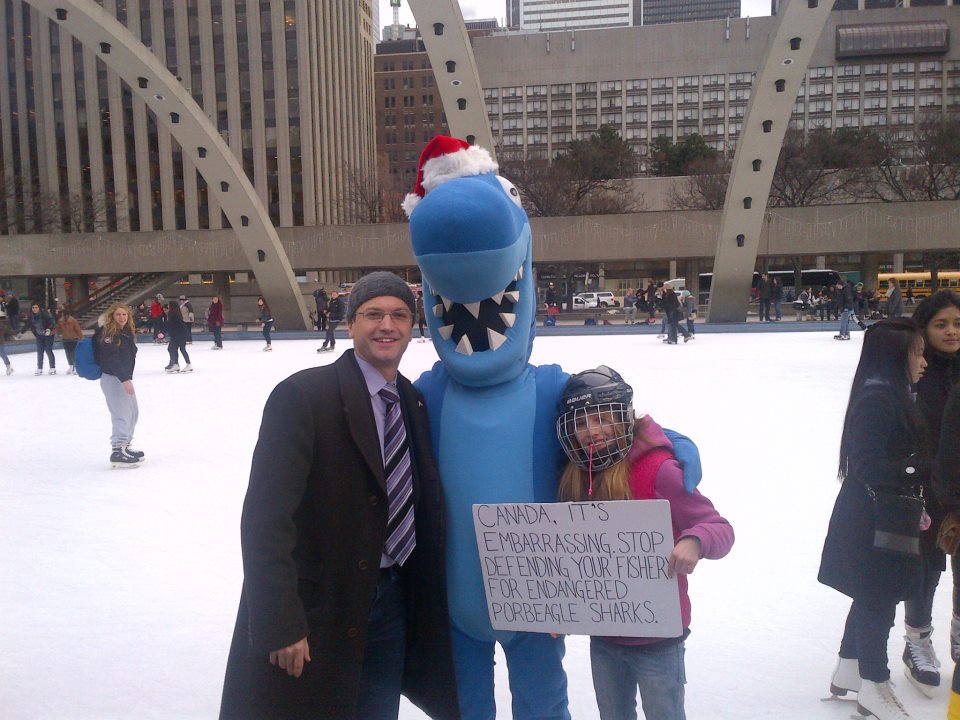
The porbeagle spends much of its life in Canadian waters, and is often referred to as “Canada’s shark”.
Hector skated to raise awareness that Canada is the only country in the world that maintains a directed fishery of this endangered species, and to protest further shark finning.
At the 18th Special Meeting of the International Committee for the Conservation of Atlantic Tunas (ICCAT) November 12th-19th, 2012, Canada was the only country out of 48 Member States to maintain a directed fishery for the porbeagle shark. In fact, Canada single-handedly blocked the consensus of the 47 other countries to stop fishing.
Over 20,000 Canadians sent letters to Acting Minister of Fisheries and Oceans, Gail Shea, expressing outrage at Canada’s position.
“The Atlantic-wide ban, proposed by the EU at the 2012 ICAAT meeting, would have given the slow-to-reproduce shark the best chance to recover and help close loopholes allowing porbeagle fishing in international waters”, said Shannon Arnold, Marine Program Coordinator of the Ecology Action Centre in Halifax. “We hope the Minister of Fisheries and Oceans will now take the decisive action Canadians demand.”
“The shark fin ban is another proud moment in Toronto’s history of speaking out against dumb policy, whether it’s women’s right to vote or the 1992 northern cod stock collapse. Protecting the porbeagle shark is another chapter in the world-wide shark ecology movement”, said David Donnelly, principal at Donnelly Law.
On October 25, 2011, City Council enacted a by-law prohibiting the possession, sale and consumption of shark fin or shark fin food products within the City of Toronto. The shark fin by-law, banning the consumption, sale and possession of shark fin or shark fin products, was declared invalid by the Ontario Superior Court of Justice on November 30, 2012.
Background
The porbeagle shark spends most of its life in Canadian waters, from northern Newfoundland and into the Gulf of St. Lawrence.
Research has tracked the precipitous decline by up to 89% in Canadian waters. Even without fishing, the porbeagle shark will take decades to recover to previous population levels.
The porbeagle shark was assessed as endangered by the Committee on the Status of Endangered Wildlife in Canada (COSEWIC), but the Minister of Fisheries and Oceans did not follow the advice of this expert committee to list the porbeagle as endangered under the Species at Risk Act. Canada is the only country in the Atlantic that maintains a directed fishery of this endangered species. Fishing for porbeagles is banned in the European Union and the Mediterranean Sea.
Canada also allows hundreds of porbeagles to be landed as bycatch in fisheries that target other fish like swordfish and tuna. In 2010, the total bycatch of porbeagle sharks was approximately 60 tonnes, three times the amount captured by Canada’s direct fishery.
For more information contact:
Shannon Arnold, Ecology Action Centre, 902-446-4840, sharnold@ecologyaction.ca
David Donnelly, Donnelly Law, 416-722-0220, david@donnellylaw.ca
Anti-SLAPP Bill launched in Ontario: A Big Step Forward for Democratic Rights in the Province
Toronto - Today, environmental groups applauded a proposed new law that would allow Ontario citizens to speak out to protect the environment and their health without fear of damaging lawsuits meant to intimidate them. Yasir Naqvi, Member of Provincial Parliament for Ottawa Centre, today tabled a private member’s bill – the Protection of Public Participation Act - that targets Strategic Lawsuits Against Public Participation (SLAPPs). SLAPPs are civil suits of dubious merit, generally intended to censor, intimidate or silence critics and prevent individuals from voicing concerns about public interest issues. Often in the form of defamation suits, they stifle citizen participation in public decision-making.
"These suits impede public participation in the democratic process and expose SLAPP victims to unnecessary financial and emotional costs," said Hugh Wilkins, staff lawyer with Ecojustice. "Ontario is stronger when its citizens can exercise their right to clean land, air and water without fear of a SLAPP."
These types of lawsuits have been used when citizens report environmental violations, file complaints with government agencies, work to educate the public about an issue, or speak at a public meeting. In 2010, the Attorney General convened an expert advisory panel that strongly recommended the enactment of anti-SLAPP legislation. The bill tabled today adopts the recommendations of that panel, which include a faster process for dismissing SLAPPs, strong disincentives for initiating them, and guidelines for judges on how to address them.
The Environmental Commissioner of Ontario, the Association of Municipalities of Ontario and Ontario Bar Association have all called for anti-SLAPP legislation.
"When a company sues an organization or individual in order to intimidate them, we all lose. Ontario needs people unafraid to advocate for a healthier and more vibrant society," said Shane Moffatt, a campaigner with Greenpeace Canada.
"Lawsuits without merit that are meant to bully people from exercising their rights must be stopped," said Maude Barlow, National Chairperson of the Council of Canadians. "There is no place for that type of conduct in our society."
SLAPPs are on the rise in Ontario. An example was the almost $150 million in lawsuits filed against multiple opponents of the Big Bay Point mega-marina, in Innisfil, on Lake Simcoe. All the suits were either dropped or dismissed by the courts for inactivity, with costs against the developer.
"Ontario residents’ rights under the Environmental Bill of Rights are violated every time a SLAPP chills a fair and open environmental decision-making process," said David Donnelly, counsel to Environmental Defence. "Many jurisdictions in North America have banned SLAPPs after having to put up with frivolous cases that never reached a judge or jury," Donnelly added.
"Anti-SLAPP legislation will save costs for the justice system by ensuring the early dismissal of these meritless lawsuits," said Ramani Nadarajah of the Canadian Environmental Law Association (CELA). "The private member's bill will protect citizens and groups who are engaging in public debate and is vital to Ontario's democracy."
Victory for the Escarpment
Nelson Quarry application has insufficient provisions for endangered species, wetlands and woodlands protection Toronto, ON – Environmentalists and community members are overjoyed by today’s decision of the Joint Board to protect Burlington’s Mount Nemo and Jefferson Salamander breeding ponds on the farm of the Harmer family. The decision denies Nelson Aggregate’s proposed 26 million tonne quarry on the 82 hectare site.
“The Board’s decision is balanced and in keeping with our belief that development on the Niagara Escarpment, a UNESCO World Biosphere Reserve must be harmonious with the features and functions of the natural environment. The decision is PERL’s dream come true,” said Sarah Harmer, a founder of Protecting Escarpment Rural Land (PERL), and hearing witness.
The Board’s decision gives Mount Nemo and its rare and endangered species a chance to breathe after a century of quarrying. This decision also protects the unique ecological functions of the Escarpment that cannot be replaced by planting trees nearby, which was originally proposed by Nelson Aggregates to offset its negative environmental impact.
“This is a true victory for the Escarpment and all the public agencies that worked to protect Mount Nemo, a gem of the Greenbelt in southern Ontario,” said Dr. Rick Smith, executive director of Environmental Defence. "It shows that the Niagara Escarpment Plan, a cornerstone of Ontario’s earliest environmental protection efforts, is still relevant and strong."
PERL and Environmental Defence attributed today’s win to the persistent and expert advocacy of Halton Region, the City of Burlington, Niagara Escarpment Commission, Conservation Halton and all the participants that testified against the development.
“We’re ecstatic with this outcome. It sets a new course for development on the Escarpment, making clear that the Niagara Escarpment Plan contains specific provisions that offer additional aspects of environmental protection in Ontario,” said David Donnelly, counsel to Environmental Defence and PERL during the 15-month hearing.
“The public was right, Mount Nemo is the wrong place for another destructive, below water table quarry,” said Roger Goulet, executive director of PERL.
Nelson presented a lengthy case in favour of the new quarry. In total, 60 witnesses, including 47 experts were called to the witness box.
The decision strongly supports the dissenting decision of Vice-Chair Robert Wright, in the Walker Aggregates Ltd. decision of the Joint Board that surprisingly approved a new quarry on the Escarpment. The Walker decision is being appealed by the Niagara Escarpment Commission.
About PERL (www.perlofburlington.org): Protecting Escarpment Rural Land is involved in a number of initiatives to help protect the Niagara Escarpment for future generations. PERL retained Order of Canada architect Douglas Cardinal to help it devise a “Vision for Mount Nemo” that would allow Nemo’s industrial past to be transformed into a sustainable, ecological future.
Niagara Escarpment Commission Votes 9 to 3 to Judicially Review Walker Aggregates Inc. Decision
On August 16, 2012 the Niagara Escarpment Commission (NEC) voted 9 to 3 to seek a judicial review of the Joint Board decision to approve a massive quarry for Walker Aggregates Inc. on the Niagara Escarpment west of Duntroon. A successful judicial review could protect the Niagara Escarpment’s hydrology, wildlife and ecosystem. The Region of Halton, the City of Burlington and over 20 community groups and individuals including Environmental Defence, Protecting Escarpment Rural Land, Grey Association for Better Planning, PitSense Niagara Escarpment Group Inc., People for Responsible Escarpment Development Caledon Inc., Blue Mountain Watershed Trust Foundation, Nature League (incorporated as Senior League Endowment Society of Collingwood), and the Oakvillegreen Conservation Association urged the NEC to embrace the100-page dissent judgment of Member Wright. Member Wright’s dissent argues that the Board’s decision would undermine the integrity of the Niagara Escarpment Plan (NEP), set a perilous course for future development and jeopardize the Escarpment’s unique protected status.
Former Minister of the Environment and Member of Clearview Community Coalition (CCC) Ruth Grier commented that “in all my time in government and as an advocate, the Walker decision caused me the greatest concern for the health of the Niagara Escarpment UNESCO Biosphere Reserve. I commend the commission for their vote to defend the Niagara Escarpment, one of Ontario’s truly unique environmental features.”
“Ontarians don't want a mega-quarry that puts our land, water and wildlife at risk, for the benefit of few” said Dr. Rick Smith, Executive Director of Environmental Defence. "I'm happy to see that the NEC recognizes this quarry in this location is a mistake."
The NEC’s vote to launch a judicial review of the Walker Aggregates Inc. decision shows that the NEC is willing to uphold the NEP and that the decision to approve the licence in the first place was flawed by wrongly placing the Provincial Policy Statement (PPS) above the more restrictive NEP.
“We are all relieved that the Board’s decision will be reviewed to ensure the environment and local residents are given the full measure of NEP protection. A court will have the final say on whether the Niagara Escarpment Plan is the paramount regime, which is the will of the Legislature and people of Ontario” said David Donnelly, counsel to Environmental Defence and CCC.
Keep checking the Donnelly Law website for updates on the judicial review.
To read the Joint Board decision: http://www.ert.gov.on.ca/files/201206/00000300-BPQ1IK6FIN0026-CFI4BD7E8HO026.pdf
On Lake Simcoe, cottage dreams have become a developer’s nightmare
STEVE LADURANTAYE The Globe and Mail
Published
Friday Harbour sits at the mouth of an abandoned Lake Simcoe marina, a resort development that promises city-weary Torontonians a year-round escape from the blistering pace of their lives for less than the cost of a decent downtown condominium.
The developer is quick to talk up the 242-hectare site’s many amenities. The 2,000-some lakeside units, tucked in alongside a nature reserve, will range in price from $250,000 to a $1-million. They’ll eventually sit next to a new golf course, a 400-room hotel, an amphitheater and dozens of high-end shops and restaurants.
Buyers need not even worry about their carbon footprints. The site is about 12 kilometres from the Barrie South GO Station, meaning anyone with a decent bike could make the trip to cottage country without ever sticking a key into an ignition.
While it sounds pretty idyllic, reality is a little more complicated. Markham-based Geranium Corp. launches a massive marketing effort this weekend that will culminate with a sales centre opening in the fall, but the company won’t dwell on the 10-year legal battle that has dogged developer Earl Rumm every step of the way, costing both him and his opponents tens of millions of dollars.
His long and impressive list of enemies – which features both townies and millionaire Bay Street big shots who have vacationed in the area for generations and don’t want to see their refuges disrupted by thousands of new part-timers – have fought for a decade.
Their concerns are myriad: They worry about the lake’s water quality, they dread increased weekend traffic. They also wonder what would happen if the real-estate market weakened and demand for expensive second homes tanked, leaving a half-finished site fully tricked out with municipal water and sewer services.
“Some people are never happy,” Mr. Rumm says, sitting in the back of a Land Rover during a company-sponsored tour of the site that started with a helicopter ride from downtown Toronto. “They keep losing and losing in every challenge they make, and still they get to come back and challenge every time we look for a new permit or try to move things further along.”
As his excavators strip the site of trees to prepare for the billion-dollar development – which has the blessing of both the province and the municipality – his opponents are digging in for one last offensive that could render all previous approvals moot and chill resort developments across the province.
The whole project depends on blowing open the mouth of the harbour, digging a 24-hectare hole, deep enough for any boat that can navigate the Trent-Severn Waterway, and filling it with water. The thousands of vacation homes would be built along the artificial shoreline that is created, and the golf course’s rolling hills will be built using the excavated dirt.
But the land around the harbour still belongs to the province. Mr. Rumm is convinced the land transfer is a rubber-stamp process, but environmentalists working under the umbrella Innisfil District Association hope they can keep the province from selling the land to Mr. Rumm.
“It should really be renamed Monday Morning Harbour because there is going to be a huge hangover when the environmental costs come due,” says David Donnelly, the lawyer working with the group.
The environmentalists who oppose him have dismissed his ecological efforts but the company feels it’s getting a bad rap, mostly from the part-time residents who oppose the project. Eighty-one hectares – a full third – of the site has been designated as an environmental zone.
“If this were a parking lot naturalization then I could see some positives,” says Mr. Donnelly. “If you look at a satellite shot of Lake Simcoe, there’s not a lot of forested shoreline left.”
While Mr. Rumm is only months away from opening a sales centre, the project’s roots goes back decades, to when he would visit the area as a child to spend time with friends and relatives in their summer homes. He says he has the area’s greater good in mind – the company estimates the resort would have 1,000 full-time employees and generate about $4.4-million in annual property-tax revenue for Innisfil.
He grew to love the area, he says, and now owns one of the largest properties along the shoreline. That’s put him in a strange situation over the last decade as he squared off with high-profile opponents who spend as much time on Bay Street as they do on the lake.
“They think they can be cogs in the system, when really all they are doing is creating a lot of noise and fuss for nothing,” Mr. Rumm said.
“There is a process for us to follow, and we’ve followed that process every step of the way.”
That’s not to say he came out of the last decade unscathed. The development was cleared by the Ontario Municipal Board in 2007, but a string of approvals were needed before he could start clearing the land. He estimates the company has spent $100-million so far, and doesn’t have much to show for it aside from the parcel of land and dozens of reviews and environmental remediation plans.
While opponents focus on environmental concerns, the greatest threat to the project has little to do with trees or permits. The project is targeted toward wealthy city dwellers who want to get away for up to 300 days a year. But the units are a hybrid of cottage and house, which means they are susceptible to the market forces challenging both types of properties.
The condo rush that pushed prices in the city up by double-digit percentages since the recession is showing signs of slowing. Household debt, meanwhile, is at the highest level on record.
A recent report from ReMax, meanwhile, underlines the challenges facing anyone trying to sell vacation properties. The market has been in the dumps for years, and hasn’t enjoyed the same level of sales activities as the residential housing market. The average vacation property in the Innisfil area sits on the market for 235 days, with starting prices on winterized waterfront property starting around $500,000.
The report hints that slow sales in the area are the result of a lack of product, not a lack of interest. That’s the kind of thing Mr. Rumm likes to hear as he prepares to stake his company’s future on the massive resort development.
“This is going to happen,” he says. “You can’t time the market, you can’t worry about things like that. This is all about the lifestyle. We’ll be there to entertain you, so you don’t have to worry about entertaining yourself. How can anyone be against that?”
OMB Splits 2-1 in Approving Massive Walker Quarry on Niagara Escarpment

OMB Splits 2-1 in Approving Massive Walker Quarry on Niagara Escarpment: Decision sets “perilous course” for increased development on Escarpment
Collingwood, ON – Environmentalists are shocked by a split decision (2-1) of the Joint Board approving a massive, new 42-million tonne aggregate quarry located at the very highest point of the Niagara Escarpment, near Duntroon, Ontario.
The 263-page decision includes an unprecedented 100-page Dissenting Reasons from Environmental Review Tribunal (ERT) Member Mr. Robert V. Wright, the only Escarpment Commission Hearing Officer (ECHO) amongst the two other Ontario Municipal Board (OMB) members who sat through the 15-month hearing.
Ominously, Member Wright wrote in his dissenting minority decision:
The majority decision in this matter sets a perilous course for increased development in the NEP Area that is not compatible with the natural environment of the Niagara Escarpment and land in its vicinity.
Member Wright calls the Escarpment the “geological backbone of southern Ontario."
The Niagara Escarpment Plan (NEP) is the law of Ontario. The minority decision labels the NEP an “environmental conservation plan” that lays out strict tests for minimal impairment of the environment as a condition of development, including the proposed quarry.
Member Wright zeroed in on the critical failure of the two OMB members to address the NEP correctly in their majority decision:
The findings and conclusion of my [OMB] colleagues reject the development control approach, and fail to analyze crucial aspects of this development proposal through the lens of the statutory provisions of the NEPDA [Niagara Escarpment Planning and Development Act] and the policies of the NEP. The practical result is that the specific provisions and policies of the NEPDA and the NEP that protect the natural environment of the Niagara Escarpment and land in its vicinity are either wrongly equated with the PPS [Provincial Policy Statement] requirements, or given little, or no, legal effect, and the more general province-wide policies of the PPS are applied by default.
Failing to apply the law correctly can be considered an “error of law” and is grounds for appeal. The OMB also erred by finding the quarry will produce only “minor or temporary” impacts to the Escarpment’s natural system. Member Wright disagreed with the OMB, stating “The complete removal of features and functions such as a significant woodland, spring and portion of a stream are not “minor and temporary”.” The Niagara Escarpment Commission (NEC), citizens’ and environmental groups, both conservation authorities responsible for two different local watersheds, and the Environmental Commissioner of Ontario all agreed the impacts were either unacceptable or unknown, and all testified in opposition to the Walker Quarry.
The Aggregate Resources Act licence (if issued) allows 2.5 million tonnes of annual extraction, making it one of the largest in Canada. Member Wright also raises the alarm about the OMB’s protection of water resources, stating that “to say that a portion of SW2 [significant wetland] spring and stream system on site can be removed without any negative impacts is a non sequiter.”
“A huge new quarry planning to harvest limestone from deep in Ontario’s famed Niagara Escarpment is another chapter in an ongoing natural resources policy disaster,” said Dr. Rick Smith, Executive Director of Environmental Defence. “The decision proves the health of the Niagara Escarpment cannot be left in the hands of the OMB."
“Our community and the NEC put on a very strong case against this quarry, highlighting both the environmental and safety threats posed by such a massive new extraction and haul route in our community, we’re in a state of disbelief,” said Janet Gillham, President of the Clearview Community Coalition (CCC). "The CCC's vision for Clearview Township is based on the natural heritage advantage that the Niagara Escarpment could provide if it was protected.”
“We’re seeking legal advice regarding an appeal. This decision sends a pretty clear signal to the world – Ontario is failing to provide the Niagara Escarpment with the recognition and protection it deserves,” Gillham added. “The Walker quarry will be massive, posing the same if not greater risks than the proposed Melancthon mega-quarry just down the road,” said David Donnelly, counsel to CCC and Environmental Defence.
“The experts and staff of the NEC, its Commissioners and the ECHO all agreed this quarry will cause unacceptable ecological loss to the Niagara Escarpment. Residents have a right to expect that this consensus should have led to a decision to protect one of Ontario's few UNESCO World Biosphere Reserves,” Donnelly added.
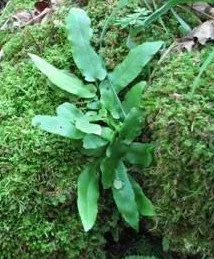
The Board acknowledged the significance of the world’s largest known colony of American Harts Tongue Fern on the quarry property.
Environmentalists are renewing their call to have the species listed as threatened or endangered under the Endangered Species Act.
-30-
For more information, or to arrange an interview, contact: Stephanie Kohls, Communications Director, Environmental Defence, 416-323-9521 ext. 232; 647-280-9521 (cell); skohls@environmentaldefence.ca

Internationally Significant Skandatut Site Saved

New Cultural Heritage Landscape Park to Celebrate Nature and First Nations History June 6, 2012
Vaughan, ON – Vaughan City Council voted unanimously last night to accept a deal to save Skandatut, an internationally significant cultural heritage site in the Greenbelt, on the historic Hu
mber River in Vaughan, Ontario.
The 6 acre village site will be transferred to public ownership, and will be buffered from new development by a 2.5 acre park. The site is surrounded by a river valley and conservation land on three sides.
At the council debate, Vaughan Mayor Maurizio Bevilacqua saluted its importance to both residents and members of the Huron-Wendat Nation: “Nature is extremely important to know in all that it teaches us. We cherish Skandatut just as much as you do.
“To all involved on behalf of the city I wish to express my warmest and sincerest gratitude. This moment defines the best of what humanity has to offer—compassion and understanding.”
Assembly of First Nations National Chief Shawn Atleo, political Chief to all of Canada’s 634 Nations, wrote to Premier McGuinty in 2010 calling it “rare” and “internationally significant.”
The site is located on a steep-sided promontory overlooking the Humber River and valley. At its time of occupation in the sixteenth century, it was a large and heavily fortified Huron-Wendat village. Located on the Carrying Place Trail, which was one of Ontario’s oldest and most important lines of trade, diplomacy and communication in the Great Lakes Region. Given its location and size, it was likely the “capital” of southern Ontario.
Despite its iconic history, the site’s fate wasn’t always secure. Less than two years ago, a private landowner was excavating to make way for development. The provincial government had to step in to temporarily preserve the archaeological site.
“This is a great moment for world heritage, to finally have protected this village site that straddled the world of life on the Great Lakes before and after the arrival of Europeans," said Luc Laine, a member of the Huron-Wendat Nation. “When we make the re-burial of our ancestors across the river, Skandatut will be linked again permanently with the ossuary to which it belonged."
Laine thanked the Mayor, Councillor Michael Di Biase, Councillor Deb Schulte and other members of Council for their wisdom and efforts.
When thousands of Huron-Wendat and other First Nations remains—which were illegally excavated—return to the site, the resulting park area will be one of the largest protected and sacred cultural heritage landscapes in Canada.
“Adding Skandatut to the list of the Greenbelt’s protected landscapes is a major accomplishment that will be celebrated long after we’re gone," said Dr. Rick Smith, executive director of Environmental Defence. He noted that adding the site to the Greenbelt has been a Ontario Greenbelt Alliance priority since 2007.
“Preserving Skandatut is a wonderful achievement that highlights the very best about Ontario’s commitment to truly sustainable development and respect for First Nations," said David Donnelly, who began acting for the Huron-Wendat on Skandatut back in 2004.
“For me, there is also a deep sense of relief that we’ve lived up to our reputation as a just society and that we didn’t lose another part of our past. Ontario heritage is more than just bricks and mortar," Donnelly added.
Award-winning documentary “Shellshocked” details wild oyster reefs’ destruction
Published on Monday April 23, 2012 in the Toronto Star Mary Ormsby, Feature Writer
A shimmering mound of Atlantic oysters chills atop shaved ice, shucked and inviting, lining a platter at a downtown Toronto gathering.
Succulent. Briney. Plentiful.
It’s been that way with oysters — particularly the plentiful part — for more than 100 years in Toronto.
Citizens, the grand and the humble, have slurped the slippery mollusc in public oyster houses or stirred the ocean creatures into bubbling stew pots for family meals. An 1894 ad in Toronto’sEvening Star shows oysters were cents to buy; a cheap, nutritious, democratic food pulled from wild maritime coastal reefs and shipped west to Toronto.
But no more.
Today’s pricey oyster menus are filled almost exclusively with meat farmed through aquaculture businesses.
Wild oysters — which clean our water and protect species in our food chain — have been eaten, poisoned and suffocated to virtual extinction. In Canada, that demise began around confederation.
Researchers have found 85 per cent of the world’s wild oyster reefs have died, a human-engineered destruction detailed in an award-winning documentary, Shellshocked, by American filmmaker Emily Driscoll. The film made its Canadian premiere April 16 in Toronto at Rodney’s Oyster House on King Street West.
“Wild oyster reefs are functionally extinct and that means they no longer have a significant role in their ecosystem,” says Driscoll, who was raised in New York City, once considered the world’s economic and gastronomic oyster capital.
Only a handful of wild oysters remain in New York Harbour, recently the site of aggressive restoration projects.
“In my film, wild oysters are called ecosystem engineers. So for something that vital in the ecosystem to no longer have are role. . . is a big fall.”
Wild oysters are a keystone species that thrives in coastal estuaries.
Oysters purify water (an adult can filter up to 190 litres daily), neutralize killer nitrogen and provide a three-dimensional habitat for hundreds of fish and plants (oysters usually glue themselves to other shells shortly after fertilization — eggs and sperm are sprayed into open water, the soft, floating larva latches to a hard surface permanently where, it too, will grow a rock-like shell). Those wild reefs, so thick and large early French explorers had trouble navigating Canadian waters, also acted as erosion protection of shorelines.
Inka Milewski is the science adviser to the Conservation Council of New Brunswick and a wild oyster reef expert. She estimates only 10 per cent of the historic natural reef remains in all of Atlantic Canada.
The environmentalist recalls trying to pinpoint a “last remnant of reef” to study a decade ago. She found it in the Northumberland Strait, at Bouctouche Bay, but what was left to explore “was so sad.”
“Wild oyster reefs were once these three-dimensional emerging structures out of the sea bottom that were solid oyster clusters,” Milewski says.
In the 2002 report she co-authored, “Oysters in New Brunswick: More than a harvestable resource,” the scientist noted that French explorer Nicolas Denys wrote in 1672 of the region’s oyster reefs growing almost to the water’s surface.
“So imagine (an oyster structure) a height of six or seven or eight feet. When I go, I find something that is barely a foot off the sea bottom. Some of (the oysters) are covered in a green slime, which is a symptom of eutrophication — nutrient pollution from sewage systems, runoff and fish plants.”
Government regulations to contain overfishing were enacted in 1867 but the legislation wasn’t heeded and reefs were being stripped bare faster than the oysters could reproduce. Diseases struck over ensuing decades, further depleting the fragile natural beds by the 1950s, including those holding the region’s famous Malpeque oysters.
Aquaculture has put oysters back on tables in such robust quantities that it’s easy to see why people don’t understand the ocean environment is stressed, with little natural reef left, Driscoll says.
“The oysters people have on their plate, 95 per cent of the time it’s a farmed oyster. So people would have no way of knowing (of the vanishing reefs) because in their day-to-day experience, oysters seem plentiful,” the filmmaker says.
Milewski fears the economic upside of oyster farming has shifted governmental and scientific focus to aquaculture and away from examining the restoration, recovery and ecological importance of natural oyster reefs.
Milewski says it’s important to understand that what happens under water, such as the extinction of keystone species, has a direct impact on the human food chain.
“I don’t want to sound alarmist but really, it is alarming what is happening to our oceans.”
Driscoll says her film, ultimately, is about hope — of people being caring and innovative in attempts to restore wild reefs as habitats and water purifiers.
Black Out Speak Out: Take Action
wp-content/uploads/2012/06/website_en2.jpg
Right now, Parliament is pushing through a bill to weaken many of the country's most important environmental protection measures and silence the voices of all Canadians who seek to defend nature. Today it's our voice; tomorrow it could be yours. Here are the top five reasons to Speak Out:
- Charities are being targeted. The government is adding $8 million in new funding for the Canada Revenue Agency to audit charities like environmental groups in spite of the fact they have simply exercised their legal right to advocate for things like laws to fight global warming. This will have a chilling effect on democratic debate. What's more, under these new laws, citizen groups will likely be shut out of environmental reviews of big projects like oil pipelines. Key government agencies with expertise will also have less input. Well-funded backroom lobbyists and political operatives will have greater influence.
- Canadians' participation in Parliament is being disrespected. Instead of following the established process for making sweeping changes, which allows for thorough public debate, these changes are being shoehorned into a massive budget law. This drastically reduces the amount of consultation on a whole variety of topics. These changes will have serious consequences for all Canadians and our voices are not being heard.
- Nature is being put at serious risk. The Canadian Environmental Assessment Act is being replaced with a totally new law. Under it, Ottawa will play a much smaller role in protecting people from harmful projects, while retaining the right to basically rubber-stamp big projects that powerful oil interests want. And the new weaker rules are being applied to review processes that are already underway–so projects like the Enbridge Northern Gateway tankers and pipeline project could get an easier ride.
- Too much power is in the hands of too few. The National Energy Board will no longer be able to say "no" to oil pipeline projects that are not in the public interest. Politicians in Cabinet will be able to overrule the expert energy regulator if powerful oil interests don't like its decision. Permits that allow the destruction of habitat for fish and threatened or endangered species will now be issued behind closed doors without public scrutiny, if they are required at all.
- Trusted advisors to government that provide high-quality analysis for balanced policy are being ignored. The 2012 budget eliminates the funding for the last remaining government advisory body – the National Roundtable on the Environment and Economy (NRTEE). The NRTEE provides analysis and advice on how to meet our international commitments to reducing greenhouse gas pollution. Many lakes, rivers and streams that provide habitat to fish will be at greater risk of destruction because of changes to the Fisheries Act contained within the budget implementation bill. Healthy fish habitat is important for fish and for the people and businesses that depend on them.
For more information, please download a list of the TOP 10 items of environmental concern in the 2012 budget bill (Bill C-38).
Sarah Harmer's Huffington Post Article: Singing for the Salamander
Huffington Post, The Blog Authored by Sarah Harmer
For the past three months, my dedicated lawyer David Donnelly, Protecting Escarpment Rural Land ("PERL"), and I have been trying to obtain a Ministry of Natural Resources (MNR) biologist's written opinion on whether a quarry company's mitigation plan would protect the breeding ponds and wetlands of the Federally Endangered Jefferson Salamanders that are on our family farm.
On March 27, 2012, I was compelled to appeal an absurd decision of the MNR to deny my earlier Freedom of Information (FOI) request for this opinion.
Only a few hundred metres away from these ultra-sensitive and ostensibly "protected" breeding ponds is the site of the proposed Nelson Aggregate Co. below-water-table quarry, which would very likely undermine the hydrogeology of the entire area, including the Grindstone Creek Headwaters Provincially Significant Wetland Complex. If the water goes away, so do the salamanders (the Jeffies, as they are affectionately known).
Our farm, atop the Niagara Escarpment's Mount Nemo in North Burlington, is part of a UNESCO World Biosphere Reserve. It is one of only 27 Jefferson Salamander habitats left in Ontario, indeed in all of Canada. Clearly this is the wrong place for a massive extraction industry.
But Nelson Aggregate Co. didn't even bother to ask us if they could come on our property to monitor the wetlands if the quarry gets approved. PERL's expert biologist Dave Stephenson is skeptical that a professional MNR Species-at-Risk biologist would have sufficient confidence in a mitigation strategy when access to the ponds has not been sought and is so uncertain.
What if the MNR biologist still has concerns? Shouldn't the joint board reviewing this quarry licence application hear them?
In their FOI decision of March 6, the MNR did show a record of the information we had requested, but decided to deny me access to it on the basis that "disclosure of the record would reveal recommendations of a public servant." When I read those words I thought, "How ironic to hide information from someone who is called a servant of the public." In the next few months I'll find out if Ontario's Information and Privacy Commissioner agrees with me: MNR bureaucrats should not be overriding the public interest and hiding information critical to the protection of an endangered species. Just as importantly, a government agency should not be having private meetings with a corporation to review remediation plans for other people's property without extending to the landowner the same participatory rights.
Seven years ago, citizens of the Mount Nemo area formed PERL, a community group that has represented the interests of the community and sponsored crucial science about what is at risk on Mount Nemo. After incredible amounts of volunteer work and dedication, these citizens, including my family, should not be in this position now: The MNR could have disclosed at the hearing the biologist's opinion without all this wasted time and energy. We filed a Motion to Disclose this evidence during the hearing, and I swore an affidavit stating how critical this evidence was to our case. When our motion was denied, our legal team had to file the FOI, involving more precious time and resources.
When this FOI request was just recently denied, I had to engage lawyer Alexandra Mayeski, an FOI appeal legal expert and, coincidently, a childhood schoolmate and neighbour whom I rode the school bus with as a kid. Synchronicity at work.
The story goes like this. PERL has been fighting the proposed Nelson Aggregate Co. quarry on Mount Nemo since 2005. For years, the MNR agreed with PERL that the Significant Woodlands, Threatened and endangered species habitats, Provincially Significant Wetlands, source water hydrogeology, and prime agricultural lands on the proposed site added up to a big negative for the quarry proposal. The Region of Halton, City of Burlington, Halton Region Conservation Authority and the Niagara Escarpment Commission all opposed the quarry too.
So did important allies like Environmental Defence, Lake Ontario Waterkeeper, David Suzuki Foundation, Coalition on the Niagara Escarpment (CONE) and many others.
Then, on the first day of the Joint Board Hearing, the MNR did an about-face and supported the quarry! Starting on November 19, 2010, the Joint Board Hearing heard evidence from dozens of experts from all the public agencies listed above, and experts from PERL. We all opposed the quarry proposal and provided testimony to the same.
But what of the independent MNR experts who had filed witness statements critical of the project? We decided to summons them, to cross-examine them on whether it was experts or policy "suits" that decided to do a "180" and support the quarry in this clearly inappropriate location.
One of the experts that was summoned was John Pisapio, species-at-risk biologist for the MNR. He's also on the Jefferson Salamander Recovery Team. At the time of his testimony, Nelson had no clear strategy for protecting the wetlands and breeding ponds on my family farm if something went wrong with the quarry. For example, if, as predicted by experts, the under-draining of the whole area lowered the water table so that the water in the wetlands leaked out from underneath and the wetlands dried up.
Pisapio's evidence at the hearing in October, 2011 was pretty devastating to the proposal -- he testified he had concerns about the inadequate monitoring and mitigation measures proposed in Nelson's Adaptive Management Plan (AMP) for the Harmer Wetlands and the Jefferson salamanders in particular.
This was a blockbuster moment!
Did Nelson and the MNR call PERL and my family to talk about what to do next? No.
Instead, MNR staff collaborated with Nelson to come up with a new mitigation plan involving the wetlands on our property without consulting me or my family. Nelson now says they'll install gauges (monitors) and run pipes onto our property, if the ponds go dry. Right, we're supposed to trust Nelson after they transplanted and subsequently killed endangered butternut trees, dredged and drained wetlands, and were convicted of illegally placing fill in the Grindstone Creek Provincially Significant Wetland Complex? I don't think so.
A very telling part of the situation is this: the planning expert for Nelson, Brian Zeman, testified at the hearing that when MNR officials were discussing the new Jefferson mitigation plan, he was the one who was the minute-taker. Separation between corporate interest and our own government has never been more difficult for me to discern.
Thankfully, the law may be on our side. Even if the Information and Privacy Commissioner says the biologist's opinion qualifies as being protected from disclosure, we can argue that the records are subject to the compelling public interest override provision under Section 23 of Ontario's Freedom of Information and Protection of Privacy Act. Since the records we're seeking relate to mitigation strategies for the Harmer Wetlands known to contain a provincially Endangered Species, this fits with previous Orders of the Information and Privacy Commissioner's Office that have recognized that the public has an interest, from the perspective of protecting the natural environment and protecting health and safety, in seeing that government institutions conduct a full and fair assessment before granting environmental approvals, including approvals under the Aggregate Resources Act.
Do we really need to wait months for this decision? C'mon Premier McGuinty, play fair! Give us the damn biologist's opinion.
http://www.huffingtonpost.ca/sarah-harmer/sarah-harmer_b_1400873.html?ref=canada
SHELLSHOCKED: Canadian Premiere hosted by Donnelly Law and Rodney's Oyster House
 ENVIRONMENTAL DEFENCE
For Immediate Release: March 26, 2012
ENVIRONMENTAL DEFENCE
For Immediate Release: March 26, 2012
Shellshocked: Saving Oysters to Save Ourselves Canadian Premiere on April 16 at Rodney's Oyster House in Toronto: Filmmaker and environmental experts discuss the importance of protecting North American waterways and oyster culture
Toronto, ON – On the heels of its successful U.S. debut, the Canadian premiere of Shellshocked: Saving Oysters to Save Ourselves will take place at Rodney's Oyster House on April 16th 2012 at 6:00PM. The screening will be followed by a Q&A with Director Emily Driscoll, and environmentalist and prominent Oysterman Rodney T. Clark. At the event, guests will be treated to a specially prepared oyster reception and tasting. Proceeds raised will be donated to Environmental Defence to further its work to protect and improve Canada's water ecosystems.
Shellshocked: Saving Oysters to Save Ourselves Canadian Premiere
WHEN: Monday, April 16th, 2012
WHERE: At Rodney’s Oyster House at 469 King Street West, Toronto
TIME: Doors open at 6PM, screening at 6:45PM
WHAT: Film screening and Q&A, featuring filmmaker Emily Driscoll, and environmentalist and "the Oysterman" Rodney T. Clark
PHOTO OPS: Great shots of oyster shucking, Emily Driscoll, Rodney T. Clark, guests enjoying oysters and bubbly
TICKETS: $77.50 per person. Includes oyster reception and tasting. Call 416-363-8105 ext.0 for ticket purchases or in-person at Rodney's Oyster House. NOTE: all proceeds are donated to Environmental Defence
INTERVIEW OPPORTUNITIES: Emily Driscoll, Director and Filmmaker, Rodney Clark, “the Oysterman” and owner of Rodney's Oyster House, and Environmental Defence Spokesperson, David Donnelly.
ABOUT THE FILM (www.shellshockedmovie.com): SHELLSHOCKED follows efforts to prevent the extinction of wild oysters, a keystone species that keeps our oceans healthy by filtering water and engineering ecosystems. Today, because of over-fishing and pollution, wild oyster reefs have been declared the most severely impacted marine habitat on earth and are functionally extinct. Now scientists, government officials, artists and environmentalists are fighting to bring oysters back to New York Harbor – the former oyster capital of the world.
ABOUT THE DIRECTOR (www.emilydriscollonline.com): Emily Driscoll is a science and nature documentary producer. Her previous documentary BUGGED: The Race to Eradicate the Asian Longhorned Beetle aired on PBS stations and screened at the Department of the Interior. She has a master’s degree from NYU in science journalism and is working toward a master’s degree in science documentary production from NYU’s Gallatin School of Individualized Study. She’s written articles and produced videos for a number of science news publications. Emily also plays and produces videos about competitive badminton.
ABOUT RODNEY'S OYSTER HOUSE (rodneysoysterhouse.com): Rodney’s Oyster House, located at 469 King Street West is an iconic Toronto restaurant dedicated to preserving and celebrating oyster culture. Rodney Clark, "the Oysterman," has presented oysters in downtown Toronto since the late 1970's, and helms one of the Great Oyster Houses of North America. He has taken a leading role in promoting sustainable aquaculture with the opening of Rodney’s Oyster Depot on Prince Edward Island, over five years ago, and will talk about sustainable Oystering and the future of the oyster in North America, from the Rodney's perspective.
ABOUT ENVIRONMENTAL DEFENCE (www.environmentaldefence.ca): Environmental Defence is Canada's most effective environmental action organization. We challenge, and inspire change in government, business and people to ensure a greener, healthier and prosperous life for all.
-30-
For more information or to arrange an interview, please contact: Stephanie Kohls, Environmental Defence, 416-323-9521 ext. 232; 647-280-9521 (cell); skohls@environmentaldefence.ca