Victory for the Escarpment
Nelson Quarry application has insufficient provisions for endangered species, wetlands and woodlands protection Toronto, ON – Environmentalists and community members are overjoyed by today’s decision of the Joint Board to protect Burlington’s Mount Nemo and Jefferson Salamander breeding ponds on the farm of the Harmer family. The decision denies Nelson Aggregate’s proposed 26 million tonne quarry on the 82 hectare site.
“The Board’s decision is balanced and in keeping with our belief that development on the Niagara Escarpment, a UNESCO World Biosphere Reserve must be harmonious with the features and functions of the natural environment. The decision is PERL’s dream come true,” said Sarah Harmer, a founder of Protecting Escarpment Rural Land (PERL), and hearing witness.
The Board’s decision gives Mount Nemo and its rare and endangered species a chance to breathe after a century of quarrying. This decision also protects the unique ecological functions of the Escarpment that cannot be replaced by planting trees nearby, which was originally proposed by Nelson Aggregates to offset its negative environmental impact.
“This is a true victory for the Escarpment and all the public agencies that worked to protect Mount Nemo, a gem of the Greenbelt in southern Ontario,” said Dr. Rick Smith, executive director of Environmental Defence. "It shows that the Niagara Escarpment Plan, a cornerstone of Ontario’s earliest environmental protection efforts, is still relevant and strong."
PERL and Environmental Defence attributed today’s win to the persistent and expert advocacy of Halton Region, the City of Burlington, Niagara Escarpment Commission, Conservation Halton and all the participants that testified against the development.
“We’re ecstatic with this outcome. It sets a new course for development on the Escarpment, making clear that the Niagara Escarpment Plan contains specific provisions that offer additional aspects of environmental protection in Ontario,” said David Donnelly, counsel to Environmental Defence and PERL during the 15-month hearing.
“The public was right, Mount Nemo is the wrong place for another destructive, below water table quarry,” said Roger Goulet, executive director of PERL.
Nelson presented a lengthy case in favour of the new quarry. In total, 60 witnesses, including 47 experts were called to the witness box.
The decision strongly supports the dissenting decision of Vice-Chair Robert Wright, in the Walker Aggregates Ltd. decision of the Joint Board that surprisingly approved a new quarry on the Escarpment. The Walker decision is being appealed by the Niagara Escarpment Commission.
About PERL (www.perlofburlington.org): Protecting Escarpment Rural Land is involved in a number of initiatives to help protect the Niagara Escarpment for future generations. PERL retained Order of Canada architect Douglas Cardinal to help it devise a “Vision for Mount Nemo” that would allow Nemo’s industrial past to be transformed into a sustainable, ecological future.
David Donnelly Addresses the 3rd Annual Access to Information and Privacy Law Symposium
David Donnelly has been invited to participate in a seminar at the Canadian Bar Association's 3rd Annual Access to Information and Privacy Law Symposium on September 14-15, 2012. The Annual Privacy and Access Law Symposium focuses on recent developments and trends in privacy and access law. David will speak to his experience on Freedom of Information requests on behalf of clients, the need for expedited process, particularly reduced time and cost. The seminar will discuss the top ten problems with the access to information and how to fix them and will be based on a survey of the Canadian Bar Association Privacy and Access Section members. The Symposium is hosted by the Canadian Bar Association and will take place at the Westin Hotel in Ottawa, ON.
Learn more at http://www.cba.org/pd/details_en.aspx?id=NA_PRV12
Niagara Escarpment Commission Votes 9 to 3 to Judicially Review Walker Aggregates Inc. Decision
On August 16, 2012 the Niagara Escarpment Commission (NEC) voted 9 to 3 to seek a judicial review of the Joint Board decision to approve a massive quarry for Walker Aggregates Inc. on the Niagara Escarpment west of Duntroon. A successful judicial review could protect the Niagara Escarpment’s hydrology, wildlife and ecosystem. The Region of Halton, the City of Burlington and over 20 community groups and individuals including Environmental Defence, Protecting Escarpment Rural Land, Grey Association for Better Planning, PitSense Niagara Escarpment Group Inc., People for Responsible Escarpment Development Caledon Inc., Blue Mountain Watershed Trust Foundation, Nature League (incorporated as Senior League Endowment Society of Collingwood), and the Oakvillegreen Conservation Association urged the NEC to embrace the100-page dissent judgment of Member Wright. Member Wright’s dissent argues that the Board’s decision would undermine the integrity of the Niagara Escarpment Plan (NEP), set a perilous course for future development and jeopardize the Escarpment’s unique protected status.
Former Minister of the Environment and Member of Clearview Community Coalition (CCC) Ruth Grier commented that “in all my time in government and as an advocate, the Walker decision caused me the greatest concern for the health of the Niagara Escarpment UNESCO Biosphere Reserve. I commend the commission for their vote to defend the Niagara Escarpment, one of Ontario’s truly unique environmental features.”
“Ontarians don't want a mega-quarry that puts our land, water and wildlife at risk, for the benefit of few” said Dr. Rick Smith, Executive Director of Environmental Defence. "I'm happy to see that the NEC recognizes this quarry in this location is a mistake."
The NEC’s vote to launch a judicial review of the Walker Aggregates Inc. decision shows that the NEC is willing to uphold the NEP and that the decision to approve the licence in the first place was flawed by wrongly placing the Provincial Policy Statement (PPS) above the more restrictive NEP.
“We are all relieved that the Board’s decision will be reviewed to ensure the environment and local residents are given the full measure of NEP protection. A court will have the final say on whether the Niagara Escarpment Plan is the paramount regime, which is the will of the Legislature and people of Ontario” said David Donnelly, counsel to Environmental Defence and CCC.
Keep checking the Donnelly Law website for updates on the judicial review.
To read the Joint Board decision: http://www.ert.gov.on.ca/files/201206/00000300-BPQ1IK6FIN0026-CFI4BD7E8HO026.pdf
On Lake Simcoe, cottage dreams have become a developer’s nightmare
STEVE LADURANTAYE The Globe and Mail
Published
Friday Harbour sits at the mouth of an abandoned Lake Simcoe marina, a resort development that promises city-weary Torontonians a year-round escape from the blistering pace of their lives for less than the cost of a decent downtown condominium.
The developer is quick to talk up the 242-hectare site’s many amenities. The 2,000-some lakeside units, tucked in alongside a nature reserve, will range in price from $250,000 to a $1-million. They’ll eventually sit next to a new golf course, a 400-room hotel, an amphitheater and dozens of high-end shops and restaurants.
Buyers need not even worry about their carbon footprints. The site is about 12 kilometres from the Barrie South GO Station, meaning anyone with a decent bike could make the trip to cottage country without ever sticking a key into an ignition.
While it sounds pretty idyllic, reality is a little more complicated. Markham-based Geranium Corp. launches a massive marketing effort this weekend that will culminate with a sales centre opening in the fall, but the company won’t dwell on the 10-year legal battle that has dogged developer Earl Rumm every step of the way, costing both him and his opponents tens of millions of dollars.
His long and impressive list of enemies – which features both townies and millionaire Bay Street big shots who have vacationed in the area for generations and don’t want to see their refuges disrupted by thousands of new part-timers – have fought for a decade.
Their concerns are myriad: They worry about the lake’s water quality, they dread increased weekend traffic. They also wonder what would happen if the real-estate market weakened and demand for expensive second homes tanked, leaving a half-finished site fully tricked out with municipal water and sewer services.
“Some people are never happy,” Mr. Rumm says, sitting in the back of a Land Rover during a company-sponsored tour of the site that started with a helicopter ride from downtown Toronto. “They keep losing and losing in every challenge they make, and still they get to come back and challenge every time we look for a new permit or try to move things further along.”
As his excavators strip the site of trees to prepare for the billion-dollar development – which has the blessing of both the province and the municipality – his opponents are digging in for one last offensive that could render all previous approvals moot and chill resort developments across the province.
The whole project depends on blowing open the mouth of the harbour, digging a 24-hectare hole, deep enough for any boat that can navigate the Trent-Severn Waterway, and filling it with water. The thousands of vacation homes would be built along the artificial shoreline that is created, and the golf course’s rolling hills will be built using the excavated dirt.
But the land around the harbour still belongs to the province. Mr. Rumm is convinced the land transfer is a rubber-stamp process, but environmentalists working under the umbrella Innisfil District Association hope they can keep the province from selling the land to Mr. Rumm.
“It should really be renamed Monday Morning Harbour because there is going to be a huge hangover when the environmental costs come due,” says David Donnelly, the lawyer working with the group.
The environmentalists who oppose him have dismissed his ecological efforts but the company feels it’s getting a bad rap, mostly from the part-time residents who oppose the project. Eighty-one hectares – a full third – of the site has been designated as an environmental zone.
“If this were a parking lot naturalization then I could see some positives,” says Mr. Donnelly. “If you look at a satellite shot of Lake Simcoe, there’s not a lot of forested shoreline left.”
While Mr. Rumm is only months away from opening a sales centre, the project’s roots goes back decades, to when he would visit the area as a child to spend time with friends and relatives in their summer homes. He says he has the area’s greater good in mind – the company estimates the resort would have 1,000 full-time employees and generate about $4.4-million in annual property-tax revenue for Innisfil.
He grew to love the area, he says, and now owns one of the largest properties along the shoreline. That’s put him in a strange situation over the last decade as he squared off with high-profile opponents who spend as much time on Bay Street as they do on the lake.
“They think they can be cogs in the system, when really all they are doing is creating a lot of noise and fuss for nothing,” Mr. Rumm said.
“There is a process for us to follow, and we’ve followed that process every step of the way.”
That’s not to say he came out of the last decade unscathed. The development was cleared by the Ontario Municipal Board in 2007, but a string of approvals were needed before he could start clearing the land. He estimates the company has spent $100-million so far, and doesn’t have much to show for it aside from the parcel of land and dozens of reviews and environmental remediation plans.
While opponents focus on environmental concerns, the greatest threat to the project has little to do with trees or permits. The project is targeted toward wealthy city dwellers who want to get away for up to 300 days a year. But the units are a hybrid of cottage and house, which means they are susceptible to the market forces challenging both types of properties.
The condo rush that pushed prices in the city up by double-digit percentages since the recession is showing signs of slowing. Household debt, meanwhile, is at the highest level on record.
A recent report from ReMax, meanwhile, underlines the challenges facing anyone trying to sell vacation properties. The market has been in the dumps for years, and hasn’t enjoyed the same level of sales activities as the residential housing market. The average vacation property in the Innisfil area sits on the market for 235 days, with starting prices on winterized waterfront property starting around $500,000.
The report hints that slow sales in the area are the result of a lack of product, not a lack of interest. That’s the kind of thing Mr. Rumm likes to hear as he prepares to stake his company’s future on the massive resort development.
“This is going to happen,” he says. “You can’t time the market, you can’t worry about things like that. This is all about the lifestyle. We’ll be there to entertain you, so you don’t have to worry about entertaining yourself. How can anyone be against that?”
OMB Splits 2-1 in Approving Massive Walker Quarry on Niagara Escarpment
OMB Splits 2-1 in Approving Massive Walker Quarry on Niagara Escarpment: Decision sets “perilous course” for increased development on Escarpment
Collingwood, ON – Environmentalists are shocked by a split decision (2-1) of the Joint Board approving a massive, new 42-million tonne aggregate quarry located at the very highest point of the Niagara Escarpment, near Duntroon, Ontario.
The 263-page decision includes an unprecedented 100-page Dissenting Reasons from Environmental Review Tribunal (ERT) Member Mr. Robert V. Wright, the only Escarpment Commission Hearing Officer (ECHO) amongst the two other Ontario Municipal Board (OMB) members who sat through the 15-month hearing.
Ominously, Member Wright wrote in his dissenting minority decision:
The majority decision in this matter sets a perilous course for increased development in the NEP Area that is not compatible with the natural environment of the Niagara Escarpment and land in its vicinity.
Member Wright calls the Escarpment the “geological backbone of southern Ontario."
The Niagara Escarpment Plan (NEP) is the law of Ontario. The minority decision labels the NEP an “environmental conservation plan” that lays out strict tests for minimal impairment of the environment as a condition of development, including the proposed quarry.
Member Wright zeroed in on the critical failure of the two OMB members to address the NEP correctly in their majority decision:
The findings and conclusion of my [OMB] colleagues reject the development control approach, and fail to analyze crucial aspects of this development proposal through the lens of the statutory provisions of the NEPDA [Niagara Escarpment Planning and Development Act] and the policies of the NEP. The practical result is that the specific provisions and policies of the NEPDA and the NEP that protect the natural environment of the Niagara Escarpment and land in its vicinity are either wrongly equated with the PPS [Provincial Policy Statement] requirements, or given little, or no, legal effect, and the more general province-wide policies of the PPS are applied by default.
Failing to apply the law correctly can be considered an “error of law” and is grounds for appeal. The OMB also erred by finding the quarry will produce only “minor or temporary” impacts to the Escarpment’s natural system. Member Wright disagreed with the OMB, stating “The complete removal of features and functions such as a significant woodland, spring and portion of a stream are not “minor and temporary”.” The Niagara Escarpment Commission (NEC), citizens’ and environmental groups, both conservation authorities responsible for two different local watersheds, and the Environmental Commissioner of Ontario all agreed the impacts were either unacceptable or unknown, and all testified in opposition to the Walker Quarry.
The Aggregate Resources Act licence (if issued) allows 2.5 million tonnes of annual extraction, making it one of the largest in Canada. Member Wright also raises the alarm about the OMB’s protection of water resources, stating that “to say that a portion of SW2 [significant wetland] spring and stream system on site can be removed without any negative impacts is a non sequiter.”
“A huge new quarry planning to harvest limestone from deep in Ontario’s famed Niagara Escarpment is another chapter in an ongoing natural resources policy disaster,” said Dr. Rick Smith, Executive Director of Environmental Defence. “The decision proves the health of the Niagara Escarpment cannot be left in the hands of the OMB."
“Our community and the NEC put on a very strong case against this quarry, highlighting both the environmental and safety threats posed by such a massive new extraction and haul route in our community, we’re in a state of disbelief,” said Janet Gillham, President of the Clearview Community Coalition (CCC). "The CCC's vision for Clearview Township is based on the natural heritage advantage that the Niagara Escarpment could provide if it was protected.”
“We’re seeking legal advice regarding an appeal. This decision sends a pretty clear signal to the world – Ontario is failing to provide the Niagara Escarpment with the recognition and protection it deserves,” Gillham added. “The Walker quarry will be massive, posing the same if not greater risks than the proposed Melancthon mega-quarry just down the road,” said David Donnelly, counsel to CCC and Environmental Defence.
“The experts and staff of the NEC, its Commissioners and the ECHO all agreed this quarry will cause unacceptable ecological loss to the Niagara Escarpment. Residents have a right to expect that this consensus should have led to a decision to protect one of Ontario's few UNESCO World Biosphere Reserves,” Donnelly added.
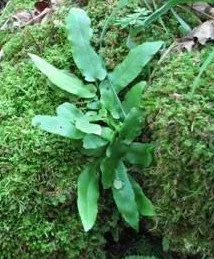
The Board acknowledged the significance of the world’s largest known colony of American Harts Tongue Fern on the quarry property.
Environmentalists are renewing their call to have the species listed as threatened or endangered under the Endangered Species Act.
-30-
For more information, or to arrange an interview, contact: Stephanie Kohls, Communications Director, Environmental Defence, 416-323-9521 ext. 232; 647-280-9521 (cell); skohls@environmentaldefence.ca
Black Out Speak Out: Take Action
wp-content/uploads/2012/06/website_en2.jpg
Right now, Parliament is pushing through a bill to weaken many of the country's most important environmental protection measures and silence the voices of all Canadians who seek to defend nature. Today it's our voice; tomorrow it could be yours. Here are the top five reasons to Speak Out:
- Charities are being targeted. The government is adding $8 million in new funding for the Canada Revenue Agency to audit charities like environmental groups in spite of the fact they have simply exercised their legal right to advocate for things like laws to fight global warming. This will have a chilling effect on democratic debate. What's more, under these new laws, citizen groups will likely be shut out of environmental reviews of big projects like oil pipelines. Key government agencies with expertise will also have less input. Well-funded backroom lobbyists and political operatives will have greater influence.
- Canadians' participation in Parliament is being disrespected. Instead of following the established process for making sweeping changes, which allows for thorough public debate, these changes are being shoehorned into a massive budget law. This drastically reduces the amount of consultation on a whole variety of topics. These changes will have serious consequences for all Canadians and our voices are not being heard.
- Nature is being put at serious risk. The Canadian Environmental Assessment Act is being replaced with a totally new law. Under it, Ottawa will play a much smaller role in protecting people from harmful projects, while retaining the right to basically rubber-stamp big projects that powerful oil interests want. And the new weaker rules are being applied to review processes that are already underway–so projects like the Enbridge Northern Gateway tankers and pipeline project could get an easier ride.
- Too much power is in the hands of too few. The National Energy Board will no longer be able to say "no" to oil pipeline projects that are not in the public interest. Politicians in Cabinet will be able to overrule the expert energy regulator if powerful oil interests don't like its decision. Permits that allow the destruction of habitat for fish and threatened or endangered species will now be issued behind closed doors without public scrutiny, if they are required at all.
- Trusted advisors to government that provide high-quality analysis for balanced policy are being ignored. The 2012 budget eliminates the funding for the last remaining government advisory body – the National Roundtable on the Environment and Economy (NRTEE). The NRTEE provides analysis and advice on how to meet our international commitments to reducing greenhouse gas pollution. Many lakes, rivers and streams that provide habitat to fish will be at greater risk of destruction because of changes to the Fisheries Act contained within the budget implementation bill. Healthy fish habitat is important for fish and for the people and businesses that depend on them.
For more information, please download a list of the TOP 10 items of environmental concern in the 2012 budget bill (Bill C-38).
Sarah Harmer's Huffington Post Article: Singing for the Salamander
Huffington Post, The Blog Authored by Sarah Harmer
For the past three months, my dedicated lawyer David Donnelly, Protecting Escarpment Rural Land ("PERL"), and I have been trying to obtain a Ministry of Natural Resources (MNR) biologist's written opinion on whether a quarry company's mitigation plan would protect the breeding ponds and wetlands of the Federally Endangered Jefferson Salamanders that are on our family farm.
On March 27, 2012, I was compelled to appeal an absurd decision of the MNR to deny my earlier Freedom of Information (FOI) request for this opinion.
Only a few hundred metres away from these ultra-sensitive and ostensibly "protected" breeding ponds is the site of the proposed Nelson Aggregate Co. below-water-table quarry, which would very likely undermine the hydrogeology of the entire area, including the Grindstone Creek Headwaters Provincially Significant Wetland Complex. If the water goes away, so do the salamanders (the Jeffies, as they are affectionately known).
Our farm, atop the Niagara Escarpment's Mount Nemo in North Burlington, is part of a UNESCO World Biosphere Reserve. It is one of only 27 Jefferson Salamander habitats left in Ontario, indeed in all of Canada. Clearly this is the wrong place for a massive extraction industry.
But Nelson Aggregate Co. didn't even bother to ask us if they could come on our property to monitor the wetlands if the quarry gets approved. PERL's expert biologist Dave Stephenson is skeptical that a professional MNR Species-at-Risk biologist would have sufficient confidence in a mitigation strategy when access to the ponds has not been sought and is so uncertain.
What if the MNR biologist still has concerns? Shouldn't the joint board reviewing this quarry licence application hear them?
In their FOI decision of March 6, the MNR did show a record of the information we had requested, but decided to deny me access to it on the basis that "disclosure of the record would reveal recommendations of a public servant." When I read those words I thought, "How ironic to hide information from someone who is called a servant of the public." In the next few months I'll find out if Ontario's Information and Privacy Commissioner agrees with me: MNR bureaucrats should not be overriding the public interest and hiding information critical to the protection of an endangered species. Just as importantly, a government agency should not be having private meetings with a corporation to review remediation plans for other people's property without extending to the landowner the same participatory rights.
Seven years ago, citizens of the Mount Nemo area formed PERL, a community group that has represented the interests of the community and sponsored crucial science about what is at risk on Mount Nemo. After incredible amounts of volunteer work and dedication, these citizens, including my family, should not be in this position now: The MNR could have disclosed at the hearing the biologist's opinion without all this wasted time and energy. We filed a Motion to Disclose this evidence during the hearing, and I swore an affidavit stating how critical this evidence was to our case. When our motion was denied, our legal team had to file the FOI, involving more precious time and resources.
When this FOI request was just recently denied, I had to engage lawyer Alexandra Mayeski, an FOI appeal legal expert and, coincidently, a childhood schoolmate and neighbour whom I rode the school bus with as a kid. Synchronicity at work.
The story goes like this. PERL has been fighting the proposed Nelson Aggregate Co. quarry on Mount Nemo since 2005. For years, the MNR agreed with PERL that the Significant Woodlands, Threatened and endangered species habitats, Provincially Significant Wetlands, source water hydrogeology, and prime agricultural lands on the proposed site added up to a big negative for the quarry proposal. The Region of Halton, City of Burlington, Halton Region Conservation Authority and the Niagara Escarpment Commission all opposed the quarry too.
So did important allies like Environmental Defence, Lake Ontario Waterkeeper, David Suzuki Foundation, Coalition on the Niagara Escarpment (CONE) and many others.
Then, on the first day of the Joint Board Hearing, the MNR did an about-face and supported the quarry! Starting on November 19, 2010, the Joint Board Hearing heard evidence from dozens of experts from all the public agencies listed above, and experts from PERL. We all opposed the quarry proposal and provided testimony to the same.
But what of the independent MNR experts who had filed witness statements critical of the project? We decided to summons them, to cross-examine them on whether it was experts or policy "suits" that decided to do a "180" and support the quarry in this clearly inappropriate location.
One of the experts that was summoned was John Pisapio, species-at-risk biologist for the MNR. He's also on the Jefferson Salamander Recovery Team. At the time of his testimony, Nelson had no clear strategy for protecting the wetlands and breeding ponds on my family farm if something went wrong with the quarry. For example, if, as predicted by experts, the under-draining of the whole area lowered the water table so that the water in the wetlands leaked out from underneath and the wetlands dried up.
Pisapio's evidence at the hearing in October, 2011 was pretty devastating to the proposal -- he testified he had concerns about the inadequate monitoring and mitigation measures proposed in Nelson's Adaptive Management Plan (AMP) for the Harmer Wetlands and the Jefferson salamanders in particular.
This was a blockbuster moment!
Did Nelson and the MNR call PERL and my family to talk about what to do next? No.
Instead, MNR staff collaborated with Nelson to come up with a new mitigation plan involving the wetlands on our property without consulting me or my family. Nelson now says they'll install gauges (monitors) and run pipes onto our property, if the ponds go dry. Right, we're supposed to trust Nelson after they transplanted and subsequently killed endangered butternut trees, dredged and drained wetlands, and were convicted of illegally placing fill in the Grindstone Creek Provincially Significant Wetland Complex? I don't think so.
A very telling part of the situation is this: the planning expert for Nelson, Brian Zeman, testified at the hearing that when MNR officials were discussing the new Jefferson mitigation plan, he was the one who was the minute-taker. Separation between corporate interest and our own government has never been more difficult for me to discern.
Thankfully, the law may be on our side. Even if the Information and Privacy Commissioner says the biologist's opinion qualifies as being protected from disclosure, we can argue that the records are subject to the compelling public interest override provision under Section 23 of Ontario's Freedom of Information and Protection of Privacy Act. Since the records we're seeking relate to mitigation strategies for the Harmer Wetlands known to contain a provincially Endangered Species, this fits with previous Orders of the Information and Privacy Commissioner's Office that have recognized that the public has an interest, from the perspective of protecting the natural environment and protecting health and safety, in seeing that government institutions conduct a full and fair assessment before granting environmental approvals, including approvals under the Aggregate Resources Act.
Do we really need to wait months for this decision? C'mon Premier McGuinty, play fair! Give us the damn biologist's opinion.
http://www.huffingtonpost.ca/sarah-harmer/sarah-harmer_b_1400873.html?ref=canada
SHELLSHOCKED: Canadian Premiere hosted by Donnelly Law and Rodney's Oyster House
ENVIRONMENTAL DEFENCE
For Immediate Release: March 26, 2012
Shellshocked: Saving Oysters to Save Ourselves Canadian Premiere on April 16 at Rodney's Oyster House in Toronto: Filmmaker and environmental experts discuss the importance of protecting North American waterways and oyster culture
Toronto, ON – On the heels of its successful U.S. debut, the Canadian premiere of Shellshocked: Saving Oysters to Save Ourselves will take place at Rodney's Oyster House on April 16th 2012 at 6:00PM. The screening will be followed by a Q&A with Director Emily Driscoll, and environmentalist and prominent Oysterman Rodney T. Clark. At the event, guests will be treated to a specially prepared oyster reception and tasting. Proceeds raised will be donated to Environmental Defence to further its work to protect and improve Canada's water ecosystems.
Shellshocked: Saving Oysters to Save Ourselves Canadian Premiere
WHEN: Monday, April 16th, 2012
WHERE: At Rodney’s Oyster House at 469 King Street West, Toronto
TIME: Doors open at 6PM, screening at 6:45PM
WHAT: Film screening and Q&A, featuring filmmaker Emily Driscoll, and environmentalist and "the Oysterman" Rodney T. Clark
PHOTO OPS: Great shots of oyster shucking, Emily Driscoll, Rodney T. Clark, guests enjoying oysters and bubbly
TICKETS: $77.50 per person. Includes oyster reception and tasting. Call 416-363-8105 ext.0 for ticket purchases or in-person at Rodney's Oyster House. NOTE: all proceeds are donated to Environmental Defence
INTERVIEW OPPORTUNITIES: Emily Driscoll, Director and Filmmaker, Rodney Clark, “the Oysterman” and owner of Rodney's Oyster House, and Environmental Defence Spokesperson, David Donnelly.
ABOUT THE FILM (www.shellshockedmovie.com): SHELLSHOCKED follows efforts to prevent the extinction of wild oysters, a keystone species that keeps our oceans healthy by filtering water and engineering ecosystems. Today, because of over-fishing and pollution, wild oyster reefs have been declared the most severely impacted marine habitat on earth and are functionally extinct. Now scientists, government officials, artists and environmentalists are fighting to bring oysters back to New York Harbor – the former oyster capital of the world.
ABOUT THE DIRECTOR (www.emilydriscollonline.com): Emily Driscoll is a science and nature documentary producer. Her previous documentary BUGGED: The Race to Eradicate the Asian Longhorned Beetle aired on PBS stations and screened at the Department of the Interior. She has a master’s degree from NYU in science journalism and is working toward a master’s degree in science documentary production from NYU’s Gallatin School of Individualized Study. She’s written articles and produced videos for a number of science news publications. Emily also plays and produces videos about competitive badminton.
ABOUT RODNEY'S OYSTER HOUSE (rodneysoysterhouse.com): Rodney’s Oyster House, located at 469 King Street West is an iconic Toronto restaurant dedicated to preserving and celebrating oyster culture. Rodney Clark, "the Oysterman," has presented oysters in downtown Toronto since the late 1970's, and helms one of the Great Oyster Houses of North America. He has taken a leading role in promoting sustainable aquaculture with the opening of Rodney’s Oyster Depot on Prince Edward Island, over five years ago, and will talk about sustainable Oystering and the future of the oyster in North America, from the Rodney's perspective.
ABOUT ENVIRONMENTAL DEFENCE (www.environmentaldefence.ca): Environmental Defence is Canada's most effective environmental action organization. We challenge, and inspire change in government, business and people to ensure a greener, healthier and prosperous life for all.
-30-
For more information or to arrange an interview, please contact: Stephanie Kohls, Environmental Defence, 416-323-9521 ext. 232; 647-280-9521 (cell); skohls@environmentaldefence.ca
Environment Defence Weighs in on MNR Refusal to Disclose Material to PERL
On February 28, 2012, Dr. Rick Smith, Executive Director of Environmental Defence wrote a strong letter to Minister of Natural Resources, the Hon. Michael Gravelle, demanding the release of relevant MNR information about the Nelson Aggregate Co. proposed Adaptive Management Plan as it relates to the Harmer property. The required information is about an MNR decision that pertains almost exclusively to the Harmer property, not Nelson’s. As Dr. Smith wrote, "[t]o withhold information vital to PERL’s interest, while allowing complete access to Nelson, is unfair and contrary to the principles of open and transparent government."
Read the full letter here: Letter from Dr. Rick Smith to Minister Gravelle
A Revolution is Brewing in Green Building and Community Design
By David Donnelly & Lia Magi Published in: Sustainable Builder Magazine, Special Showcase Issue 2011
Ontario is a world leader in setting boundaries for new Greenfield developments. Paradoxically, Southern Ontario is also attracting rapid population growth, requiring the construction of one million new homes that threaten thousands of hectares of prime farmland and wildlife habitat.
With costly and time-consuming land use battles between environmentalists, developers, and municipalities looming on the horizon, our firm was asked to provide a model for new Greenfield development.
Our clients, developers Mattamy Homes and OPDI, adopted a simple threshold challenge: “Environmentalists are very good at telling developers what not to build; let’s try inventing a sustainable community design we can all agree on.”
After one year of stakeholder consultations, we’ve produced a made-in-Ontario new Greenfield Sustainable Building and Community Design Standard (“Greenfield Standard”), with the goal of making it law in 2012. Recent examples, like the Greenbelt, Green Energy Act, and Lake Simcoe Protection Act, show that Ontario has the pedigree for leadership and decisive action to protect the environment and create good, green jobs.
Our proposed new Greenfield Standard is wonderfully simple: 1. Build new suburban communities at an urban standard. That is, use 55 per cent of the land for development, not the current 45 per cent that spreads development out too thinly; 2. Require new units to reduce energy and water consumption by 50 per cent from current standards; 3. Cap development levies on new lots/units at a target density (75 jobs and residents/hectare) and, 4. Extend tax incentive financing to developers that meet the Greenfield Standard thresholds.
European visitors to Ontario are often surprised by the amount of land we use up in creating new communities, for roads, lots, schools, and infrastructure. As visitors leave the lush, compact neighbourhoods of Leslieville, Parkdale, and the Annex, they’re left wondering why we require developers to surrender so much of their land for infrastructure, instead of building to the desired form of many of Toronto’s most successful and up-and-coming neighbourhoods.

Currently, developers must surrender 55 per cent of their land in “new town” plans, leaving only 45 per cent for commercial and residential buildings. This ratio has produced the widely spaced, poorly connected suburban developments that dominate the North American urban landscape. By building at a higher density and more compactly, we can use more land for housing and employment, instead of infrastructure. Building real communities with nearby employment makes for transit-dependent villages (where it’s better to take the bus) rather than transit- supportive villages, where the bus is merely another option.
In addition, simply by shrinking massive road right-of-ways and high-school yards, and cutting back on public infrastructure land consumption and unused greenspace to free more private land for development, developers can off-set most of the additional costs for introducing bio-swales, and district heating and cooling. Ontario’s antiquated habit of building grand boulevards (or heat islands) in residential areas to accommodate two oxen turning will need to be revised; the Greenfield Standard establishes targets for that.
Designing people-friendly streets requires building single-loaded roads adjacent to natural features and parks; reducing block dimensions, where no side is longer than 250 metres to encourage pedestrian activity; reducing road widths that adopt new lane designs and bike lanes; and adding green linkages. In addition, we need to treat clean water as if it were a valuable commodity, because it is.
Less than 50 per cent of the drinking water we use actually requires treating. Treating water is an expensive process, compared to reusing waste water. Watering lawns, putting out fires, and flushing toilets are some of the uses of water that can be better served by grey-water and rain water. The United Nations urges countries to “treat water to no higher quality than needed.” This makes a lot of sense in Ontario, particularly in urbanizing watersheds that do not have access to the Great Lakes.

Ontario’s Green Energy Act provides the right incentives for existing home-owners to “go green,” but does not require new communities to be net-zero energy consumers. Our standard does that, and it requires that LED street- lighting and zero-net energy should be required by 2017, along with making streets oriented north-south and lots east-west, in order to optimize southern solar gain and to minimize western solar heat gain to dwelling units.
At the building lot level, the one-tree-per-family allotment needs to be replaced with a 62-trees-per-hectare (25-trees-per-acre) standard, creating an urban canopy (over narrower roads). Water-guzzling lawns need to be replaced by drought-resistant xeriscaping, with nearby common areas and parks that encourage social interaction, rather than fenced-in isolation.
Locally sourced building materials, like sand and stone, can shrink the carbon footprint of construction, when compared to imported finished stone from China and India.
To level the playing field, so to speak, Greenfield Standard compliant communities should be allowed to finance the “green” elements of the design (e.g. storm water, district heating, and cooling, etc.), by leveraging the enormous long-term savings to the host municipality with tax incentive financing (TIF), and local improvement charges (LIC).
We need to act fast on this new standard. The Greater Toronto Area is consistently ranked in the top three fastest-growing communities in North America (according to the Neptis Foundation). Given our projected growth targets, maintaining the development of the status quo would consume more than 1,000 km2 of prime farmland in a little more than 25 years.
In Ontario, creating a new Greenfield Standard is not an academic exercise for some far-off time target. For example, in the coming weeks, new growth will be allocated in Simcoe County. The province projects the Simcoe Area will grow by nearly 230,000 residents, to a total population of about 667,000 by 2031, in addition to a forecast of 73,300 new jobs by 2031. Simcoe County has maintained Western union online that it needs even more population increases.
The environmentalists of Campaign Lake Simcoe broke the ice by requesting that future population allocation in Simcoe County be awarded only to communities built to a new, higher Greenfield Standard.
There are two additional benefits of proceeding with a Greenfield Standard collaboration.
First, both the development and the environmental communities are in the early stages of a changing of the guard, as the resource- hungry baby boomer generation begins retiring. Now is the perfect time to introduce closer collaboration between the current and the next generation of modern-era builders and environmentalists – groups that have been too long at each other’s throats.
And there’s reason for optimism. On June 1, 2011, our client Environmental Defence and Holcim Canada (and its Canadian affiliate Dufferin Aggregates) released a new green gravel standard for Ontario. Named Sustainable and Environmentally Responsible Aggregate, (nick-named “Green Gravel”), one of the primary purposes of Green Gravel is to offer environmentally conscious municipalities and consumers the ability to leverage their purchasing power and request responsibly sourced aggregate materials, including green cement and ready-mix concrete in new communities.
We can learn from the above example. The private sector and environmentalists can collaborate effectively in the land-use planning, and the community space and building design sectors to create sustainable communities.
Finally, there is another larger benefit to the implementation of the Greenfield Standard and allocating new growth-only in areas that meet or exceed its conditions. Rewarding sustainable development and community design over traditional urban growth decision-making will dispel much of the cynicism and mystery that normally follows the awarding of a new population allocation. These decisions too often appear to be the result of good lobbying or political expediency, not sustainability thinking.
Ontario has a tremendous record on which to build. Successive provincial governments have protected the Oak Ridges Moraine from further development, created a 1.8-million acre protected Greenbelt (the world’s best), and enshrined in the Places to Grow Act an intensification target of 40 per cent new growth in existing urban areas, versus 60 per cent growth in new Greenfield development.
Ontario is the birthplace of post-war, sustainable Greenfield suburban planning and design. Given the enormous development pressure we’re currently facing, it’s time for our builders, citizens, politicians, also environmentalists to lead again. As my wise oysterman friend often reminds me, “We all fish off the same wharf.”
David R. Donnelly, principal of Donnelly Law, is one of Canada’s leading environmental lawyers and advocates for smart growth. He has acted as legal advisor and counsel to Environmental Defence since 2000. Lia Magi is an associate at Donnelly Law, practising in the areas of environmental law, land-use planning, and litigation.
Ethan Hawke Joins Fight to Protect Gulf of St. Lawrence from Oil and Gas Drilling
November 23, 2011 – The battle to protect the Gulf of St. Lawrence from oil and gas development received a major boost this week when American actor, writer and director Ethan Hawke benevolently lent his support to the cause. Mr. Hawke, a landowner along the Gulf in Nova Scotia, was approached by coastal landowners, fishermen, Mi’kmaq leaders and concerned citizens who felt their voices were not being heard. Mr. Hawke joins a growing list of celebrities including Dr. David Suzuki, author Farley Mowat, actor and director Jason Priestley, and music composer Philip Glass who have also spoken out in support of a moratorium on offshore oil and gas development in the Gulf of St. Lawrence. “The Gulf of St. Lawrence is truly unique in its beauty, culture and biodiversity; I feel it is important to support my east coast neighbours in their demand for a moratorium,” explains Mr. Hawke. “We should take every measure possible to avoid making the same mistakes that were made with the Gulf of Mexico and preserve these precious renewable marine resources for future generations. The time has come to take action on this important issue before it is too late.”
The David Suzuki Foundation, in collaboration with Save Our Seas and Shores Coalition and with the support of Mr. Hawke, is asking Canadian citizens to take action by demanding a moratorium on offshore oil and gas drilling in the Gulf.
“Thousands of First Nations, Quebecois, Acadian and Gaelic coastal communities have historic precedence in these waters and have great interest in wanting to protect the Gulf’s multi-billion dollar renewable fishery and tourism industries,” affirms Mary Gorman, spokesperson for Save our Seas and Shores Coalition. “It would be foolish to consider risking a renewable global marine food supply that has sustained us for centuries, only to exploit unnecessary fossil fuels.”
Both Quebec and Newfoundland are currently exploring the possibility of drilling oil and gas in the Gulf of St. Lawrence. The province of Quebec, now under provincial moratorium, is in the process of conducting public consultations to assess the risk factors involved with oil and gas exploitation in the Gulf. The situation in Newfoundland has become increasingly alarming, with the province currently poised to move forward with an exploratory drilling at the controversial Old Harry prospect, located only 6km from Quebec’s jurisdiction, as early as next year. Similar attempts made by Nova Scotia to exploit the Gulf were halted a decade ago.
“The Gulf of St. Lawrence is a single body of water that should not be divided by man-made borders,” states Dr. Jean-Patrick Toussaint of the David Suzuki Foundation. “The Gulf is home to more than 2,200 marine species which spawn, nurse and migrate there year-round. Exploratory drilling could seriously impact the feeding and migration of fish like Atlantic salmon, herring, mackerel and cod as well as marine mammals like the endangered blue whale.”
Earlier this summer, numerous coastal communities and environmental groups asked federal Minister of the Environment Peter Kent to take leadership in overseeing the environmental implications and risks of permitting oil and gas drilling in the Gulf. However, the federal government ultimately delegated this responsibility to an unelected offshore provincial petroleum board.
“We are delighted and grateful to have Ethan Hawke graciously accept to support the battle to protect our Gulf,” adds Ms. Gorman. “We hope that his public support will help draw greater attention to an issue that could potentially impact the coastlines and economy of all five provinces bordering the Gulf, and which requires critical action.”
Concerned individuals and groups can sign the petition to demand a moratorium on oil and gas drilling in the Gulf of St. Lawrence by visiting the David Suzuki website: http://action.davidsuzuki.org/st-lawrence
- 30 - For more information, please contact: Manon Dubois, Communications Specialist David Suzuki Foundation mdubois@davidsuzuki.org, 514.679.0821 Mary Gorman Save Our Seas and Shores Coalition mjgorman@ns.sympatico.ca, 902.926.2128
Harmer and PERL Rock “Public Day” at Mount Nemo Quarry Hearing
Community concerns dominate Nelson Aggregates Burlington hearing
Burlington, ON – Canadian singer-songwriter Sarah Harmer, Roger Goulet, executive director, Protecting Escarpment Rural Land (PERL), concerned local residents and representatives of environmental groups testified today against the proposed 23-million tonne Nelson Aggregate quarry licence application.
“In the midst of a public review, Nelson Aggregate with a host of ecological and hydrogeology experts on retainer, dredged and drained Provincially Significant Wetlands, and unsuccessfully transplanted endangered trees from their habitat,” said Harmer, co-Founder of PERL and songwriter of the iconic Canadian hit, Escarpment Blues. “There is a real element of trust and confidence that is missing here.”
“Mount Nemo is the wrong place for another destructive, below water table quarry. The environmentally sensitive features and functions of the Mount Nemo plateau must be formally recognized and re-designated accordingly, using the latest science, current regulations and standards, and applying the Precautionary Principle,” said Goulet, executive director of PERL.
“It is inconceivable that anyone would think of quarrying this UNESCO World Biosphere Reserve. Who would consider quarrying the Great Wall of China?” Isabelle Harmer testified, a 41 year resident of Mount Nemo.
“Extracting the aggregate will destroy the ability of Mount Nemo to continue to be a fresh water collector in the future. The result could be catastrophic for future generations in short supply of fresh water to drink,” said Bob Patrick, President of Coalition on the Niagara Escarpment.
Numerous residents around the quarry complained large blasts had cracked the walls of their homes. They also stated that dust from the quarry was everywhere including their roads and properties and that the constant drones of heavy trucks often disturbed early morning sleep.
Harmer and other witnesses called on the province to heed the call of the Environmental Commissioner to establish a conservation plan for protecting and siting strategy for locating new aggregate pits and quarries, leading to too many random and localized fights over new quarries.
The hearing is scheduled to finish on December 14, 2011.
ABOUT ENVIRONMENTAL DEFENCE (environmentaldefence.ca): We are Canada's most effective environmental action organization. We challenge, and inspire change in government, business and people to ensure a greener, healthier and prosperous life for all.
ABOUT PERL: Protecting Escarpment Rural Land is involved in a number of initiatives to help protect the Niagara Escarpment for future generations. PERL retained Order of Canada architect Douglas Cardinal to help it devise a “Vision for Mount Nemo” that would allow Nemo’s industrial past to be transformed into a sustainable, ecological future.
-30-
For more information or to arrange an interview, please contact: Stephanie Kohls, Environmental Defence, (416) 323-9521, ext. 232 or (647) 280-9521(cell), skohls@environmentaldefence.ca
OMB Hears from Conservation Biology Expert at Nelson Quarry Hearing
Dr. Reed Noss Leader in Oak Ridges Moraine Fight and Greenbelt Creation
OMB Hears from Conservation Biology Expert at Nelson Quarry Hearing: Dr. Reed Noss Leader in Oak Ridges Moraine Fight and Greenbelt Creation
Burlington, ON—Dr. Reed Noss, the past President of the Society for Conservation Biology and world leading author on the science and planning of wildlife corridors, testified on October 18, 2011 that the Niagara Escarpment is globally significant and expressed concerns that development is significantly fragmenting its landscape, including the Mount Nemo area.
The proposed Nelson Aggregates Inc. 43 hectare, 23-million tonne quarry in Burlington is opposed by Environmental Defence and Protecting Escarpment Rural Land (“PERL”).
“Of all the Biosphere Reserves I’ve spent time in, the Niagara Escarpment is the most modified, which is why I’m concerned that we’re reaching or have reached a threshold that jeopardizes the species that require sufficient connectivity across the Mount Nemo Plateau,” Noss testified.
Noss said he was “disappointed” in UNESCO for not working closer with the Niagara Escarpment Commission (NEC) to better identify necessary protection areas like conservation “core” areas, connection corridors, buffers and vital life-giving water supplies.
“What a great day it was for the Escarpment to hear from the professor that helped save the Oak Ridges Moraine that it’s time to save Mount Nemo, before it’s too late,” said Dr. Rick Smith, Executive Director, Environmental Defence.
“Whether it’s former Premier Bill Davis or Dr. Noss, there’s a growing consensus that the Niagara Escarpment Plan is long overdue for a serious update to bring it in line with current ecological thinking,” said Sarah Harmer, co-founder of PERL.
According to Noss, southern Ontario is “topographically challenged,” meaning relatively flat, which limits the biodiversity of species that occur. The Escarpment, its cliff faces, wetlands, and forests gives species an advantage to adapt to climate change. In other words, the Niagara Escarpment offers an opportunity for a climate corridor.
Noss was critical of the Nelson Aggregate ecological assessment for not being adequate, which included “numerous uncertainties,” and for not using proper scientific methodologies. He also stated that the Nelson Aggregate Adaptive Management Plan (AMP) does not follow standard protocols for an AMP.
Dr. Noss is not alone in this opinion. The expert planning and biology staff members from Conservation Halton, Region of Halton and the City of Burlington have all expressed serious concerns relating to the loss of provincially significant wetlands and significant woodlands; species at risk including the Jefferson Salamander, the Butternut and the Bobolink; changes in flow contribution to downstream watercourses and associated impacts on fisheries; uncertainty relating to assurance of long term flow contribution to the downstream watercourses; protection of private wells; the adequacy of the AMPs; and issues related to climate change and the rehabilitation plan.
ABOUT ENVIRONMENTAL DEFENCE (www.environmentaldefence.ca): We are Canada's most effective environmental action organization. We challenge, and inspire change in government, business and people to ensure a greener, healthier and prosperous life for all.
ABOUT PERL: Protecting Escarpment Rural Land is involved in a number of initiatives to help protect the Niagara Escarpment for future generations. PERL retained Order of Canada architect Douglas Cardinal to help it devise a “Vision for Mount Nemo” that would allow Nemo’s industrial past to be transformed into a sustainable, ecological future.
-30-
For more information or to arrange an interview, please contact: Stephanie Kohls, Environmental Defence, 416-323-9521 ext. 232; 647-280-9521 (cell),skohls@environmentaldefence.ca
Momentum Continues to Grow for Socially and Environmentally Responsible Aggregates (SERA)
Release of Draft Aggregate Standards Draws Broad Spectrum of Support TORONTO, June 7, 2011 /CNW/ - The Canada Green Building Council, the Mayor of Oakville, and Mattamy Development Corporation are just three of many eminent groups speaking out in support of the Draft SERA Standards that were released last week.
On June 1, 2011 the Draft SERA Standards were launched as a starting point in developing a world-class voluntary environmental and social certification system for Ontario's aggregate industry. While the draft standards may have initially arisen out of negotiations between Holcim Inc. and Environmental Defence, according to Michael Fenn, SERA's Interim Chair, "It is SERA's responsibility now to carry the standards forward. Our number one job is to ensure that a broader group of industry, community, environmental and First Nations interests have a say in fleshing them out and finalizing them".
In addition to engaging key stakeholders in finalizing the standards, SERA will also be soliciting input on the design of an independent auditing system that will be used to assess compliance against the standards. According to Lorne Johnson, the new Executive Director of SERA, "Having tough but achievable standards is only half the battle for us. To be truly credible, SERA is going to need a rigorous and independent auditing system with audit teams that are fully arms-length from the aggregate operations they are assessing".
Yesterday BRE Global, an independent and impartial, research-based consultancy, testing and training organization announced its agreement with SERA to support the ongoing development Coinstar point of a Canadian responsible sourcing standard for aggregates. Support for the SERA certification system continues today from industry and environmental leaders across Ontario.
What others are saying about SERA:
Gary Gregoris, Senior VP, Mattamy Development Corporation
"Mattamy Homes supports construction industry initiatives that contribute to a more sustainable future and healthier planet. The collaborative effort between Environmental Defence and Holcim Canada to create standards for responsibly sourced aggregate shows leadership within the industry in addressing environmental impacts. We support the direction of the initiative and look forward to working with SERA moving forward."
Silvio DeGasperis, TACC Construction Ltd.
It is great to see the industry come together with environmental NGOs and other stakeholders to put something concrete in place. These standards are finally breaking the status quo and pushing the industry to look at the way we do business and make sure it is sustainable for the long-term.
Gord Miller, Environmental Commissioner of Ontario
"Over the years my annual reports have emphasized that Ontario's process to approve and regulate aggregate operations needs improvement. With the formation of SERA and the Draft SERA Standards I am encouraged to see traditional adversaries working together to develop an independently auditable certification system that has the power to change the way we think about aggregates."
Rob Burton, Mayor, Oakville
"Oakville has been pleased to be recognized for its environmental leadership in natural heritage protection and progressive land use planning. SERA could play a significant role in reducing the ecological footprint of the aggregate industry and making Oakville a green building centre."
Linda Jeffrey, MPP and Minister of Natural Resources
"It is a positive step forward for Ontarians when the business community and environmental organizations come together to work towards a common solution. The efforts by Holcim Canada and Environmental Defence clearly underscore the importance, for the balance between economic prosperity and long term sustainability of our environment and natural resources. Your initiative will be a nice complement to the rigorous regulatory framework under the Aggregate Resources Act which is administered by my Ministry."
Peter Tabuns, MPP and Ontario NDP Environment Critic
"The aggregate debate is like the other environmental debates and conflicts that our society deals with. Bringing together historic adversaries to find a solution makes sense. SERA sets the stage for finding that solution in the aggregate debate and I hope it is successful."
Steve Parish, Mayor, Ajax
"SERA is a real step forward for the aggregate debate in Ontario. Any time traditional adversaries come together and try to cooperate on a world-class solution, this has to be good news. And those who purchase aggregate will be the beneficiary of the SERA effort in that they will have access to a greener, independently certified, product."
Michael McSweeney, President, Cement Association of Canada
"While a reliable long-term supply of aggregates is essential to the country's infrastructure and the cement and concrete industry's viability, the protection of the environment and quality of life for our communities is also of paramount importance. SERA and its standards will provide our industry with a roadmap for meeting or exceeding world-class social and environmental management practice and, as the standards become broadly adopted, provide the public with tangible assurance that we are doing so. We commend our member Holcim Canada, Environmental Defence, and SERA's other founding board members for their leadership in taking this momentous step forward."
Janet Sumner, Executive Director, CPAWS-Wildlands League
"It's all about choice and how to chart a good environmental outcome. Third-party verified environmental and social standards have historically been very successful in offering the private sector and civil society a market-based alternative to navigate controversial resource development questions. SERA's launch of the draft aggregate standards last week is a great first start. We wish SERA the best of luck as it now engages a broader group of interests in helping ensure the standards deliver workable solutions for all stakeholders."
Neill Lanz, Vice President, Clearview Community Coalition
"Having just been through a extensive Ontario Municipal Board hearing, at great expense for both our community group and the proponent, I'm thrilled to see the Draft standards. If the standards translate into even one community group and one proponent avoiding what we just went through, then that is already a big win for everyone."
Stewart Hardacre, President and CEO, Habitat for Humanity Canada
Habitat for Humanity Canada has a philosophy of transforming communities through leadership and collaboration and the new SERA standards embody a similar approach. We are trying to build communities as sustainably as possible, and working with partners like Holcim Canada that are sourcing materials in an environmentally responsible manner is important to us and the communities we build.
Dr. Jacqueline Glass, APRES Responsible Sourcing Network Manager, Loughborough University -
"Being able to reassure customers that the materials they have chosen have been sourced responsibly is a benchmark for any business that wants its sustainability credentials to be taken seriously. This new collaboration, Socially and Environmentally Responsible Aggregates (SERA), between Holcim and Environmental Defence marks a watershed and will undoubtedly propel many organisations in Canada to take stock of their environmental and social practices. By introducing a new standard on responsible sourcing of aggregates, this initiative will raise awareness of sustainability, but will also transform how companies in this sector engage with their communities. This approach brings fresh thinking and hope for a positive future."
Thomas Esakin, Executive Director, Canadian Institute for Environmental Law and Policy
"SERA is a welcome advancement for the responsible sourcing of aggregate materials. In March 2011 CIELAP released a report titled Aggregate Extraction in Ontario: A Strategy for the Future that called for change and improvements on a range of aggregate issues. We are encouraged that the draft SERA standards directly tackle a number of these important issues"
Harvey Jones, President, Grey Matters
"Grey Matters is thrilled by the announcement of the SERA standards. The siting of pits and quarries in Ontario has been one of the largest issue of concern for citizens across the Province for years. Clearly, a more thoughtful approach to resource management is needed. Bravo to Environmental Defence and Holcim for bringing both sides to the table and for creating such a progressive and thoughtful initiative."
Paul Ostrander, President and CEO, Holcim Canada
"Aggregate is an important resource that is vital for building the country's infrastructure. SERA will help the aggregate industry to meet the demand for aggregates while meeting community needs and demonstrating measurable efforts to address the social and environmental impacts of pits and quarries."
Graham Flint, Chairman, Friends of Rural Communities and the Environment (FORCE)
"This is a pleasant surprise! Enhanced evaluation of aggregate sites and operations, as well as moving beyond minimum regulatory compliance are important principles and directions. We look forward to examining the details in the draft SERA standard and to understanding the stakeholder consultation process for involvement and improvement. At first glance though, there seem to be some good elements. The authors are to be congratulated for launching this initiative."
Thomas Mueller, President and CEO, Canada Green Building Council
"We hope that the SERA certification system and management standard will change the way the cement industry sources construction materials across Canada. Adoption of this system will help protect our natural environment from the impacts of resource extraction and involve local communities in the development of long-term management plans."
Derek Hughes, Responsible Sourcing Scheme Manager, BRE Global
"A clear and far-sighted initiative such as SERA demonstrates that Canada, through the activities of Holcim (Canada) Inc. and Environmental Defence, intends to be at the forefront of activities to develop an exciting new sustainability tool bringing significant benefits to a wide range of stakeholders within both industry and society."
Rodney Wilts, Partner, BuildGreen Solutions
"Following an exhaustive online review BuildGreen Solutions is confident to say that we could find nothing that came close to rivaling the draft SERA standards in terms of rigour or comprehensiveness related to aggregate extraction."
Penny Richardson, President, The Coalition of Concerned Citizens of Caledon
"The Coalition of Concerned Citizens of Caledon welcomes the improved industry standards that SERA proposes. This is a real step forward in encouraging long-term planning in the aggregates sector. We are looking forward to exchanging ideas with the SERA Founding Board to ensure that the needs of our community are met."
Jamie Kirkpatrick, Campaigner, Toronto Environmental Alliance
"Toronto Environmental Alliance sees the Draft SERA Standards as a big step forward in the protection of the GTA countryside. TEA, through our Dig Conservation, Not Holes campaign, has been looking for innovative approaches of this nature and we commend Environmental Defence and Holcim for this new approach."
Peter Kendall, Executive Director, Schad Foundation
"The Schad Foundation has a history of supporting projects that protect and restore our natural environment. We are proud to support innovative projects like SERA which will significantly protect and restore wildlife habitat in our most vulnerable areas."
Maia Becker, Vice President, Forest Stewardship Council Canada
"The development of a world-class SERA standard and certification system will provide builders with the tools they need to select environmentally and socially responsible construction materials."
Timothy Gray, Program Director, Ivey Foundation
"The no-go and net-gain approaches proposed by SERA are a huge step forward for both the aggregate industry and other developments in settled landscapes."
About SERA (www.seracanada.ca)
Socially and Environmentally Responsible Aggregates (SERA) is a not-for-profit organization that aims to create, administer and promote widespread support for certification of responsibly sourced construction materials. Its initial focus is on establishing a voluntary certification system to promote responsibly sourced aggregate materials in Ontario, offering operators an innovative way to demonstrate their efforts to recognize the social and environmental expectations of the local community.
__
CNW: http://www.newswire.ca/en/releases/archive/June2011/07/c3549.html
New Path Towards Sustainable and Responsibly Sourced Aggregates Applauded
The establishment of a not-for-profit organization bringing together industry, communities, environmental groups and First Nations organizations to create world-class certification standards raises the bar and signals a new era of collaboration. OTTAWA, June 6, 2011 /CNW/ - The Cement Association of Canada applauded Holcim Canada and Environmental Defence today for their visionary collaboration in establishing the not-for-profit organization Socially and Environmentally Responsible Aggregates ("SERA") previously announced on June 1, 2011 and, in so doing, charting a new course for sustainable and environmentally responsible aggregate extraction and consumption.
SERA will create world-class voluntary certification standards for responsibly sourced aggregates and promote their widespread adoption, initially focusing its efforts in Ontario. As it moves forward, it will actively engage with a broader group of aggregate operators, community and environmental groups and First Nations organizations to create the standards, providing an innovative forum for addressing the social and environmental expectations of local communities.
"While a reliable long-term supply of aggregates is essential to the country's infrastructure and the cement and concrete industry's viability, the protection of the environment and quality of life for our communities is also of paramount importance," said Cement Association of Canada President and CEO, Michael McSweeney. "SERA and its standards will provide our industry with a roadmap for meeting or exceeding world-class social and environmental management practice and, as the standards become broadly adopted, provide the public with tangible assurance that we are doing so. We commend our member Holcim Canada, Environmental Defence, and SERA's other founding board members for their leadership in taking this momentous step forward."
The SERA Standards are expected to have a transformative effect on the management of aggregate materials by contributing to the achievement of:
- A reliable long-term supply of aggregate materials that will be socially and environmentally responsibly sourced;
- The protection of our landscape's most ecologically and hydrologically important natural areas;
- The meaningful engagement with local communities and First Nations groups before extraction is licensed and throughout the lifecycle of operations;
- A defined time limit for extraction and phase out plans that incorporate communities' interests;
- The ability of government and private purchasers to leverage their buying power and request responsibly sourced aggregate materials to meet the requirements of new, green building standards and policies; and
- A market-based tool for government regulators that recognizes sites that address the social, environmental and water expectations of the local community.
About the Cement Association of Canada The Cement Association of Canada (CAC) is the voice of Canada's cement manufacturing industry, a vital contributor to the country's economy and infrastructure. The industry provides a reliable, domestic supply of cement required to build Canada's critical infrastructure including our network of roads and bridges, homes and buildings, waterworks and dams. The CAC and its members are committed to the environmentally responsible manufacturing of cement and concrete products. CAC's members are CalPortland, Ciment Québec, ESSROC Italcementi Group, Federal White Cement Ltd., Holcim Canada, Lafarge Canada, Lehigh Hanson Canada and St Marys Cement Group — companies whose parent corporations belong to the World Business Council for Sustainable Development's Cement Sustainability Initiative. The cement and concrete industry contributes more than $8 billion in annual sales and over 27,000 direct and indirect jobs to the Canadian economy. For more information, please visit www.cement.ca.
--
CNW: http://www.newswire.ca/en/releases/archive/June2011/06/c2996.html
Quarry operator seeks environmental seal of approval
MARTIN MITTELSTAEDT
Globe and Mail - Published Wednesday, Jun. 01, 2011
First came lumber certified as environmentally friendly, then seafood. Now a move is afoot to give gravel – blasted out of open-pit mines, then hauled out using diesel-belching trucks – the green seal of approval.
In a move that will test the outer limits of the green-products concept, the Canadian unit of Holcim Ltd., the Swiss-based cement giant, and advocacy group Environmental Defence will announce Wednesday that they’re establishing a certification standard for aggregates, which they claim would be the toughest in the world in setting stringent conditions on quarrying.
The effort by the company is an attempt to defuse some of the vociferous opposition from community groups that typically accompanies almost all new gravel pits being proposed in Canada, and at many existing quarries.
Even though aggregates are needed for roads and all infrastructure projects using cement, quarries are highly unpopular. It usually takes years of costly wrangling before provincial regulators or municipalities will issue approvals, if they do so at all, largely owing to opposition by neighbouring property owners over dust, noise, and landscape destruction concerns.
In the past year, Ontario regulators have rejected two proposed quarries, one in the Caledon area on the outskirts of Toronto and another near Guelph.
“We see this as shifting away from the combative nature of where the industry is with various stakeholders,” says Bill Galloway, senior vice-president at Holcim (Canada) Inc., of the certification approach.
Sustainable rocks may seem like an oxymoron, given that gravel is blasted out of open pit mines, but Mr. Galloway is convinced it’s possible, if quarries are placed in areas where the potential for environmental harm is minimized and operating practices avoid affecting neighbouring land owners.
“I definitely believe that you can be green,” Mr. Galloway says.
Among the requirements for green gravel, the certification standard would place environmentally sensitive areas off-limits for quarries, would force companies to establish new conservation zones up to three times the size of their pits as offsets, would cut greenhouse-gas emissions, and would increase the amount of recycled aggregates they use to cut the need for virgin rocks. These requirements go well beyond current regulatory standards.
Having quarries certified under the proposed standard will lead to “measurably greener aggregates, aggregate that is mined with much less of an impact on the landscape,” contends Rick Smith, executive director of Environmental Defence.
He said the stipulation for companies to establish conservation reserves up to three times the size of the area they mine “is a huge step forward.”
Residents who live near the actual quarries, rather than the proposed new conservation zones, might disagree. Opponents of the quarry proposed for the Caledon area, for instance, cited among their concerns increased truck traffic; potential negative effects on local aquifers and ground water; dust, dirt and reduced air quality; the introduction of heavy industry into a quiet rural residential area; and noise from blasting and quarry operations. And it’s not just NIMBYism: Opponents ranged from the town of Caledon and Peel Region to the Ontario Ministry of Natural Resources and the Niagara Escarpment Commission.
Still, product certification has been a boon in forestry, where environmentalists have largely made peace with companies that were once among their biggest adversaries. The certification system is being patterned after the Forest Stewardship Council’s approach to giving lumber a green seal of approval if it comes from woodlands meeting stringent environmental conditions.
Certification has worked in the forestry sector because “consumers want to know what they’re getting is respectable” and companies want to make the environmental initiatives they undertake “part of [their] value proposition” for customers, says Avrim Lazar, president of the Forest Products Association of Canada.
Holcim intends to seek a green label for its 25 quarries and sand and gravel pits in Canada.
The certification process would be overseen by an independent, non-profit entity, Socially and Environmentally Responsible Aggregates, to which all quarry operators in Canada would be able to submit facilities for evaluation.
Mr. Smith says quarries that get a green stamp of approval would likely face much less opposition from environmental groups, like his own, which typically is involved in three to six fights against gravel pits at any one time. “A great amount of the sting would be taken out of this issue if this standard were broadly adopted by the industry,” he contends.
The decision by a major player in the aggregate industry such as Holcim to ink a certification deal with environmentalists comes after several major regulatory setbacks for quarry companies unable to overcome environmental opposition.
Squabbling over gravel isn’t just a factor in densely populated Southern Ontario. Recent fights over pits have also broke out around Calgary, Edmonton, along the Fraser River in the Lower Mainland of British Columbia, and in Nova Scotia.
But it isn’t clear whether having companies meet higher environmental standards would be enough to mollify quarry critics, particularly nearby residents. “Basically nobody wants one of these things close to them. They’re noisy, they’re dusty, they disturb the water [table],” observes Ric Holt, president of Gravel Watch Ontario, an environmental group.
What makes a rock green?
For quarries to be certified as green, under the plan put forward by Environmental Defence and Holcim Ltd., companies would have to meet dozens of exacting conditions, such as:
Staying out of environmentally sensitive lands. This would include valuable agricultural lands, such as the Niagara Peninsula’s wine and tender-fruit areas, protected areas in greenbelts, significant woodlands, endangered species habitat, and provincially significant wetlands.
Creating wildlife habitat: Companies would have to create offsetting new wildlife habitat up to three times the size of their quarry lands.
Reducing greenhouse gas emissions: Existing quarries would have to reduce greenhouse gas emissions by 15 per cent below 1990 levels.
Recycling: Companies would have to minimize quarrying of fresh rocks through increased recycling of concrete and aggregates. This would be contingent on provinces raising standards for the recycled content of aggregate-based building materials.
Improving water: Quarry companies would have to ensure that they improve or restore the quantity and quality of groundwater and surface water.
Involving communities: Community involvement would be required in all major steps in development of the resource, including site choice, operations and rehabilitation.
__
Globe and Mail: http://www.theglobeandmail.com/report-on-business/quarry-operator-seeks-environmental-seal-of-approval/article2042089/page2/
A New Collaboration Sets the Path towards Responsibly Sourced Construction Materials in Ontario
Collaboration between Environmental Defence and Holcim Canada leads to a new approach for socially and environmentally responsible pits and quarries in Ontario
Toronto, ON – Environmenta
l Defence and Holcim Canada have jointly established a not-for-profit organization called “SERA” (Socially and Environmentally Responsible Aggregates) that will create world-class voluntary certification standards for responsibly sourced sand, stone and gravel.
This is an unprecedented collaboration between Environmental Defence, an NGO with a long history of leadership on environmental issues including aggregate siting and Holcim Canada and its aggregate division Dufferin Aggregates, a leading aggregate company in Canada. This unlikely alliance is an enormous step towards resolving conflicts between industry, First Nations and community and environmental groups.
“Aggregate is an important resource that is vital for building the country’s infrastructure,” said Paul Ostrander, President and CEO, Holcim (Canada) Inc. “SERA will help the aggregate industry to meet the demand for aggregates while meeting community needs and demonstrating measurable efforts to address the social and environmental impacts of pits and quarries.”
In addition to the establishment of SERA, Holcim Canada and Environmental Defence also released today a set of draft standards for socially and environmentally responsible aggregate siting, operation and use.
“SERA is the result of two years of hard work between Environmental Defence and Holcim Canada – it’s our best effort to define what leadership looks like for the aggregate industry,” said Dr. Rick Smith, Executive Director of Environmental Defence. “Moving forward, we realize that for SERA and these standards to succeed, we need the involvement and support of a broader group of industry, community and environmental groups, and First Nations organizations.”
The proposed SERA certification system builds on the experiences of other resource management standards, like Building Research Establishment (BRE) and the Forest Stewardship Council (FSC), and provides general Principles and specific Core Requirements that independent certifiers will use to assess an aggregate site’s success in meeting or exceeding best management environmental practices.
“Reducing the environmental footprint of construction materials is the next important step in sustainable construction,” says Thomas Mueller, President and CEO, Canada Green Building Council. “SERA sets a benchmark for how aggregates used in cement production are sourced in a sustainable and environmentally responsible way.”
The aim is that the Draft SERA Standards provide a clear and practical approach for responsibly sourced aggregates offering world-class practices for the siting, rehabilitation and operation of pits and quarries well above what is currently required of industry under Ontario statute. In addition, these standards will also outline responsible resource use and processing.
SERA’s goal is that the SERA Standards will have a transformative effect by contributing to the achievement of:
A reliable long-term supply of aggregate materials that will be socially and environmentally responsibly sourced;
Protection of our landscape’s most ecologically and hydrologically important natural areas;
Meaningful engagement with local communities and First Nations groups before extraction is licensed and throughout the lifecyle of operations;
A defined time limit for extraction and phase out plans that incorporate communities’ interests;
The ability of government and private purchasers to leverage their buying power and request responsibly sourced aggregate materials to meet the requirements of new, green building standards and policies;
A market-based tool for government regulators that recognizes sites thataddress the social, environmental and water expectations of the local community.
An independent consultant, BuildGreen Solutions, was engaged by SERA staff to conduct an online review of the Draft SERA Standards compared with international aggregate standards. BuildGreen Solutions’ research concluded that "following an exhaustive online review BuildGreen Solutions is confident to say that we could find nothing that came close to rivaling the draft SERA standards in terms of rigour or comprehensiveness related to aggregate extraction.”
Over the next 18 – 24 months the SERA Founding Board and Executive Director, Lorne Johnson, will be dedicated to engaging government, aggregate operators, environmental groups, municipalities, community groups and First Nations representatives to ensure that the final standards are protective of the natural environment, considerate of local communities and implementable by industry. Johnson has been responsible for successfully coordinating the development of regional and national corporate social responsibility standards for Canada’s forest sector through the FSC and the Canadian Boreal Forest Agreement (CBFA).
“Our social legacy depends on reliable sources of aggregate materials for the roads, schools, hospitals and homes built each year. Just as FSC achieved for the forestry sector we need to be sure that the way we utilize our aggregate resources has a minimal impact on our natural environment and community,” says SERA Executive Director, Lorne Johnson. “For the first time in Ontario, SERA offers communities and operators a way to work together to deliver responsibly sourced aggregate materials.”
Environmental Defence and Holcim Canada are confident in the long-term environmental and economic benefits of SERA certification. Representatives from both organizations will serve on the SERA Founding Board and continue to provide input during the SERA Standards consultation process.
Environmental Defence intends to use the Standards as a key part of its decision making process, to determine whether specific aggregate sites should or should not be opposed and, therefore, where Environmental Defence will direct its resources.
Dufferin Aggregates, an aggregate division of Holcim Canada, intends to use the Draft Standards as guidance for its responsible practices. Its intent will be to SERA certify all of its aggregate operations.
About SERA (www.seracanada.ca)
Socially and Environmentally Responsible Aggregates (SERA) is a not-for-profit organization that aims to create, administer and promote widespread support for certification of responsibly sourced construction materials. Its initial focus is on establishing a voluntary certification system to promote responsibly sourced aggregate materials in Ontario, offering operators an innovative way to demonstrate their efforts to recognize the social and environmental expectations of the local community.
---
Environmental Defence: http://environmentaldefence.ca/articles/new-collaboration-sets-path-towards-responsibly-sourced-construction-materials-in-ontario
NS: Smart Growth and Environment Focus of Downtown Lecture Tonight
DHBC's 10th Anniversary Carmichael Lecture to talk about managing urban sprawl
Peter Clarke, The Daily Business Buzz
[HALIFAX, NS] - There are many arguments for and against the expanding urban sprawl of the Halifax Regional Municipality – it can’t be stopped and development is good but there are always unintended side effects.
Tonight is the 10th Anniversary Carmichael Lecture put on by the Downtown Halifax Business Commission in partnership with the Ecology Action Centre where guest speakers David Donnelly and Bruce Lourie from Toronto will speak about managing the urban sprawl and their experiences with the issue in Ontario and on how urban growth can affect the environment.
The expansive sprawl can deplete farmable land, natural resources and environments and can lead to an increase in pollution in both air and water said Donnelly, an environmental layer and an advocate for smart growth in Canada.
“Halifax has a bit of a unique situation because it hasn’t lost and won’t lose thousands of acres of farm land,” said Donnelly.
He said Halifax does have three issues facing it however: he said the traffic congestion is comparable to Toronto in terms of commute times for people, the natural core surrounding Halifax has been “cut to shreds” and that a significant amount of jobs are migrating out of the city and into surrounding suburban areas.
“Halifax should be scared out of its wits that the tide is going out on its downtown,” he said.
He added that in Ontario, the provincial government had to legislate against sprawl with its Places to Grow Act which required by law a 60 – 40 split between sprawl expansion and adding to density of a central area.
“If Halifax doesn’t follow suit, it could end up being the Detroit Michigan of the Eastern Seaboard,” he said.
While the effect the legislation has had on Toronto’s downtown itself isn’t very notable, it has had a greater impact on the smaller satellite communities in the Greater Toronto Area such as Vaughn.
Donnelly and his co-speaker Lourie were both instrumental in creating the “greenbelt” in Toronto. Greenbelts are essentially boundaries and limits on development that keep natural spaces within cities and around them and essentially put an invisible wall around and urban area to encourage density development as opposed to sprawling.
To improve its downtown, Donnelly says Halifax has a few advantages that some other cities don’t: He said it is a unique city in that it’s the only game in town with no similar cities in close proximity. It also has an underdeveloped waterfront and downtown that could bolster the city’s fortunes if developed right.
One big step for Donnelly though would be an adjustment to the taxes – it is universally true across many cities that taxes are very high in the downtown area for both residents and businesses.
“It hurts me to say but if I was advising a client on where to set up a business I would be sorely tempted and probably bound to recommend a suburban area,” he said
One local group would like to see Halifax develop what it already has before it continues expanding.
“It cuts into green space - threatening sensitive areas and ecosystems,” said Jen Powley, sustainable transportation coordinator at the Ecology Action Centre.
The EAC is advocating for smart development.
“We would like to see developments not cutting into new areas,” she said.
New developments require lots of extra resources such as new water and sewer systems, secondary streets and power connections, while meanwhile she said there are 23 vacant lots in the downtown area which she thinks would be a much better use of building materials.
Carmichael Lecture is happening tonight at the Westin Hotel on Barrington Street from 6:00 to 8:00 p.m. The event is free of charge and open to public on a first-come, first-served basis.
Along with managing Halifax’s urban sprawl Donnelly and Lourie will touch on other topics such as the architecture of green belts – their functions and policies.
______
The Daily Business Buzz: http://www.ns.dailybusinessbuzz.ca/Provincial-News/2011-05-12/article-2499763/NS%3A-Smart-growth-and-evironment-focus-of-downtown-lecture-tonight/1?newsletterid=203&date=2011-05-12-06
Curbing HRM Urban Sprawl ‘Essential’
Environmentalists to deliver Carmichael lecture tonight on city’s growth
By BILL POWER Business Reporter, Chronicle Herald
Halifax runs the risk of becoming the Detroit of Canada’s East Coast if it doesn’t get tough about suburban sprawl, environmentalist David Donnelly said Wednesday.
"The government of Ontario has learned the hard way that one of the greatest Ponzi schemes out there is for developers to stick a subdivision out in the middle of nowhere and then get somebody else to pay for services," said Donnelly.
Donnelly and Bruce Lourie, an ecology activist and writer, will discuss urban sprawl and why it matters to the downtown core at the 10th Anniversary Carmichael Lecture, presented by the Downtown Halifax Business Commission in partnership with the Ecology Action Centre.
The lecture is scheduled to begin tonight at 6 p.m. at the Atlantic ballroom at the Westin Nova Scotian. The event is free and open to the public.
Donnelly and Lourie were instrumental is establishing the Greater Toronto Area’s greenbelt, which is expected to have a major impact on how that city reinvigorates its downtown.
Donnelly said in an interview Halifax must establish a boundary for urban growth and enforce it, otherwise developers are going to continue looking further afield where their costs are cheaper.
"A clear line for urban development is essential," he said. "Otherwise cities are forced to finance infrastructure in remote areas while their inner cores continue to deteriorate."
The situation in Detroit is a good example of how a deteriorating core can depress the entire community, he said.
A review of the Halifax Regional Municipality regional plan is scheduled for 2011.
"As HRM continues to grow, so the challenges of balancing downtown revitalization, regional growth, transportation and environmental and economic sustainability," Paul MacKinnon, the business commission’s executive director, said in a news release on the lecture.
Kate Carmichael was executive director of the commission and died in 2001. This year’s lecture marks the 10th anniversary of her passing.
________
Chronicle Herald online: http://thechronicleherald.ca/Business/1242885.html
Making the Case for Higher Density, Rather Than Higher Buildings
By David Donnelly, MES LLB
Sustainable Builder Magazine - May 2011
I think that moving towards higher density developments will be the best thing that ever happened to the green building movement in Ontario. The province’s Places to Grow and Greenbelt legislation are slowly setting the stage for developers to make a fundamental choice: do want to I offer a big front yard in Bradford West Gwillimbury, or district heating and cooling in Markham?
Municipalities, stretched for years by the cost and inefficiency of servicing urban sprawl, are slowly but surely catching on and demanding better built communities. The GTA is the fourth most congested urban area in North America, behind Los Angeles, San Francisco and Chicago, and just ahead of the urban planning nightmare Houston, Texas. As new greenfield homebuyers in the Greater Toronto Area realize their commute will exceed the current seven hour weekly average, the intensification movement is bound to soar.
In the second half of this article, I’ll reveal why I think higher density will help sell greener units and why green builders need to join environmentalists by becoming advocates for much smarter development, or outright greenfield protection. But first, the two major myths about higher density need to be de-bunked.
Myth #1 – People Hate High Density
Quick, where did you go on your honeymoon?
Making higher density attractive to homebuyers is a question of good planning, design and now I would add, green building. Ask your favourite developer or his lawyer where he went for his honeymoon. If it wasn’t an island somewhere, he will likely tell you it was London, Rome or Paris. You can be sure it wasn’t Richmond Hill.
Dissuading the public from the natural tendency to buy land over location is a challenge we all face this decade. The traditional development industry has done a good job of convincing the public that a 650 square foot backyard is worth the commute.
Let’s look a little deeper, because residents of the GTA are embracing higher density living already. The “condo craze” is proceeding unabated. There were 33,615 new homes and condos sold in the GTA last year, up 24 per cent over 2008. Forty-six per cent, or 15,425 of those units, were highrise condo apartment suites with some lofts or stacked units included.
So, if people hate density so much, why are they buying into it at record numbers and spending their honeymoons surrounded by it?
Myth #2 – You Can’t Achieve High Density Without Highrise Development
Skill testing question: which city has higher density, Manhattan or Paris, France?
The answer generally surprises people: it’s about the same when you compare the island of Manhattan to the 20 municipal arrondissements (the parts you wander) of Paris – 27,400 people per square kilometre (ppl/sq km) in Manhattan vs. 25,360 ppl/sq km in Paris. That’s a difference the general public can’t detect.
Manhattan: 59.4 sq km Population: 1.6 million Density: 27,400 ppl/sq km Paris: 86.9 sq km Population: 2.2 million citizens Density: 25,360 ppl/sq km
What makes this comparison so startling is the fact that Paris has achieved its density without any real highrise development. One thing distinguishing Paris from other international cities is its skyline. Except for the Eiffel Tower and one 59-storey office building, there are few buildings taller than 12 storeys (or 37 metres).
This walkable, livable scale came out of the first Paris Building Code, drafted in the 1850’s. The so-called “alignement” law still regulates the building facades of new constructions according to a pre-defined street width. Building height is limited according to the width of the street it will occupy. Taller buildings are generally not approved.
To combat highrise phobia that calls to mind images of American inner city decay, why aren’t we at least debating similar medium scale planning principles? It is simply wrong to say that the GTA does not have enough land for a healthy mix of new development, including new greenfield/sprawl. Most importantly, higher densities do not have to mean highrise development.
The Markham Foodbelt “Density” Controversy Markham Councillors Erin Shapero and Valerie Burke proposed the Markham Foodbelt to protect 20 square kilometres (4,940 acres) of prime Markham farmland, and 14 square kilometres (3,500 acres) of greenspace around the tributaries of the Rouge River. Opponents used the myths of urban decay and higher density living to raise fears of a highrise take-over of Markham, including advertising warning against an “apartment belt”. The Markham Foodbelt proposal was narrowly defeated, allowing an additional 2,470 acres of land to be developed. Despite the Foodbelt defeat, Markham is moving towards higher density living. About 54 per cent of new residential units built in the next 20 years will be apartments or condos, according to town planning director Valerie Shuttleworth. Had the Foodbelt been approved, that figure would have risen to 73 per cent, a increase of only 19 per cent. Built correctly (i.e. without sky-scrapers), this is not a change the public would notice. Markham covers 211 square kilometres, its population is approximately 300,000, and its density is 1,418 ppl/sq km. In other words, Paris is less than half the size of Markham and has over 18 times more density!
By comparison, the City of Toronto covers 641 sq km at a density of 3,972 ppl/sq km. Markham is one-third the size of Toronto, with a little more than 10 per cent of Toronto’s population. In fact, Markham is built at such a low density, it has a very long way to go before it becomes a complete community. Disturbingly, Vaughan is also on course to urbanize even more of its rural land, even though it is a far less dense (870 ppl/sq km) municipality than Markham.
One of the leaders of the anti-Foodbelt faction, Councillor Gordon Langdon, was quoted in the Toronto Star saying, “My children don’t want to buy a condo, they want to buy a house with a piece of grass”. Property value assessments don’t bear this out. The density of the Beach neighbourhood in Toronto is 6,111 ppl/sq km, and there are no highrises in the Beach. The Annex (8,500 ppl/sq km) and other desirable Toronto neighbourhoods (e.g. Forest Hill, Rosedale, etc.) all have similar profiles. While these neighbourhoods can offer grass, they achieve high-densities without highrise development, and perhaps more importantly to their residents, they offer access to shops, restaurants, transit and services, and to vibrant community experiences. So what was all the fuss about? It certainly shouldn’t have been about higher densities in Markham.
Had the new, higher density been planned to a higher, smarter density, and been built to the very highest environmental standards, Markham could have realized a huge benefit in terms of infrastructure efficiency, transit densities, and preservation of prime farmland. New urban intensification projects generally sell themselves on access to shops, restaurants, transit and services, whether they are highrise condos or infill townhouse projects. The trick for green builders is to recognize the added advantages of building in existing urban areas or at higher densities in greenfield projects, and selling consumers on the environmental features, and the walkable, livable communities. Density does not have to be a community killer; just ask any honeymooner.
David Donnelly is the Principal of Donnelly Law and Counsel to Environmental Defence
__
Sustainable Builder Magazine: http://www.sbmagazine.ca/archives/659