Environmental Law, Featured David Donnelly Environmental Law, Featured David Donnelly

David Donnelly Addresses the 3rd Annual Access to Information and Privacy Law Symposium

David Donnelly has been invited to participate in a seminar at the Canadian Bar Association's 3rd Annual Access to Information and Privacy Law Symposium on September 14-15, 2012.  The Annual Privacy and Access Law Symposium focuses on recent developments and trends in privacy and access law. David will speak to his experience on Freedom of Information requests on behalf of clients, the need for expedited process, particularly reduced time and cost. The seminar will discuss the top ten problems with the access to information and how to fix them and will be based on a survey of the Canadian Bar Association Privacy and Access Section members.  The Symposium is hosted by the Canadian Bar Association and will take place at the Westin Hotel in Ottawa, ON.  

Learn more at http://www.cba.org/pd/details_en.aspx?id=NA_PRV12

Read More
Featured David Donnelly Featured David Donnelly

David Donnelly at Green Jobs Forum 2012

David Donnelly shared his experience as an environmental lawyer with an enthusiastic crowd at the inaugural Green Jobs Forum in Toronto.   Drawing on his 25 years of experience in the non-profit environmental sector, David entertained the crowd while providing insight into potential roles for environmental lawyers in fostering a greener future.    Learn more at www.greenjobsforum.ca Green Living Enterprises created the Green Jobs Forum to raise awareness of opportunities for youth in the ever-expanding Green Economy: learn more at www.greenjobsforum.ca/.

Read More

Niagara Escarpment Commission Votes 9 to 3 to Judicially Review Walker Aggregates Inc. Decision

On August 16, 2012 the Niagara Escarpment Commission (NEC) voted 9 to 3 to seek a judicial review of the Joint Board decision to approve a massive quarry for Walker Aggregates Inc. on the Niagara Escarpment west of Duntroon.  A successful judicial review could protect the Niagara Escarpment’s hydrology, wildlife and ecosystem.  The Region of Halton, the City of Burlington and over 20 community groups and individuals including Environmental Defence, Protecting Escarpment Rural Land, Grey Association for Better Planning, PitSense Niagara Escarpment Group Inc., People for Responsible Escarpment Development Caledon Inc., Blue Mountain Watershed Trust Foundation, Nature League (incorporated as Senior League Endowment Society of Collingwood), and the Oakvillegreen Conservation Association urged the NEC to embrace the100-page dissent judgment of Member Wright. Member Wright’s dissent argues that the Board’s decision would undermine the integrity of the Niagara Escarpment Plan (NEP), set a perilous course for future development and jeopardize the Escarpment’s unique protected status.

Former Minister of the Environment and Member of Clearview Community Coalition (CCC) Ruth Grier commented that “in all my time in government and as an advocate, the Walker decision caused me the greatest concern for the health of the Niagara Escarpment UNESCO Biosphere Reserve.  I commend the commission for their vote to defend the Niagara  Escarpment, one of Ontario’s truly unique environmental features.”

“Ontarians don't want a mega-quarry that puts our land, water and wildlife at risk, for the benefit of few” said Dr. Rick Smith, Executive Director of Environmental Defence. "I'm happy to see that the NEC recognizes this quarry in this location is a mistake."

The NEC’s vote to launch a judicial review of the Walker Aggregates Inc. decision  shows that the NEC is willing to uphold the NEP and that the decision to approve the licence in the first place was flawed by wrongly placing the Provincial Policy Statement (PPS) above the more restrictive NEP.

“We are all relieved that the Board’s decision will be reviewed to ensure the environment and local residents are given the full measure of NEP protection.  A court will have the final say on whether the Niagara Escarpment Plan is the paramount regime, which is the will of the Legislature and people of Ontario” said David Donnelly, counsel to Environmental Defence and CCC.

Keep checking the Donnelly Law website for updates on the judicial review.  

To read the Joint Board decision:  http://www.ert.gov.on.ca/files/201206/00000300-BPQ1IK6FIN0026-CFI4BD7E8HO026.pdf

Read More

On Lake Simcoe, cottage dreams have become a developer’s nightmare

STEVE LADURANTAYE The Globe and Mail

Published 


Friday Harbour sits at the mouth of an abandoned Lake Simcoe marina, a resort development that promises city-weary Torontonians a year-round escape from the blistering pace of their lives for less than the cost of a decent downtown condominium.

The developer is quick to talk up the 242-hectare site’s many amenities. The 2,000-some lakeside units, tucked in alongside a nature reserve, will range in price from $250,000 to a $1-million. They’ll eventually sit next to a new golf course, a 400-room hotel, an amphitheater and dozens of high-end shops and restaurants.

Buyers need not even worry about their carbon footprints. The site is about 12 kilometres from the Barrie South GO Station, meaning anyone with a decent bike could make the trip to cottage country without ever sticking a key into an ignition.

While it sounds pretty idyllic, reality is a little more complicated. Markham-based Geranium Corp. launches a massive marketing effort this weekend that will culminate with a sales centre opening in the fall, but the company won’t dwell on the 10-year legal battle that has dogged developer Earl Rumm every step of the way, costing both him and his opponents tens of millions of dollars.

His long and impressive list of enemies – which features both townies and millionaire Bay Street big shots who have vacationed in the area for generations and don’t want to see their refuges disrupted by thousands of new part-timers – have fought for a decade.

Their concerns are myriad: They worry about the lake’s water quality, they dread increased weekend traffic. They also wonder what would happen if the real-estate market weakened and demand for expensive second homes tanked, leaving a half-finished site fully tricked out with municipal water and sewer services.

“Some people are never happy,” Mr. Rumm says, sitting in the back of a Land Rover during a company-sponsored tour of the site that started with a helicopter ride from downtown Toronto. “They keep losing and losing in every challenge they make, and still they get to come back and challenge every time we look for a new permit or try to move things further along.”

As his excavators strip the site of trees to prepare for the billion-dollar development – which has the blessing of both the province and the municipality – his opponents are digging in for one last offensive that could render all previous approvals moot and chill resort developments across the province.

The whole project depends on blowing open the mouth of the harbour, digging a 24-hectare hole, deep enough for any boat that can navigate the Trent-Severn Waterway, and filling it with water. The thousands of vacation homes would be built along the artificial shoreline that is created, and the golf course’s rolling hills will be built using the excavated dirt.

But the land around the harbour still belongs to the province. Mr. Rumm is convinced the land transfer is a rubber-stamp process, but environmentalists working under the umbrella Innisfil District Association hope they can keep the province from selling the land to Mr. Rumm.

“It should really be renamed Monday Morning Harbour because there is going to be a huge hangover when the environmental costs come due,” says David Donnelly, the lawyer working with the group.

The environmentalists who oppose him have dismissed his ecological efforts but the company feels it’s getting a bad rap, mostly from the part-time residents who oppose the project. Eighty-one hectares – a full third – of the site has been designated as an environmental zone.

“If this were a parking lot naturalization then I could see some positives,” says Mr. Donnelly. “If you look at a satellite shot of Lake Simcoe, there’s not a lot of forested shoreline left.”

While Mr. Rumm is only months away from opening a sales centre, the project’s roots goes back decades, to when he would visit the area as a child to spend time with friends and relatives in their summer homes. He says he has the area’s greater good in mind – the company estimates the resort would have 1,000 full-time employees and generate about $4.4-million in annual property-tax revenue for Innisfil.

He grew to love the area, he says, and now owns one of the largest properties along the shoreline. That’s put him in a strange situation over the last decade as he squared off with high-profile opponents who spend as much time on Bay Street as they do on the lake.

“They think they can be cogs in the system, when really all they are doing is creating a lot of noise and fuss for nothing,” Mr. Rumm said.

“There is a process for us to follow, and we’ve followed that process every step of the way.”

That’s not to say he came out of the last decade unscathed. The development was cleared by the Ontario Municipal Board in 2007, but a string of approvals were needed before he could start clearing the land. He estimates the company has spent $100-million so far, and doesn’t have much to show for it aside from the parcel of land and dozens of reviews and environmental remediation plans.

While opponents focus on environmental concerns, the greatest threat to the project has little to do with trees or permits. The project is targeted toward wealthy city dwellers who want to get away for up to 300 days a year. But the units are a hybrid of cottage and house, which means they are susceptible to the market forces challenging both types of properties.

The condo rush that pushed prices in the city up by double-digit percentages since the recession is showing signs of slowing. Household debt, meanwhile, is at the highest level on record.

A recent report from ReMax, meanwhile, underlines the challenges facing anyone trying to sell vacation properties. The market has been in the dumps for years, and hasn’t enjoyed the same level of sales activities as the residential housing market. The average vacation property in the Innisfil area sits on the market for 235 days, with starting prices on winterized waterfront property starting around $500,000.

The report hints that slow sales in the area are the result of a lack of product, not a lack of interest. That’s the kind of thing Mr. Rumm likes to hear as he prepares to stake his company’s future on the massive resort development.

“This is going to happen,” he says. “You can’t time the market, you can’t worry about things like that. This is all about the lifestyle. We’ll be there to entertain you, so you don’t have to worry about entertaining yourself. How can anyone be against that?”


http://www.theglobeandmail.com/news/toronto/on-lake-simcoe-cottage-dreams-have-become-a-developers-nightmare/article4381867/

Read More

OMB Splits 2-1 in Approving Massive Walker Quarry on Niagara Escarpment

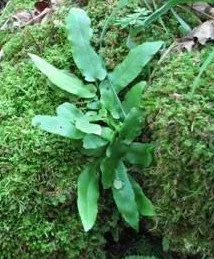
Harts_tongue_fern_lg-e1300121952712.jpg

OMB Splits 2-1 in Approving Massive Walker Quarry on Niagara Escarpment: Decision sets “perilous course” for increased development on Escarpment  

Collingwood, ON – Environmentalists are shocked by a split decision (2-1) of the Joint Board approving a massive, new 42-million tonne aggregate quarry located at the very highest point of the Niagara Escarpment, near Duntroon, Ontario.

The 263-page decision includes an unprecedented 100-page Dissenting Reasons from Environmental Review Tribunal (ERT) Member Mr. Robert V. Wright, the only Escarpment Commission Hearing Officer (ECHO) amongst the two other Ontario Municipal Board (OMB) members who sat through the 15-month hearing.

Ominously, Member Wright wrote in his dissenting minority decision:

The majority decision in this matter sets a perilous course for increased development in the NEP Area that is not compatible with the natural environment of the Niagara Escarpment and land in its vicinity.

Member Wright calls the Escarpment the “geological backbone of southern Ontario."

The Niagara Escarpment Plan (NEP) is the law of Ontario.  The minority decision labels the NEP an “environmental conservation plan” that lays out strict tests for minimal impairment of the environment as a condition of development, including the proposed quarry.

Member Wright zeroed in on the critical failure of the two OMB members to address the NEP correctly in their majority decision:

The findings and conclusion of my [OMB] colleagues reject the development control approach, and fail to analyze crucial aspects of this development proposal through the lens of the statutory provisions of the NEPDA [Niagara Escarpment Planning and Development Act] and the policies of the NEP. The practical result is that the specific provisions and policies of the NEPDA and the NEP that protect the natural environment of the Niagara Escarpment and land in its vicinity are either wrongly equated with the PPS [Provincial Policy Statement] requirements, or given little, or no, legal effect, and the more general province-wide policies of the PPS are applied by default.

Failing to apply the law correctly can be considered an “error of law” and is grounds for appeal.  The OMB also erred by finding the quarry will produce only “minor or temporary” impacts to the Escarpment’s natural system.  Member Wright disagreed with the OMB, stating “The complete removal of features and functions such as a significant woodland, spring and portion of a stream are not “minor and temporary”.” The Niagara Escarpment Commission (NEC), citizens’ and environmental groups, both conservation authorities responsible for two different local watersheds, and the Environmental Commissioner of Ontario all agreed the impacts were either unacceptable or unknown, and all testified in opposition to the Walker Quarry.

The Aggregate Resources Act licence (if issued) allows 2.5 million tonnes of annual extraction, making it one of the largest in Canada.   Member Wright also raises the alarm about the OMB’s protection of water resources, stating that “to say that a portion of SW2 [significant wetland] spring and stream system on site can be removed without any negative impacts is a non sequiter.”

“A huge new quarry planning to harvest limestone from deep in Ontario’s famed Niagara Escarpment is another chapter in an ongoing natural resources policy disaster,” said Dr. Rick Smith, Executive Director of Environmental Defence.  “The decision proves the health of the Niagara Escarpment cannot be left in the hands of the OMB."

“Our community and the NEC put on a very strong case against this quarry, highlighting both the environmental and safety threats posed by such a massive new extraction and haul route in our community, we’re in a state of disbelief,” said Janet Gillham, President of the Clearview Community Coalition (CCC).  "The CCC's vision for Clearview Township is based on the natural heritage advantage that the Niagara Escarpment could provide if it was protected.”

“We’re seeking legal advice regarding an appeal.  This decision sends a pretty clear signal to the world – Ontario is failing to provide the Niagara Escarpment with the recognition and protection it deserves,” Gillham added. “The Walker quarry will be massive, posing the same if not greater risks than the proposed Melancthon mega-quarry just down the road,” said David Donnelly, counsel to CCC and Environmental Defence.

“The experts and staff of the NEC, its Commissioners and the ECHO all agreed this quarry will cause unacceptable ecological loss to the Niagara Escarpment.  Residents have a right to expect that this consensus should have led to a decision to protect one of Ontario's few UNESCO World Biosphere Reserves,” Donnelly added.

The Board acknowledged the significance of the world’s largest known colony of American Harts Tongue Fern on the quarry property.

Environmentalists are renewing their call to have the species listed as threatened or endangered under the Endangered Species Act.

-30-

For more information, or to arrange an interview, contact: Stephanie Kohls, Communications Director, Environmental Defence, 416-323-9521 ext. 232; 647-280-9521 (cell); skohls@environmentaldefence.ca

Read More
Featured, First Nations Law, Greenbelt, News asabourin Featured, First Nations Law, Greenbelt, News asabourin

Internationally Significant Skandatut Site Saved

HWN-Nouveau-logo-sept-2010.jpg

New Cultural Heritage Landscape Park to Celebrate Nature and First Nations History June 6, 2012

Vaughan, ON – Vaughan City Council voted unanimously last night to accept a deal to save Skandatut, an internationally significant cultural heritage site in the Greenbelt, on the historic Hu

mber River in Vaughan, Ontario.

The 6 acre village site will be transferred to public ownership, and will be buffered from new development by a 2.5 acre park. The site is surrounded by a river valley and conservation land on three sides.

At the council debate, Vaughan Mayor Maurizio Bevilacqua saluted its importance to both residents and members of the Huron-Wendat Nation: “Nature is extremely important to know in all that it teaches us.  We cherish Skandatut just as much as you do.

“To all involved on behalf of the city I wish to express my warmest and sincerest gratitude.  This moment defines the best of what humanity has to offer—compassion and understanding.”

Assembly of First Nations National Chief Shawn Atleo, political Chief to all of Canada’s 634 Nations, wrote to Premier McGuinty in 2010 calling it “rare” and “internationally significant.”

The site is located on a steep-sided promontory overlooking the Humber River and valley.  At its time of occupation in the sixteenth century, it was a large and heavily fortified Huron-Wendat village.  Located on the Carrying Place Trail, which was one of Ontario’s oldest and most important lines of trade, diplomacy and communication in the Great Lakes Region.  Given its location and size, it was likely the “capital” of southern Ontario.

Despite its iconic history, the site’s fate wasn’t always secure.  Less than two years ago, a private landowner was excavating to make way for development. The provincial government had to step in to temporarily preserve the archaeological site.

“This is a great moment for world heritage, to finally have protected this village site that straddled the world of life on the Great Lakes before and after the arrival of Europeans," said Luc Laine, a member of the Huron-Wendat Nation. “When we make the re-burial of our ancestors across the river, Skandatut will be linked again permanently with the ossuary to which it belonged."

Laine thanked the Mayor, Councillor Michael Di Biase, Councillor Deb Schulte and other members of Council for their wisdom and efforts.

When thousands of Huron-Wendat and other First Nations remains—which were illegally excavated—return to the site, the resulting park area will be one of the largest protected and sacred cultural heritage landscapes in Canada.

“Adding Skandatut to the list of the Greenbelt’s protected landscapes is a major accomplishment that will be celebrated long after we’re gone," said Dr. Rick Smith, executive director of Environmental Defence.  He noted that adding the site to the Greenbelt has been a Ontario Greenbelt Alliance priority since 2007.

“Preserving Skandatut is a wonderful achievement that highlights the very best about Ontario’s commitment to truly sustainable development and respect for First Nations," said David Donnelly, who began acting for the Huron-Wendat on Skandatut back in 2004.

“For me, there is also a deep sense of relief that we’ve lived up to our reputation as a just society and that we didn’t lose another part of our past. Ontario heritage is more than just bricks and mortar," Donnelly added.

Read More
Featured, News asabourin Featured, News asabourin

Award-winning documentary “Shellshocked” details wild oyster reefs’ destruction

Published on Monday April 23, 2012 in the Toronto Star Mary Ormsby, Feature Writer

A shimmering mound of Atlantic oysters chills atop shaved ice, shucked and inviting, lining a platter at a downtown Toronto gathering.

Succulent. Briney. Plentiful.

It’s been that way with oysters — particularly the plentiful part — for more than 100 years in Toronto.

Citizens, the grand and the humble, have slurped the slippery mollusc in public oyster houses or stirred the ocean creatures into bubbling stew pots for family meals. An 1894 ad in Toronto’sEvening Star shows oysters were cents to buy; a cheap, nutritious, democratic food pulled from wild maritime coastal reefs and shipped west to Toronto.

But no more.

Today’s pricey oyster menus are filled almost exclusively with meat farmed through aquaculture businesses.

Wild oysters — which clean our water and protect species in our food chain — have been eaten, poisoned and suffocated to virtual extinction. In Canada, that demise began around confederation.

Researchers have found 85 per cent of the world’s wild oyster reefs have died, a human-engineered destruction detailed in an award-winning documentary, Shellshocked, by American filmmaker Emily Driscoll. The film made its Canadian premiere April 16 in Toronto at Rodney’s Oyster House on King Street West.

“Wild oyster reefs are functionally extinct and that means they no longer have a significant role in their ecosystem,” says Driscoll, who was raised in New York City, once considered the world’s economic and gastronomic oyster capital.

Only a handful of wild oysters remain in New York Harbour, recently the site of aggressive restoration projects.

“In my film, wild oysters are called ecosystem engineers. So for something that vital in the ecosystem to no longer have are role. . . is a big fall.”

Wild oysters are a keystone species that thrives in coastal estuaries.

Oysters purify water (an adult can filter up to 190 litres daily), neutralize killer nitrogen and provide a three-dimensional habitat for hundreds of fish and plants (oysters usually glue themselves to other shells shortly after fertilization — eggs and sperm are sprayed into open water, the soft, floating larva latches to a hard surface permanently where, it too, will grow a rock-like shell). Those wild reefs, so thick and large early French explorers had trouble navigating Canadian waters, also acted as erosion protection of shorelines.

Inka Milewski is the science adviser to the Conservation Council of New Brunswick and a wild oyster reef expert. She estimates only 10 per cent of the historic natural reef remains in all of Atlantic Canada.

The environmentalist recalls trying to pinpoint a “last remnant of reef” to study a decade ago. She found it in the Northumberland Strait, at Bouctouche Bay, but what was left to explore “was so sad.”

“Wild oyster reefs were once these three-dimensional emerging structures out of the sea bottom that were solid oyster clusters,” Milewski says.

In the 2002 report she co-authored, Oysters in New Brunswick: More than a harvestable resource, the scientist noted that French explorer Nicolas Denys wrote in 1672 of the region’s oyster reefs growing almost to the water’s surface.

“So imagine (an oyster structure) a height of six or seven or eight feet. When I go, I find something that is barely a foot off the sea bottom. Some of (the oysters) are covered in a green slime, which is a symptom of eutrophication — nutrient pollution from sewage systems, runoff and fish plants.”

Government regulations to contain overfishing were enacted in 1867 but the legislation wasn’t heeded and reefs were being stripped bare faster than the oysters could reproduce. Diseases struck over ensuing decades, further depleting the fragile natural beds by the 1950s, including those holding the region’s famous Malpeque oysters.

Aquaculture has put oysters back on tables in such robust quantities that it’s easy to see why people don’t understand the ocean environment is stressed, with little natural reef left, Driscoll says.

“The oysters people have on their plate, 95 per cent of the time it’s a farmed oyster. So people would have no way of knowing (of the vanishing reefs) because in their day-to-day experience, oysters seem plentiful,” the filmmaker says.

Milewski fears the economic upside of oyster farming has shifted governmental and scientific focus to aquaculture and away from examining the restoration, recovery and ecological importance of natural oyster reefs.

Milewski says it’s important to understand that what happens under water, such as the extinction of keystone species, has a direct impact on the human food chain.

“I don’t want to sound alarmist but really, it is alarming what is happening to our oceans.”

Driscoll says her film, ultimately, is about hope — of people being caring and innovative in attempts to restore wild reefs as habitats and water purifiers.

http://www.thestar.com/news/insight/article/1166472--award-winning-documentary-shellshocked-details-wild-oyster-reefs-destruction

Read More

Sarah Harmer's Huffington Post Article: Singing for the Salamander

Huffington Post, The Blog Authored by Sarah Harmer

For the past three months, my dedicated lawyer David Donnelly, Protecting Escarpment Rural Land ("PERL"), and I have been trying to obtain a Ministry of Natural Resources (MNR) biologist's written opinion on whether a quarry company's mitigation plan would protect the breeding ponds and wetlands of the Federally Endangered Jefferson Salamanders that are on our family farm.

On March 27, 2012, I was compelled to appeal an absurd decision of the MNR to deny my earlier Freedom of Information (FOI) request for this opinion.

Only a few hundred metres away from these ultra-sensitive and ostensibly "protected" breeding ponds is the site of the proposed Nelson Aggregate Co. below-water-table quarry, which would very likely undermine the hydrogeology of the entire area, including the Grindstone Creek Headwaters Provincially Significant Wetland Complex. If the water goes away, so do the salamanders (the Jeffies, as they are affectionately known).

Our farm, atop the Niagara Escarpment's Mount Nemo in North Burlington, is part of a UNESCO World Biosphere Reserve. It is one of only 27 Jefferson Salamander habitats left in Ontario, indeed in all of Canada. Clearly this is the wrong place for a massive extraction industry.

But Nelson Aggregate Co. didn't even bother to ask us if they could come on our property to monitor the wetlands if the quarry gets approved. PERL's expert biologist Dave Stephenson is skeptical that a professional MNR Species-at-Risk biologist would have sufficient confidence in a mitigation strategy when access to the ponds has not been sought and is so uncertain.

What if the MNR biologist still has concerns? Shouldn't the joint board reviewing this quarry licence application hear them?

In their FOI decision of March 6, the MNR did show a record of the information we had requested, but decided to deny me access to it on the basis that "disclosure of the record would reveal recommendations of a public servant." When I read those words I thought, "How ironic to hide information from someone who is called a servant of the public." In the next few months I'll find out if Ontario's Information and Privacy Commissioner agrees with me: MNR bureaucrats should not be overriding the public interest and hiding information critical to the protection of an endangered species. Just as importantly, a government agency should not be having private meetings with a corporation to review remediation plans for other people's property without extending to the landowner the same participatory rights.

Seven years ago, citizens of the Mount Nemo area formed PERL, a community group that has represented the interests of the community and sponsored crucial science about what is at risk on Mount Nemo. After incredible amounts of volunteer work and dedication, these citizens, including my family, should not be in this position now: The MNR could have disclosed at the hearing the biologist's opinion without all this wasted time and energy. We filed a Motion to Disclose this evidence during the hearing, and I swore an affidavit stating how critical this evidence was to our case. When our motion was denied, our legal team had to file the FOI, involving more precious time and resources.

When this FOI request was just recently denied, I had to engage lawyer Alexandra Mayeski, an FOI appeal legal expert and, coincidently, a childhood schoolmate and neighbour whom I rode the school bus with as a kid. Synchronicity at work.

The story goes like this. PERL has been fighting the proposed Nelson Aggregate Co. quarry on Mount Nemo since 2005. For years, the MNR agreed with PERL that the Significant Woodlands, Threatened and endangered species habitats, Provincially Significant Wetlands, source water hydrogeology, and prime agricultural lands on the proposed site added up to a big negative for the quarry proposal. The Region of Halton, City of Burlington, Halton Region Conservation Authority and the Niagara Escarpment Commission all opposed the quarry too.

So did important allies like Environmental Defence, Lake Ontario Waterkeeper, David Suzuki Foundation, Coalition on the Niagara Escarpment (CONE) and many others.

Then, on the first day of the Joint Board Hearing, the MNR did an about-face and supported the quarry! Starting on November 19, 2010, the Joint Board Hearing heard evidence from dozens of experts from all the public agencies listed above, and experts from PERL. We all opposed the quarry proposal and provided testimony to the same.

But what of the independent MNR experts who had filed witness statements critical of the project? We decided to summons them, to cross-examine them on whether it was experts or policy "suits" that decided to do a "180" and support the quarry in this clearly inappropriate location.

One of the experts that was summoned was John Pisapio, species-at-risk biologist for the MNR. He's also on the Jefferson Salamander Recovery Team. At the time of his testimony, Nelson had no clear strategy for protecting the wetlands and breeding ponds on my family farm if something went wrong with the quarry. For example, if, as predicted by experts, the under-draining of the whole area lowered the water table so that the water in the wetlands leaked out from underneath and the wetlands dried up.

Pisapio's evidence at the hearing in October, 2011 was pretty devastating to the proposal -- he testified he had concerns about the inadequate monitoring and mitigation measures proposed in Nelson's Adaptive Management Plan (AMP) for the Harmer Wetlands and the Jefferson salamanders in particular.

This was a blockbuster moment!

Did Nelson and the MNR call PERL and my family to talk about what to do next? No.

Instead, MNR staff collaborated with Nelson to come up with a new mitigation plan involving the wetlands on our property without consulting me or my family. Nelson now says they'll install gauges (monitors) and run pipes onto our property, if the ponds go dry. Right, we're supposed to trust Nelson after they transplanted and subsequently killed endangered butternut trees, dredged and drained wetlands, and were convicted of illegally placing fill in the Grindstone Creek Provincially Significant Wetland Complex? I don't think so.

A very telling part of the situation is this: the planning expert for Nelson, Brian Zeman, testified at the hearing that when MNR officials were discussing the new Jefferson mitigation plan, he was the one who was the minute-taker. Separation between corporate interest and our own government has never been more difficult for me to discern.

Thankfully, the law may be on our side. Even if the Information and Privacy Commissioner says the biologist's opinion qualifies as being protected from disclosure, we can argue that the records are subject to the compelling public interest override provision under Section 23 of Ontario's Freedom of Information and Protection of Privacy Act. Since the records we're seeking relate to mitigation strategies for the Harmer Wetlands known to contain a provincially Endangered Species, this fits with previous Orders of the Information and Privacy Commissioner's Office that have recognized that the public has an interest, from the perspective of protecting the natural environment and protecting health and safety, in seeing that government institutions conduct a full and fair assessment before granting environmental approvals, including approvals under the Aggregate Resources Act.

Do we really need to wait months for this decision? C'mon Premier McGuinty, play fair! Give us the damn biologist's opinion.

http://www.huffingtonpost.ca/sarah-harmer/sarah-harmer_b_1400873.html?ref=canada


Read More

SHELLSHOCKED: Canadian Premiere hosted by Donnelly Law and Rodney's Oyster House

ENVIRONMENTAL DEFENCE For Immediate Release:  March 26, 2012

Shellshocked: Saving Oysters to Save Ourselves Canadian Premiere on April 16 at Rodney's Oyster House in Toronto: Filmmaker and environmental experts discuss the importance of protecting North American waterways and oyster culture

Toronto, ON – On the heels of its successful U.S. debut, the Canadian premiere of Shellshocked: Saving Oysters to Save Ourselves will take place at Rodney's Oyster House on April 16th 2012 at 6:00PM. The screening will be followed by a Q&A with Director Emily Driscoll, and environmentalist and prominent Oysterman Rodney T. Clark. At the event, guests will be treated to a specially prepared oyster reception and tasting.  Proceeds raised will be donated to Environmental Defence to further its work to protect and improve Canada's water ecosystems.

Shellshocked: Saving Oysters to Save Ourselves Canadian Premiere

WHEN:   Monday, April 16th, 2012

WHERE:  At Rodney’s Oyster House at 469 King Street West, Toronto

TIME:  Doors open at 6PM, screening at 6:45PM

WHAT:  Film screening and Q&A, featuring filmmaker Emily Driscoll, and environmentalist and "the Oysterman" Rodney T. Clark

PHOTO OPS:  Great shots of oyster shucking, Emily Driscoll, Rodney T. Clark, guests enjoying oysters and bubbly

TICKETS:  $77.50 per person.  Includes oyster reception and tasting.  Call             416-363-8105       ext.0 for ticket purchases or in-person at Rodney's Oyster House.  NOTE:  all proceeds are donated to Environmental Defence

INTERVIEW OPPORTUNITIES:  Emily Driscoll, Director and Filmmaker, Rodney Clark, “the Oysterman” and owner of Rodney's Oyster House, and Environmental Defence Spokesperson, David Donnelly.

ABOUT THE FILM (www.shellshockedmovie.com): SHELLSHOCKED follows efforts to prevent the extinction of wild oysters, a keystone species that keeps our oceans healthy by filtering water and engineering ecosystems. Today, because of over-fishing and pollution, wild oyster reefs have been declared the most severely impacted marine habitat on earth and are functionally extinct. Now scientists, government officials, artists and environmentalists are fighting to bring oysters back to New York Harbor – the former oyster capital of the world.

ABOUT THE DIRECTOR (www.emilydriscollonline.com): Emily Driscoll is a science and nature documentary producer. Her previous documentary BUGGED: The Race to Eradicate the Asian Longhorned Beetle aired on PBS stations and screened at the Department of the Interior. She has a master’s degree from NYU in science journalism and is working toward a master’s degree in science documentary production from NYU’s Gallatin School of Individualized Study. She’s written articles and produced videos for a number of science news publications. Emily also plays and produces videos about competitive badminton.

ABOUT RODNEY'S OYSTER HOUSE (rodneysoysterhouse.com):  Rodney’s Oyster House, located at 469 King Street West is an iconic Toronto restaurant dedicated to preserving and celebrating oyster culture.  Rodney Clark, "the Oysterman," has presented oysters in downtown Toronto since the late 1970's, and helms one of the Great Oyster Houses of North America. He has taken a leading role in promoting sustainable aquaculture with the opening of Rodney’s Oyster Depot on Prince Edward Island, over five years ago, and will talk about sustainable Oystering and the future of the oyster in North America, from the Rodney's perspective.

ABOUT ENVIRONMENTAL DEFENCE (www.environmentaldefence.ca): Environmental Defence is Canada's most effective environmental action organization. We challenge, and inspire change in government, business and people to ensure a greener, healthier and prosperous life for all.

-30-

For more information or to arrange an interview, please contact: Stephanie Kohls, Environmental Defence,             416-323-9521       ext. 232;             647-280-9521       (cell); skohls@environmentaldefence.ca

Read More
Featured, News Lia Magi Featured, News Lia Magi

Environmental Defence, PERL and Donnelly Law Fundraiser for Mount Nemo a Big Succes

On February 23, 2012, PERL and Donnelly Law hosted an evening packed with food and live entertainment to raise funds, awareness and support for the protection of Mount Nemo in Burlington, Ontario.

Over 100 people attended and enjoyed live performances by critically-acclaimed Canadian artists including Sarah Harmer, Ron Sexsmith, Luther Wright and Colleen Hixenbaugh. Special thanks to Environmental Defence who also co-hosted the event and provided invaluable support.


Delicious local and organic food was created by the magicians of The Commissary, Leslieville's newest and funkiest bistro. Rodney Clark provided the ocean's finest oysters from Rodney's Oyster House. Beer was generously donated by Amsterdam Brewing Co. and VQA wine provided by Featherstone Estate Winery. Special thanks to Carlaw Media Group for donating the space.

Artist Stewart Jones provided the beautiful chalk rendering of Mount Nemo that transformed the loft office into a music studio. Promotion and pizzazz provided by Matt Stone Presents.

Thank you to all the attendees, organizers and supporters for your continued efforts and support.

Read More

Environment Defence Weighs in on MNR Refusal to Disclose Material to PERL

On February 28, 2012, Dr. Rick Smith, Executive Director of Environmental Defence wrote a strong letter to Minister of Natural Resources, the Hon. Michael Gravelle, demanding the release of relevant MNR information about the Nelson Aggregate Co. proposed Adaptive Management Plan as it relates to the Harmer property. The required information is about an MNR decision that pertains almost exclusively to the Harmer property, not Nelson’s. As Dr. Smith wrote, "[t]o withhold information vital to PERL’s interest, while allowing complete access to Nelson, is unfair and contrary to the principles of open and transparent government."

Read the full letter here: Letter from Dr. Rick Smith to Minister Gravelle

Read More

Ontario's Growth Plan Amendment for Simcoe County? #Fail

Huffington Post, Politics, January 31, 2012 Co-authored by Claire Malcolmson and David Donnelly

There are new rules for growth in Simcoe County. On January 19 the Ontario Ministry of Infrastructure enacted Amendment #1 to the Growth Plan for the Greater Golden Horseshoe, also known as the Simcoe Sub-area Amendment. The Amendment is hailed as awin for developers and the County, and signals that the province has tired of trying to curb Simcoe's taste for rapid, uncoordinated growth of low-density bedroom communities.

Lying just north of Southern Ontario's Greenbelt, Simcoe County faces massive growth pressures fuelled by developers' land speculation, and high housing and development prices in Toronto. Implementing the Growth Plan in Simcoe County, Barrie, and Orillia has been painful for all involved. Simcoe County's 2008 Official Plan was so far from the province's direction that the province stepped in, first with a "vision" for Simcoe in 2009, and finally, January's first amendment to the Growth Plan.

After receiving numerous complaints from all sectors about the draft amendment number one, the province appointed Provincial Development Facilitator Paula Dill to conduct a further consultation. The consultations covered 59 meetings with stakeholders and included 176 written submissions. Minister of Transportation and Infrastructure Bob Chiarelli said, "All we heard was protect the lake, protect the natural environment, and we paid special attention to that."

However, it is our opinion that it is the Lake Simcoe Protection Act and Plan, not the growth plan or this amendment, which protects the environment. For example, the province seems to be handing off responsibility for larger scale environmental planning in new strategic settlement employment areas by allowing the municipality to identify the natural areas for protection. This strategy does not guarantee a coordinated, regional approach to planning and protecting green space. On a positive note, the amendment "encourages" but does not require affected municipalities "to achieve greater efficiency and conservation in energy, water and wastewater management through building and community design." A little nod to a hopefully greener future.

Amendment one sticks to growth planning and clarifies important departures from the basic tenets of the growth plan. A significant change (and a win for developers) is that the county can determine how to distribute an additional 20,000 people, in approved settlement areas, above the 667,000 population target. A worrying implication is that a number of sprawling projects appear to be grandfathered without explanation, like the Midhurst Secondary Plan for 30,000 people north of Barrie in Springwater Township, which, under prior rules should have been stopped because its proposed population exceeded the township's population allocation from the growth plan.

Environmentalists have been alarmed for several years by two massive new development proposals that would pave prime agricultural land and Lake Simcoe watershed areas along Highway #400. We contend that this is unnecessary while tens of thousands of acres of lands already approved for employment purposes can be found elsewhere in Southern Ontario. Why, we have asked, build up the housing stock where there are no jobs? Why not concentrate housing in already built-up areas, closer to functioning employment areas, transit, and services? This was what the growth plan was supposed to do.

In the Simcoe sub-area, the province of Ontario has paved the way for new employment lands on agricultural land, and has effectively increased the population allocation. Panelists and local activists at AWARE Simcoe's January 21 anti-sprawl meeting agreed now that the Province has made the rules clear for Simcoe County, it is now time to focus on Councilors' and Mayors' decisions.

We must all insist that development decisions are made based on clear criteria such as reducing impacts on water and sensitive green spaces, the proximity of real, existing jobs, and the feasibility of public transit servicing. Part of the solution is for development to be as green as possible. People concerned about the Lake should oppose any new development in the Lake Simcoe watershed that does not reduce the traditional urban sprawl ecological footprint for water and energy consumption by at least 50 per cent. Were these criteria followed, much less development would leapfrog our beloved Greenbelt.

http://www.huffingtonpost.ca/claire-malcolmson/ontario-growth-plan-simcoe_b_1242721.html

Read More

GGH Growth Plan Amendment 1 Release Anticipated

Novae Res Urbis, Vol. 15, No.3, GTA Edition By Kristine Janzen

Simcoe area planning and development stakeholders are anticipating the release of Amendment 1 to the Provincial Growth Plan for the Greater Golden Horseshoe tomorrow by infrastructure minister Bob Chiarelli. The technical briefing and luncheon is to take place at the Nottawasaga Inn Resort and Conference Centre.

The proposed amendment was released by the province in October 2010. It focused on identifying urban nodes in Simcoe County and in Barrie and Orillia where growth and intensifi cation should be directed. The amendment established population and employment growth allocations for nodes and other serviced settlement areas, as well as a process to assess the oversupply of land available for development. It also identified strategic employment areas along the Highway 400 corridor.

On November 1, 2011 the provincial development facilitator completed a comprehensive process, carrying out additional consultations with municipalities, and provided recommendations to the infrastructure minister.

While the province has not yet released any details of the final amendment or the provincial development facilitator’s report, some Simcoe area politicians are hopeful the results of several years of planning and consultation will have positive results.

“We are eager to see what the province has come up with. They’ve been tight-lipped on details,” commented Springwater Township mayor Linda Collins. The Minister of Municipal Affairs and Housing appealed the township’s Midhurst Secondary Plan to the Ontario Municipal Board last fall after it was adopted by Simcoe County, citing inconsistencies with the Provincial Policy Statement and Growth Plan for the Greater Golden Horseshoe.

Anticipating the release of the amendment, a letter from Chiarelli was sent to stakeholders at the end of December announcing completion of the provincial development facilitator’s work and issuing an invitation to tomorrow’s event.

“After an extensive consultation process on Proposed Amendment 1 to the Growth Plan for the Greater Golden Horseshoe and some great work by the provincial development facilitator, the province has developed a shared vision for sustainable growth in the Simcoe Area. This vision supports job creation, increases planning certainty, and improves quality of life while focusing growth in existing communities and protecting farmland and green spaces. The path forward must now be the result of strong partnership and continued dialogue,” wrote Minister Chiarelli in a December 23, 2011 letter to stakeholders regarding tomorrow’s event.

“I believe that our “made-in-Simcoe” approach will allow Simcoe municipalities, Barrie and Orillia to approve development that makes sense for their communities, protects the natural environment, safeguards the water quality of Lake Simcoe and supports local agriculture. I look forward to sharing this approach with you,” wrote Chiarelli.

Meanwhile, the Town of Innisfi l is hopeful its suggestions, not included in the proposed amendment, will be recognized in the new policy. It proposes an urban node designation for Alcona, alternative intensifi cation target of 23 per cent and a new policy to recognize the importance of employment areas along the Highway 400 corridor beyond the 2031 planning horizon.

“If we were given that [urban node] designation [in Alcona], we would continue to look for more ways to become more urban and more multi-storey. Obviously, if [the province doesn’t] recognize that designation, it makes it more difficult to achieve our own urbanization agenda, which we’ve set out for Alcona in our strategic plan,” explained Innisfi l communications officer Michèle Newton in an interview with NRU.

Innisfil deputy mayor Dan Davidson questions the planning rationale behind including an urban node in Bradford West Gwillimbury, which does not have water services, and not in Innisfi l, which is currently sharing water with Bradford West Gwillimbury. He thinks political motivations are behind the amendment.

“We basically have all of the criteria for an urban node. We’ve got huge growth happening in that area, about 27,000 people when it’s completed. We meet about 98 per cent of the [provincial requirements] and we’re looking at transit for that area. We meet the criteria better than Bradford. I think the politicians are playing games. It tends to be considered a very conservative area, and I think we’re being penalized for that,” commented Davidson in an interview with NRU.

According to Davidson, an urban node designation would also help with infrastructure funding for the area down the road.

Allowing Innisfi l to expand the designated Innisfi l Heights employment area along the Highway 400 corridor with additional uses will allow the town to cater to a broader range of employment uses. Including more business services, light manufacturing and supporting commercial businesses in the area will help support residential growth and provide greater employment opportunities, explained Innisfi l mayor Barb Baguley in an interview with NRU.

The current boundary of the Innisfi l Heights employment area is 320 hectares and the town has proposed expanding it to a total area of 690 hectares.

“The employments lands [outlined in the proposed amendment for the Innisfi l Heights Strategic Industrial Employment Area] are undersized for what the municipality has determined is required to be successful. We designated a larger area, a continuation of the existing area, that is pivotally important to the health and wellbeing of our municipality,” explained Baguley.

Smart growth advocates such as environmental lawyer David Donnelly (Donnelly Law) believe the amendment should focus on higher densities and a reduced ecological footprint for new growth, beyond what was initially proposed, to further restrict the impacts of sprawl in Simcoe.

“Most of the new development proposals in Simcoe County are stuck in a 1990’s mindset that will require new infrastructure funding the province simply doesn’t have. A simple benchmark for the amendment should be this: when the sidewalks of Simcoe County are as congested as Highway 400, we’ll have struck the right balance,” said Donnelly.

Stay tuned for more details and comments on the amendment in next week’s GTA edition of NRU.

Simcoe County’s new director of planning, development and tourism Dave Parks began his role Monday following the retirement of Bryan MacKell, who was involved throughout the consultation process. Parks was formerly the director of planning for Severn Township.

****

See the original article here: 120118NRG

Read More

La Nation Huronne Wendat et l'Université de Toronto Signent un Protocole d'Entente Visant le Rapatriement d'Ossements Humains et d'Artéfacts Ancestraux Provenant de l'Ontario

Wendake, le 29 novembre 2011 Le Grand Chef Konrad Sioui, au nom de la Nation Huronne­ Wendat a signé aujourd'hui, avec l'Université de Toronto, un protocole d'entente assurant le rapatriement de restes squelettiques humains et d'artéfacts provenant de sites archéologiques en Ontario.

Seated, L-R: Prof. Cheryl Regehr (Vice-Provost, Academic Programs), Mme. Heather Bastien (Chargée de projet), Grand Chief Konrad Sioui. Standing, L-R: Steve Moate (Legal Counsel, U of T); Prof. Meric Gertler (Dean of the Faculty of Arts and Science); Prof. Amy Mullin (Dean of the University of Toronto Mississauga); M. Rolland R. Sioui (Elder), René Gros-Louis (Chief), Oney Maher (Elder),Daniel Proteau (elder), Gaetan Sioui (Chief), Yvon Gros-Louis (Elder), Prof. Susan Pfeiffer (Department of Anthropology), Luc Lainé (Chargée de project), David Donnelly (Donnelly Law).


«Au milieu du vingtième siècle, l'Université de Toronto a pris part à des fouilles sur des sites archéologiques du sud de l'Ontario dans lesquels des restes squelettiques humains ont été trouvés, exhumés et transportés ultimement à l'Université. II s'est avéré que plusieurs ossements et artéfacts proviennent des ancêtres de la Nation Huronne Wendat, qui ont occupé une vaste portion du sud de l'Ontario pendant plusieurs siècles. En raison de guerres européennes et d'épidémies, la Nation Huronne Wendat a été forcée de quitter la partie sud de son territoire ancestral et de retourner plus haut sur la partie nord de son territoire national sur les rives de leur fleuve essentiel, le Saint-Laurent, près de Stadaconé (Ville de Québec) à la Seigneurie de Sillery où Wendake est maintenant situé. Les Hurons Wendat, les archéologues et les historiens ont identifié et documenté des centaines de sites Hurons Wendat en Ontario et au Québec, à travers le grand Wendake. Des douzaines de vastes villages agricoles cosmopolites semi-permanents (occupés par des milliers de gens) et leurs sites d'enterrements attenants ont été découverts, représentant un riche patrimoine culturel» a déclaré le Grand Chef Sioui.

L'Université de Toronto a complété en grande partie un inventaire et l'analyse reste à être complétée. La Nation Huronne Wendat recherche un rapatriement total des restes humains au cours de l'été de 2012 et les parties s'adjoindront la coopération de la Fiducie du Patrimoine ontarien et du Gouvernement de l'Ontario en ce qui a trait à toute composante du projet.

Le professeur Cheryl Regher, en présence de ses collègues de l'Université de Toronto et de Mississauga, a déclaré que la signature de cette entente historique marque une étape importante dans une nouvelle relation entre leurs institutions et la Nation huronne-wendat. Une première au Canada qui, selon elle, mérite d'être connue a l'échelle internationale.

Le Conseil de la Nation huronne-wendat salue le travail acharné du Chef Gaëtan Sioui, responsable du dossier, de Me David Donnelly, de monsieur Luc Laine et de madame Heather Bastien grâce à qui ce protocole a été réalisé. Le Conseil de la Nation huronne-wendat prévoit le ré-enterrement des restes de ces milliers de nos ancêtres au mois de juillet 2012, au même moment ou aura lieu la rencontre annuelle des Chefs de l'Assemblée des Premières Nations du Canada à Toronto.

Renseignements :

Melanie Vincent (418) 580-4442

___________________________________________________

The University of Toronto signs a Memorandum of Understanding with the Huron-Wendat Nation

The University of Toronto has signed a Memorandum of Understanding allowing for the repatriation of remains and artifacts to the Huron Wendat Nation.  This MoU was signed at a ceremony in Wendake, near Quebec City on No. 29.

The University of Toronto sits on land that was the home of the Huron Wendat until the late 17th century.  Primarily during the middle part of the last century, faculty, staff and students of the University participated in archaeological excavations of many sites in southern Ontario, sites that were the homes of Huron Wendat ancestors.  As a result, today the university holds many remains and artifacts gathered from those locations.

While the approaches followed in those excavations conformed with the attitudes of academia and society at the time, those attitudes have changed. The Memorandum of Understanding allows for the repatriation of those remains and artifacts in a culturally and spiritually appropriate way as determined by the Huron Wendat people.  The actual transfer of the remains will occur when the Huron Wendat Nation has secured a final resting place for the remains and artifacts, but the signing of the Memorandum of Understanding is an important step in the process. The Memorandum of Understanding further establishes a process of cooperation between the University of Toronto and the Huron-Wendat Nation for the continued development of knowledge regarding the history of their people. The university is grateful to the Huron-Wendat Nation for its commitment to preservation of knowledge and further research.

The agreement was signed on behalf of the university by Professor Cheryl Regehr, vice-provost (academic programs) and by Grand Chief Konrad Sioui, on behalf of the Huron Wendat Nation.  Also present at the signing were Professor Meric Gertler, dean of the Faculty of Arts and Science; Professor Amy Mullin, dean of the University of Toronto Mississauga, Professor Susan Pfeiffer of the Department of Anthropologyand Steve Moate, legal counsel to the university.

UofT News: http://www.news.toronto.edu/university-toronto-signs-memorandum-understanding-huron-wendat-nation

Read More

A Revolution is Brewing in Green Building and Community Design

By David Donnelly & Lia Magi Published in: Sustainable Builder Magazine, Special Showcase Issue 2011

Ontario is a world leader in setting boundaries for new Greenfield developments. Paradoxically, Southern Ontario is also attracting rapid population growth, requiring the construction of one million new homes that threaten thousands of hectares of prime farmland and wildlife habitat.

With costly and time-consuming land use battles between environmentalists, developers, and municipalities looming on the horizon, our firm was asked to provide a model for new Greenfield development.

Our clients, developers Mattamy Homes and OPDI, adopted a simple threshold challenge: “Environmentalists are very good at telling developers what not to build; let’s try inventing a sustainable community design we can all agree on.”

After one year of stakeholder consultations, we’ve produced a made-in-Ontario new Greenfield Sustainable Building and Community Design Standard (“Greenfield Standard”), with the goal of making it law in 2012. Recent examples, like the Greenbelt, Green Energy Act, and Lake Simcoe Protection Act, show that Ontario has the pedigree for leadership and decisive action to protect the environment and create good, green jobs.

Our proposed new Greenfield Standard is wonderfully simple: 1. Build new suburban communities at an urban standard. That is, use 55 per cent of the land for development, not the current 45 per cent that spreads development out too thinly; 2. Require new units to reduce energy and water consumption by 50 per cent from current standards; 3. Cap development levies on new lots/units at a target density (75 jobs and residents/hectare) and, 4. Extend tax incentive financing to developers that meet the Greenfield Standard thresholds.

European visitors to Ontario are often surprised by the amount of land we use up in creating new communities, for roads, lots, schools, and infrastructure. As visitors leave the lush, compact neighbourhoods of Leslieville, Parkdale, and the Annex, they’re left wondering why we require developers to surrender so much of their land for infrastructure, instead of building to the desired form of many of Toronto’s most successful and up-and-coming neighbourhoods.

Currently, developers must surrender 55 per cent of their land in “new town” plans, leaving only 45 per cent for commercial and residential buildings. This ratio has produced the widely spaced, poorly connected suburban developments that dominate the North American urban landscape. By building at a higher density and more compactly, we can use more land for housing and employment, instead of infrastructure. Building real communities with nearby employment makes for transit-dependent villages (where it’s better to take the bus) rather than transit- supportive villages, where the bus is merely another option.

In addition, simply by shrinking massive road right-of-ways and high-school yards, and cutting back on public infrastructure land consumption and unused greenspace to free more private land for development, developers can off-set most of the additional costs for introducing bio-swales, and district heating and cooling. Ontario’s antiquated habit of building grand boulevards (or heat islands) in residential areas to accommodate two oxen turning will need to be revised; the Greenfield Standard establishes targets for that.

Designing people-friendly streets requires building single-loaded roads adjacent to natural features and parks; reducing block dimensions, where no side is longer than 250 metres to encourage pedestrian activity; reducing road widths that adopt new lane designs and bike lanes; and adding green linkages. In addition, we need to treat clean water as if it were a valuable commodity, because it is.

Less than 50 per cent of the drinking water we use actually requires treating. Treating water is an expensive process, compared to reusing waste water. Watering lawns, putting out fires, and flushing toilets are some of the uses of water that can be better served by grey-water and rain water. The United Nations urges countries to “treat water to no higher quality than needed.” This makes a lot of sense in Ontario, particularly in urbanizing watersheds that do not have access to the Great Lakes.

Ontario’s Green Energy Act provides the right incentives for existing home-owners to “go green,” but does not require new communities to be net-zero energy consumers. Our standard does that, and it requires that LED street- lighting and zero-net energy should be required by 2017, along with making streets oriented north-south and lots east-west, in order to optimize southern solar gain and to minimize western solar heat gain to dwelling units.

At the building lot level, the one-tree-per-family allotment needs to be replaced with a 62-trees-per-hectare (25-trees-per-acre) standard, creating an urban canopy (over narrower roads). Water-guzzling lawns need to be replaced by drought-resistant xeriscaping, with nearby common areas and parks that encourage social interaction, rather than fenced-in isolation.

Locally sourced building materials, like sand and stone, can shrink the carbon footprint of construction, when compared to imported finished stone from China and India.

To level the playing field, so to speak, Greenfield Standard compliant communities should be allowed to finance the “green” elements of the design (e.g. storm water, district heating, and cooling, etc.), by leveraging the enormous long-term savings to the host municipality with tax incentive financing (TIF), and local improvement charges (LIC).

We need to act fast on this new standard. The Greater Toronto Area is consistently ranked in the top three fastest-growing communities in North America (according to the Neptis Foundation). Given our projected growth targets, maintaining the development of the status quo would consume more than 1,000 km2 of prime farmland in a little more than 25 years.

In Ontario, creating a new Greenfield Standard is not an academic exercise for some far-off time target. For example, in the coming weeks, new growth will be allocated in Simcoe County. The province projects the Simcoe Area will grow by nearly 230,000 residents, to a total population of about 667,000 by 2031, in addition to a forecast of 73,300 new jobs by 2031. Simcoe County has maintained Western union online that it needs even more population increases.

The environmentalists of Campaign Lake Simcoe broke the ice by requesting that future population allocation in Simcoe County be awarded only to communities built to a new, higher Greenfield Standard.

There are two additional benefits of proceeding with a Greenfield Standard collaboration.

First, both the development and the environmental communities are in the early stages of a changing of the guard, as the resource- hungry baby boomer generation begins retiring. Now is the perfect time to introduce closer collaboration between the current and the next generation of modern-era builders and environmentalists – groups that have been too long at each other’s throats.

And there’s reason for optimism. On June 1, 2011, our client Environmental Defence and Holcim Canada (and its Canadian affiliate Dufferin Aggregates) released a new green gravel standard for Ontario. Named Sustainable and Environmentally Responsible Aggregate, (nick-named “Green Gravel”), one of the primary purposes of Green Gravel is to offer environmentally conscious municipalities and consumers the ability to leverage their purchasing power and request responsibly sourced aggregate materials, including green cement and ready-mix concrete in new communities.

We can learn from the above example. The private sector and environmentalists can collaborate effectively in the land-use planning, and the community space and building design sectors to create sustainable communities.

Finally, there is another larger benefit to the implementation of the Greenfield Standard and allocating new growth-only in areas that meet or exceed its conditions. Rewarding sustainable development and community design over traditional urban growth decision-making will dispel much of the cynicism and mystery that normally follows the awarding of a new population allocation. These decisions too often appear to be the result of good lobbying or political expediency, not sustainability thinking.

Ontario has a tremendous record on which to build. Successive provincial governments have protected the Oak Ridges Moraine from further development, created a 1.8-million acre protected Greenbelt (the world’s best), and enshrined in the Places to Grow Act an intensification target of 40 per cent new growth in existing urban areas, versus 60 per cent growth in new Greenfield development.

Ontario is the birthplace of post-war, sustainable Greenfield suburban planning and design. Given the enormous development pressure we’re currently facing, it’s time for our builders, citizens, politicians, also environmentalists to lead again. As my wise oysterman friend often reminds me, “We all fish off the same wharf.”

David R. Donnelly, principal of Donnelly Law, is one of Canada’s leading environmental lawyers and advocates for smart growth. He has acted as legal advisor and counsel to Environmental Defence since 2000. Lia Magi is an associate at Donnelly Law, practising in the areas of environmental law, land-use planning, and litigation.

Read More

Ethan Hawke Joins Fight to Protect Gulf of St. Lawrence from Oil and Gas Drilling

November 23, 2011 – The battle to protect the Gulf of St. Lawrence from oil and gas development received a major boost this week when American actor, writer and director Ethan Hawke benevolently lent his support to the cause. Mr. Hawke, a landowner along the Gulf in Nova Scotia, was approached by coastal landowners, fishermen, Mi’kmaq leaders and concerned citizens who felt their voices were not being heard. Mr. Hawke joins a growing list of celebrities including Dr. David Suzuki, author Farley Mowat, actor and director Jason Priestley, and music composer Philip Glass who have also spoken out in support of a moratorium on offshore oil and gas development in the Gulf of St. Lawrence. “The Gulf of St. Lawrence is truly unique in its beauty, culture and biodiversity; I feel it is important to support my east coast neighbours in their demand for a moratorium,” explains Mr. Hawke. “We should take every measure possible to avoid making the same mistakes that were made with the Gulf of Mexico and preserve these precious renewable marine resources for future generations. The time has come to take action on this important issue before it is too late.”

The David Suzuki Foundation, in collaboration with Save Our Seas and Shores Coalition and with the support of Mr. Hawke, is asking Canadian citizens to take action by demanding a moratorium on offshore oil and gas drilling in the Gulf.

“Thousands of First Nations, Quebecois, Acadian and Gaelic coastal communities have historic precedence in these waters and have great interest in wanting to protect the Gulf’s multi-billion dollar renewable fishery and tourism industries,” affirms Mary Gorman, spokesperson for Save our Seas and Shores Coalition. “It would be foolish to consider risking a renewable global marine food supply that has sustained us for centuries, only to exploit unnecessary fossil fuels.”

Both Quebec and Newfoundland are currently exploring the possibility of drilling oil and gas in the Gulf of St. Lawrence. The province of Quebec, now under provincial moratorium, is in the process of conducting public consultations to assess the risk factors involved with oil and gas exploitation in the Gulf. The situation in Newfoundland has become increasingly alarming, with the province currently poised to move forward with an exploratory drilling at the controversial Old Harry prospect, located only 6km from Quebec’s jurisdiction, as early as next year. Similar attempts made by Nova Scotia to exploit the Gulf were halted a decade ago.

“The Gulf of St. Lawrence is a single body of water that should not be divided by man-made borders,” states Dr. Jean-Patrick Toussaint of the David Suzuki Foundation. “The Gulf is home to more than 2,200 marine species which spawn, nurse and migrate there year-round. Exploratory drilling could seriously impact the feeding and migration of fish like Atlantic salmon, herring, mackerel and cod as well as marine mammals like the endangered blue whale.”

Earlier this summer, numerous coastal communities and environmental groups asked federal Minister of the Environment Peter Kent to take leadership in overseeing the environmental implications and risks of permitting oil and gas drilling in the Gulf. However, the federal government ultimately delegated this responsibility to an unelected offshore provincial petroleum board.

“We are delighted and grateful to have Ethan Hawke graciously accept to support the battle to protect our Gulf,” adds Ms. Gorman. “We hope that his public support will help draw greater attention to an issue that could potentially impact the coastlines and economy of all five provinces bordering the Gulf, and which requires critical action.”

Concerned individuals and groups can sign the petition to demand a moratorium on oil and gas drilling in the Gulf of St. Lawrence by visiting the David Suzuki website: http://action.davidsuzuki.org/st-lawrence

- 30 - For more information, please contact: Manon Dubois, Communications Specialist David Suzuki Foundation mdubois@davidsuzuki.org, 514.679.0821 Mary Gorman Save Our Seas and Shores Coalition mjgorman@ns.sympatico.ca, 902.926.2128

Read More

Harmer and PERL Rock “Public Day” at Mount Nemo Quarry Hearing

Community concerns dominate Nelson Aggregates Burlington hearing  

Burlington, ON – Canadian singer-songwriter Sarah Harmer, Roger Goulet, executive director, Protecting Escarpment Rural Land (PERL), concerned local residents and representatives of environmental groups testified today against the proposed 23-million tonne Nelson Aggregate quarry licence application.

“In the midst of a public review, Nelson Aggregate with a host of ecological and hydrogeology experts on retainer, dredged and drained Provincially Significant Wetlands, and unsuccessfully transplanted endangered trees from their habitat,” said Harmer, co-Founder of PERL and songwriter of the iconic Canadian hit, Escarpment Blues.  “There is a real element of trust and confidence that is missing here.”

“Mount Nemo is the wrong place for another destructive, below water table quarry. The environmentally sensitive features and functions of the Mount Nemo plateau must be formally recognized and re-designated accordingly, using the latest science, current regulations and standards, and applying the Precautionary Principle,” said Goulet, executive director of PERL.

“It is inconceivable that anyone would think of quarrying this UNESCO World Biosphere Reserve.   Who would consider quarrying the Great Wall of China?” Isabelle Harmer testified, a 41 year resident of Mount Nemo.

“Extracting the aggregate will destroy the ability of Mount Nemo to continue to be a fresh water collector in the future.   The result could be catastrophic for future generations in short supply of fresh water to drink,” said Bob Patrick, President of Coalition on the Niagara Escarpment.

Numerous residents around the quarry complained large blasts had cracked the walls of their homes. They also stated that dust from the quarry was everywhere including their roads and properties and that the constant drones of heavy trucks often disturbed early morning sleep.

Harmer and other witnesses called on the province to heed the call of the Environmental Commissioner to establish a conservation plan for protecting and siting strategy for locating new aggregate pits and quarries, leading to too many random and localized fights over new quarries.

The hearing is scheduled to finish on December 14, 2011.

ABOUT ENVIRONMENTAL DEFENCE (environmentaldefence.ca):  We are Canada's most effective environmental action organization. We challenge, and inspire change in government, business and people to ensure a greener, healthier and prosperous life for all.

ABOUT PERL:  Protecting Escarpment Rural Land is involved in a number of initiatives to help protect the Niagara Escarpment for future generations.  PERL retained Order of Canada architect Douglas Cardinal to help it devise a “Vision for Mount Nemo” that would allow Nemo’s industrial past to be transformed into a sustainable, ecological future.

-30-

For more information or to arrange an interview, please contact: Stephanie Kohls, Environmental Defence, (416) 323-9521, ext. 232 or (647) 280-9521(cell), skohls@environmentaldefence.ca

Read More
Featured, First Nations Law Lia Magi Featured, First Nations Law Lia Magi

Humber Path honours First Nations' history

Plaques along the 'Shared Path' recognize role of native peoples

Tamara Shephard, InsideToronto.com

Toronto's newest Discovery Walk honours the extensive history of First Nations on the Humber River.

The Shared Path project weaves for 10 kilometres through the Humber River Valley and consists of 13 historical nodes that describe Canada's early history as it happened along the banks of the Humber River.

Cultural heritage and Humber River history recognize the historic presence of First Nations on the Humber, who were later followed by the French and the British.

La Societe d'histoire de Toronto initiated the project undertaken in partnership with Toronto and Region Conservation Authority (TRCA) and the City of Toronto.

"We're trying to tell the story of how important the Humber River was to Canada's national development," said TRCA Humber River project manager Susan Robertson, who is also the Shared Path project manager.

"As a conservation authority, we try to protect our rivers and celebrate them. It's not only a watershed matter. Rivers matter today as much as they did 200 years ago when they were highways into the interior."

Last month, more than 100 people including representatives of Six Nations of the Grand River, Mississaugas of the New Credit and Huron-Wendat First Nations gathered on the east bank of the Humber River in Etienne Brule Park for the official unveiling of the First Nations' Shared Path.

Shared Path bilingual plaques detail Humber River history that stretches from being an ancient Aboriginal portage route to modern roads and railways, from First Nations' settlements to 18th century French trading posts and the beginnings of French Toronto, and from the ruins of water-powered mills to the birth of industrial Toronto.

Plaques include text written in First Nations' languages.

"(The project) dealt with our concerns around recognition that our people were there, too; recognizing that there were three founding nations on the Humber River," said Carolyn King, former elected chief of the Mississaugas of the New Credit First Nation, referring to First Nations, French and English settlers.

"As First Nations' people we've had our spaces lost and taken over by earlier settlers. This project is in a public park and the entire trail is accessible. Any one of us can go there."

The Shared Path project includes a large fire pit along the river in Etienne Brule Park.

"Already, we're talking about going down there and having ceremonies at the fire pit," said King, noting First Nations' people cannot typically conduct fire ceremonies in Toronto due to regulations.

The Humber River was designated a Canadian Heritage River in 1999. It is the only Canadian Heritage River in the Greater Toronto Area and the only one in Canada on a subway stop (The Old Mill), Robertson said.

Heritage Toronto officials liaised with First Nations, as well as with Etobicoke Historical Society, Swansea Historical Society, Randall Reid, senior programs officer with Montgomery's Inn, and Etobicoke York Preservation Panel members Madeleine McDowell and Mary Louise Ashbourne on the project, and also conducted historical research and wrote the material that appears on the plaques.

Consulting firm Archaeological Services Inc. assisted with areas of archaeological significance, particularly to First Nations.

"One of the reasons why Toronto was established where it is is because the Humber River was a shortcut to Georgian Bay and militarily important," explained Gary Miedema, chief historian and associate director with Heritage Toronto.

"The portage route was established perhaps thousands of years ago. It's such a smart route it was picked up by the British and Yonge Street replaced it. There is an 11,000-year human history in this area."

Miedema said he hopes the Shared Path Discovery Walk helps residents appreciate who came before them.

"When people begin to understand what happened in the area where they live, it becomes storied. People think, 'I'm not the first to live here.' It creates some humility and respect for the area and for who lived here. It gives people a sense of rootedness, a sense of place. It's a fabulous corridor in which to tell a series of stories."

Huron-Wendat First Nations' Heather Bastien, in charge of the project for Ontario, expressed enthusiasm for the recognition of her people in the area. The Huron-Wendat First Nation now resides in Quebec.

"There are two stories in Canada: French history and English history. Natives have been forgotten. But we also have a rich history," she said.

"I'd like people to understand our history. We're not strangers. We've been there 15,000 years BC. We had a confederacy, a real government. People think we were savages. But we weren't."

___

InsideToronto.com - http://www.insidetoronto.com/news/local/article/1236318--humber-path-honours-first-nations-history 

Read More

OMB Hears from Conservation Biology Expert at Nelson Quarry Hearing

Dr. Reed Noss Leader in Oak Ridges Moraine Fight and Greenbelt Creation

OMB Hears from Conservation Biology Expert at Nelson Quarry Hearing: Dr. Reed Noss Leader in Oak Ridges Moraine Fight and Greenbelt Creation

Burlington, ON—Dr. Reed Noss, the past President of the Society for Conservation Biology and world leading author on the science and planning of wildlife corridors, testified on October 18, 2011 that the Niagara Escarpment is globally significant and expressed concerns that development is significantly fragmenting its landscape, including the Mount Nemo area.

The proposed Nelson Aggregates Inc. 43 hectare, 23-million tonne quarry in Burlington is opposed by Environmental Defence and Protecting Escarpment Rural Land (“PERL”).

“Of all the Biosphere Reserves I’ve spent time in, the Niagara Escarpment is the most modified, which is why I’m concerned that we’re reaching or have reached a threshold that jeopardizes the species that require sufficient connectivity across the Mount Nemo Plateau,” Noss testified.

Noss said he was “disappointed” in UNESCO for not working closer with the Niagara Escarpment Commission (NEC) to better identify necessary protection areas like conservation “core” areas, connection corridors, buffers and vital life-giving water supplies.

“What a great day it was for the Escarpment to hear from the professor that helped save the Oak Ridges Moraine that it’s time to save Mount Nemo, before it’s too late,” said Dr. Rick Smith, Executive Director, Environmental Defence.

“Whether it’s former Premier Bill Davis or Dr. Noss, there’s a growing consensus that the Niagara Escarpment Plan is long overdue for a serious update to bring it in line with current ecological thinking,” said Sarah Harmer, co-founder of PERL.

According to Noss, southern Ontario is “topographically challenged,” meaning relatively flat, which limits the biodiversity of species that occur. The Escarpment, its cliff faces, wetlands, and forests gives species an advantage to adapt to climate change. In other words, the Niagara Escarpment offers an opportunity for a climate corridor.

Noss was critical of the Nelson Aggregate ecological assessment for not being adequate, which included “numerous uncertainties,” and for not using proper scientific methodologies. He also stated that the Nelson Aggregate Adaptive Management Plan (AMP) does not follow standard protocols for an AMP.

Dr. Noss is not alone in this opinion. The expert planning and biology staff members from Conservation Halton, Region of Halton and the City of Burlington have all expressed serious concerns relating to the loss of provincially significant wetlands and significant woodlands; species at risk including the Jefferson Salamander, the Butternut and the Bobolink; changes in flow contribution to downstream watercourses and associated impacts on fisheries; uncertainty relating to assurance of long term flow contribution to the downstream watercourses; protection of private wells; the adequacy of the AMPs; and issues related to climate change and the rehabilitation plan.

ABOUT ENVIRONMENTAL DEFENCE (www.environmentaldefence.ca):  We are Canada's most effective environmental action organization. We challenge, and inspire change in government, business and people to ensure a greener, healthier and prosperous life for all.

ABOUT PERL:  Protecting Escarpment Rural Land is involved in a number of initiatives to help protect the Niagara Escarpment for future generations.  PERL retained Order of Canada architect Douglas Cardinal to help it devise a “Vision for Mount Nemo” that would allow Nemo’s industrial past to be transformed into a sustainable, ecological future.

-30-

For more information or to arrange an interview, please contact: Stephanie Kohls, Environmental Defence, 416-323-9521 ext. 232; 647-280-9521 (cell),skohls@environmentaldefence.ca

Read More

Studying old bones — preservation or perversion?

Map

Mary Ormsby, Feature Writer, Toronto Star

A cross-border battle is brewing over 500-year-old bones belonging to some of Ontario’s original inhabitants — a case descendents describe as academic grave robbing.

The Huron-Wendat Nation is demanding that Louisiana State University return the “stolen” remains of about 200 people. They say researchers improperly gathered the bones from an Ontario ossuary to use for unauthorized student research.

“It’s a feeling of loss — and I get angry a little bit too because (remains) have no business being in universities or museums,” says retired translator Heather Bastien of Wendake, Que., whose prehistoric ancestors first hunted, fished and farmed in southern Ontario 15,000 years ago.

The unusual dispute raises questions about the best way for academics to be culturally sensitive — particularly when studying human remains — in a CSI generation that considers bones a DNA treasure trove of clues to scientific, historic, medical and, sometimes, criminal puzzles.

Bastien, 79, is a Wendake Council representative who has been active in asserting Huron-Wendat rights in Ontario. Some of those rights, outlined in a series of Supreme Court of Canada decisions, mean First Nations people must be consulted before development begins in historic areas that might reveal burial grounds. If Huron-Wendat burial ossuaries (mass bone repositories) are accidentally disturbed — as has happened around the GTA — the nation must be notified immediately.

Bastien says a long-held belief in Ontario that Huron-Wendat were “extinct” — the group migrated to Quebec 350 years ago — has meant few tried vigorously to find them after their graves were unearthed.

That may have happened 21 years ago.

Archaeologist Heather McKillop is the LSU professor who oversaw the excavation and eventual export of bones from the Poole-Rose ossuary near Cobourg to Baton Rouge, La., where she teaches. She was given permission to do so by the native community geographically closest to the ossuary, the Alderville First Nation, which is not Huron-Wendat.

McKillop could not be reached by the Star despite several attempts over the past two weeks and a spokesperson for LSU said the school would not be able to comment. However, McKillop and co-author Lawrence Jackson described the Poole-Rose ossuary as fitting the Huron’s centuries-old Feast of the Dead burial-pit pattern in their 1991 report in the Ontario Archeological Society’s newsletter.

McKillop, described as a Canadian/American academic who studied at Trent University, has overseen student research on the ossuary remains until at least last year.

It’s not uncommon for universities and museums to have old bones.

The University of Toronto, for instance, has thousands of First Nations bones, most of which are Huron-Wendat, from archeological digs from the 1940s through the 1970s. Several years of repatriation negotiations are nearing a conclusion but details are confidential, according to a university spokesperson.

Helen Robbins, a social anthropologist and repatriation director at the Chicago Field Museum, said a scientific middle ground might be reached more often if academics and indigenous people were more “open and honest” with each other.

“There can be benefits with indigenous people getting more access to museums, learning about museums as well as museums learning more about the tribe they have the human remains of — and may have been sitting there for 100 years,’’ says Robbins, who has no connection to the Huron-Wendat /LSU matter.

Prior to European contact, the Huron-Wendat population swelled to about 40,000. They lived in an area from the southern horn of Georgian Bay to the northerly shore of Lake Ontario, and from west of Toronto to Cornwall and Prescott in the east.

Diseases brought by white settlers, including smallpox, devastated the once-mighty confederacy in the 17th century. A group of native survivors eventually migrated to Quebec in the mid-1600s, in part to escape conflict with other nations.

Today, Bastien said there are 3,000 Huron-Wendat in Canada and about 6,000 in the United States.

The Poole-Rose ossuary was carbon dated to about 1550. In typical ancestral Huron practice, many skeletons were de-fleshed and dismembered post-mortem. The measurement and comparison of cut marks on severed bones were among the studies conducted by McKillop’s graduate students.

When the ossuary was discovered by building contractors in 1990, it appears provincial law for investigating an unmarked gravesite was followed.

For remains deemed very old and aboriginal, there are two choices under the Ontario Cemeteries Act: One is to contact the closest First Nations group, which in this case was the Alderville First Nation. The second option is to consult with the most likely people descended from the dead.

Alderville’s then-chief Nora Bothwell and her council gave McKillop permission to excavate, export and study the remains. Bothwell told the Star the bones were expected to be repatriated and that she hadn’t initially known the skeletons were Huron-Wendat.

But McKillop “was likely aware at that time, or ought to have been aware, that the skeletons were ancestral Huron-Wendat,” claims a Sept. 16 letter sent to McKillop, LSU chancellor Michael Martin and provincial Tourism and Culture Minister Michael Chan. It was sent by Toronto lawyer David Donnelly, who represents the Quebec-based nation.

The letter states “this removal and subsequent experimentation was done without consultation with the Huron-Wendat First Nation” and there is no agreement between the school and the nation to “perform these unethical experiments.”

In an interview, Donnelly called the Ontario Cemeteries Act “antiquated and racist.”

“The fact is that for sensitive cultural heritage matters, the Ontario Cemeteries Act still treats aboriginal nations as being all alike. A statute that literally says talking to the closest Indian will do is despicable and illegal.”

Bastien hopes LSU officials will deliver the ancestral bones to Canada so they — and restless Huron souls — can be “returned to the earth” with a calming traditional ritual. A smudging ceremony with tobacco and sage will be performed by elders. Remains are then interred with beaver pelts, artifacts and “the three sisters” — corn, beans and squash.

“It is a special ceremony to quiet their souls,’’ Bastien says. “They’ve been roaming around for so long with no place to stay.”

The Feast of the Dead

Ancient Huron-Wendat ossuaries can contain the remains of hundreds who were honoured by the Feast of the Dead, a socially and spiritually important celebration held every 10 to 12 years.

Bones of those who died over that period were removed from raised wooden structures where they were originally laid to rest and prepared for burial. Dried flesh was stripped from the bones and burned, with skeletons disarticulated (severed at joints) and placed on beaver pelts. The ritual also signalled a village was packing up to move to another area.

French Jesuit priest Jean de Brébeuf, who lived and worked among the Huron-Wendat in the 17th century, wrote a detailed, eyewitness account about the Feast of the Dead in 1636.

“The decision having been made, as all the bodies are to be transported to the Village where is the common grave, each family sees to its dead but with a care and affection that cannot be described,’’ wrote de Brébeuf, in part, according to Martyrs’ Shrine archivist Steve Catlin.

“If they have dead relatives in any part of the Country, they spare no trouble to go for them; they take them from the Cemeteries, bear them on their shoulders and cover them with the finest robes they have.”

The Huron-Wendat believe buried bones are sacred because a person’s soul rests with the remains, while a second soul soars skyward.

__

Toronto Star: http://www.thestar.com/news/article/1066828--studying-old-bones-preservation-or-perversion

Read More