Significant Changes for Aboriginal Interests in Ontario's Provincial Policy Statement, 2014
On February 24, 2014, the Ontario Government released the Provincial Policy Statement, 2014 (“PPS 2014”), not previously updated since 2005. The PPS 2014 is Ontario’s foundational land use planning policy: all decisions affecting land use planning decisions in Ontario “shall be consistent” with the PPS. Now, for the first time, the PPS includes references to Aboriginal people. This is a watershed inclusion that removes persistent flouting of the constitutional duty to consult with Aboriginal communities in the Planning Act. Donnelly Law had litigated and advocated on behalf of its former client, the Huron-Wendat Nation, for this inclusion regarding two critical issues: notice and consultation with Aboriginal communities, and protection of significant Aboriginal cultural heritage sites.
The key highlight from the PPS 2014 is the Province finally requires consultation with Aboriginal communities in Ontario in section 4.3:
“This Provincial Policy Statement shall be implemented in a manner that is consistent with the recognition and affirmation of existing Aboriginal and treaty rights in section 35 of the Constitution Act, 1982.”
The Planning Act itself does not formally require consultation with Aboriginal communities. This single sentence means that planning authorities and the Ontario Municipal Board will be required as of April 30, 2014 to implement the PPS in a manner consistent with Canada’s Constitution. In other words, there is finally a mandatory requirement to consult and accommodate Aboriginal interests in land use planning decisions. This is consistent with David Donnelly’s (then at Gilberts LLP) submissions to the Province concerning environmental assessment, dating back to the 2003 private prosecution known as Milroy. (Read this decision here.)
The second highlight for Aboriginal rights in the 2014 PPS is section 2.6.5:
“Planning authorities shall consider the interests of Aboriginal communities in conserving cultural heritage and archaeological resources.”
The 2014 PPS adopts Donnelly Law’s 2010 and 2012 key recommendations for consultation with Aboriginal communities and will lead to more sites protected. Donnelly Law made submissions to the Ministry of Municipal Affairs and Housing (“MMAH”) in 2012 that the Province’s draft proposed section 2.6.5 be strengthened from the then merely supportive language of “should consider” to the mandatory “shall consider”. This is a critical change. As reported by Justice Linden in the Report of the Ipperwash Inquiry, approximately 2,000 significant Aboriginal sites were destroyed by development in Southern Ontario between 1951 and 1991. The PPS 2014 should help ensure this unbelievable level of destruction is not repeated.
Other key highlights on Aboriginal Rights in the PPS 2014:
- The PPS 2014 recognizes for the first time the importance of consulting with Aboriginal communities. (See Part IV, Vision for Ontario’s Land Use Planning System: The Province recognizes the importance of consulting with Aboriginal communities on planning matters that may affect their rights and interests.)
- The PPS 2014 supports coordination of planning matters with Aboriginal communities. (See Section 1.2, Coordination: 1.2.2 Planning authorities are encouraged to coordinate planning matters with Aboriginal communities.)
- The PPS 2014 recognizes that built heritage resources and cultural heritage landscapes include Aboriginal resources and landscapes. (See section 6.0, Definition. “Built heritage resource”: Built heritage resource: means a building, structure, monument, installation or any manufactured remnant that contributes to a property’s cultural heritage value or interest as identified by a community, including an Aboriginal community; and “Cultural heritage landscape”: Cultural heritage landscape: means a defined geographical area that may have been modified by human activity and is identified as having cultural heritage value or interest by a community, including an Aboriginal community.)
In the past, municipalities did not have to undertake any Aboriginal consultation because the Province had not “expressly or impliedly” delegated procedural aspects of the duty to consult, beyond the arguably unconstitutional notice provisions in three regulations under the Planning Act. Those regulations require only consultation with Aboriginal communities within one kilometre of a proposed development site – regardless of cultural affiliation. (See s. 5(9)(19) of O. Reg. 545-06.)
David Donnelly and Donnelly Law has been advocating for changes to Ontario’s planning policies and law to recognize Aboriginal interests and rights for over a decade. This work focused two key outcomes, described below.
1. Proper Notice and Consultation
There was no requirement in the Planning Act for consultation with Aboriginal communities, even if land use planning decisions may impact on Aboriginal rights, unless an Aboriginal community lived within one kilometre of the proposed development.
This situation is similar to past environmental assessment policy that was challenged by David Donnelly, then at Gilbert’s LLP, in the Milroy Prosecution. In this private prosecution against Ontario Realty Corporation (“ORC”), the predecessor to Infrastructure Ontario, the Ontario Court of Justice found ORC guilty of failing to conduct a proper environmental assessment before disposing of property with ancestral Wendat sites, since ORC did not consult with Aboriginal people. As a result of this litigation, the Ministry of the Environment changed the procedure on its Municipal Class Environmental Assessments to require consultation with Aboriginal communities. Further, in the proposed Seaton development, the subject lands of the environmental assessment, underwent an extensive consultation processes with impacted First Nations as a result of the Milroy decision.
While policy under the environmental assessment process has changed, until the new 2014 PPS, the Province made no move to incorporate Aboriginal consultation into planning matters. Donnelly Law challenged the constitutionality of Planning Act regulations that only require notice to First Nations within one kilometre of the proposed development project in an appeal of the York Region Official Plan. York Region agreed to and undertook Aboriginal consultation to develop an Archaeological Management Plan and procedure for ensuring notice is received by potentially affected Aboriginal communities, regardless of proximity from a development proposal. (Read our motion materials.)
2. Protection of Significant Aboriginal Cultural Heritage Sites and Landscapes
Thousands of Aboriginal heritage sites have been destroyed in Ontario due to development since the 1950s.
In 2005, David Donnelly represented the Founding First Nations Circle (“FFNC”) at the Ipperwash Inquiry, bringing submissions to Justine Linden for legal reform to protect Aboriginal cultural sites from destruction. The FFNC sought involvement for First Nation descendants to be involved in challenging decisions to remove Aboriginal cultural heritage sites.
A recent example of the difficulty in protecting significant Aboriginal heritage sites is the Skandatut village site in Vaughan, Ontario. In Vaughan, a private land developer tried several times to excavate the Skandatut site to make way for a new sub-division, without the consent or knowledge of the Huron-Wendat Nation. Huron-Wendat Nation counsel in Ontario David Donnelly (Donnelly Law) prepared an injunction and proceeded to Ontario Court asking for a stop-work order for Skandatut and other Aboriginal cultural heritage sites. The Ontario Minister of Culture intervened and exercised his discretion under the Ontario Heritage Act to issue his own Stop Work Order to temporarily preserve Skandatut. The Minister also ordered mediation between the landowner, City of Vaughan and Huron-Wendat Nation. After years of effort, mediation and court action, a settlement was reached by the City of Vaughan, the landowner and the Huron-Wendat Nation. The Skandatut site comprises the archaeological remains of a large and heavily fortified, late sixteenth-century ancestral Huron-Wendat village. It represents the most recent in a series of related major Huron-Wendat villages located along the Humber River valley north of Woodbridge in the City of Vaughan. In its time, Skandatut was at the centre of trade and diplomacy in the Great Lakes Region, its location and size made it the “capital” of central Ontario. It housed upwards of 1,500 to 2,000 Huron-Wendat members in 40 to 50 longhouses. Most importantly, Skandatut overlooks the former location of its burial grounds, the Thonnakonah Ossuary (formerly known as the Kleinburg Ossuary), located 500 metres west, that at one time contained the remains of 561 individuals who lived and died at Skandatut.
Advocacy regarding the Provincial Policy Statement
Donnelly Law is pleased parts of its submissions on the PPS in both 2010 and 2012 have been included in the PPS 2014:
- Explicit reference to s. 35 of the Constitution Act, 1982;
- Explicit reference to Aboriginal interests in cultural heritage and archeology in section 2.6; and
- Reference to Aboriginal interests and communities in the definitions for built heritage resources and cultural heritage landscapes.
Donnelly Law on the Recent Oak Ridges Moraine Victory
On January 27, 2014, the Ontario Municipal Board (“OMB”) denied a planning application submitted by Mr. Peter Eliopoulos to allow a massive outdoor wedding/banquet facility in King Township in the Countryside Area of the Oak Ridges Moraine Conservation Plan (the “ORMCP”). The decision was featured in the Toronto Star, with David Donnelly saying: “Putting large-scale, car-dependent commercial activities in some of the most beautiful and natural country in southern Ontario would have been a big mistake,” said lawyer David Donnelly, who represented local residents at the OMB hearing. “If you believe that King Township is horse country and not paintball country, then this is a big decision for the Oak Ridges Moraine.”
The parking lot alone would host up to 600 people plus staff, making it the largest parking lot in King Township. The banquet and wedding proposal included three garden areas with tent-like structures (solid floors and three solid sides). The outdoor event/banquet facility would be operated by a business that runs several other event venues with package deals for weddings and bar mitzvahs.
The property, at 3550 18th Sideroad, King Township, has been the subject of controversy for years. Over many years, a long canal and pond were bulldozed on the site, in contravention of the Township’s Site Alteration By-law, creating a “water feature” that extends over one kilometre-long and is estimated to have the same capacity as 14 Olympic size swimming pools! The property was downgraded from Prime Agricultural to Rural in 2013.
King Township Council voted unanimously on August 26, 2013 to oppose the application. The Stewards of the Moraine (the "Stewards") was also opposed to the application, and received party status at the OMB.
The Oak Ridges Moraine, one of Ontario’s most significant landforms, is protected by the ecologically-based ORMCP. The Stewards is pleased by the decision of the OMB that halted in its tracks an inappropriate development that could have set a dangerous precedent for more inappropriate development on the Moraine, just a few short months before Ontario begins its mandatory review of the ORMCP.
The OMB hearing focused only on whether the outdoor banquet facility was permitted by the ORMCP i.e. is the outdoor banquet facility a “major recreational use”? The ORMCP defines major recreational use as “recreational uses that require large-scale modification of terrain, vegetation or both and usually also require large-scale buildings or structures, including but not limited to the following: golf courses, serviced playing fields, serviced campgrounds, and ski hills.”
The OMB heard three days of expert planning evidence from three planners, including Mr. Robert Lehman, a highly respected planner with more than 40 years’ experience, on behalf of the Stewards. The planners focused on one key question: can a wedding be considered a major recreational use?
The Applicant’s professional planner, Mr. Jim Dyment, MCIP, RPP, testified in his evidence that a wedding is a “recreational activity”. Under cross-examination by the Stewards’ lawyer, Mr. David Donnelly, Mr. Dyment stated that a wide variety of activities could be construed as “recreation”, including dating, courting, playing cards, sitting in quiet meditation or even attending a book club can be considered “recreation” per the definition in section 6 of the Provincial Policy Statement, 2005. The planners for King Township and the Stewards held a different opinion: the proposed use was predominantly commercial and not recreational. Mr. Gerrit de Boer, a lay witness for the Stewards, shared this opinion and was quoted in the OMB Eliopoulos decision at paragraphs 19 to 21:
"A wedding is a celebration of life where two people commit to each other by taking vows. It is not recreational. And I would have never gone out with my wife if her father thought going out on a date was a major recreational event."
The OMB summed up Mr. Boer’s evidence as follows:
"It was Mr. de Boer's contention that the proposal represented a commercial venture of a type that would not be allowed under the ORMCP. While Mr. de Boer was not an expert witness on land use planning, or even weddings, the Board found his observations interesting.
The OMB agreed with Mr. de Boer, the Stewards and King Township: “the proposed banquet/wedding/event facility is not a recreational use as anticipated by the Province in the ORMCP” (Eliopoulos Decision at paragraph 31).
While this may seem like an academic debate over a simple definition, approval of the Eliopoulos outdoor banquet facility could have had profound consequences for the Oak Ridges Moraine. If this outdoor banquet facility were approved under the guise of being “recreational”, it could open the door to a whole suite of development applications that the ORMCP did not anticipate in the Countryside Area. To the Stewards’ very great surprise, some in King Township consider the definition of “major recreational use” to be very broad. The Applicant’s planner, Mr. James Dyment, seemed to argue that paintball, go-carts, laser tag and other borderline outdoor recreational pursuits could be permitted in the ORMCP Area as major recreational uses.
This is not what the drafters of the ORMCP had in mind when they put the intent of the Oak Ridges Moraine Conservation Act, 2001 into regulation i.e. the ORMCP, to protect farmland, headwaters and foster growth in suitable areas.
The clear intent of the ORMCP is to limit uses and the intensity of uses in the ORMCP Area. Any exceptions to the list should only be granted in very narrow and clearly analogous cases e.g. downhill vs. cross-country skiing. The purposes of the ORMCP include protecting the ecological and hydrological integrity of the Oak Ridges Moraine Area, ensuring the Area is maintained as a continuous natural landform and environment for the benefit of present and future generations, and providing for continued development within existing urban settlement areas. The Eliopoulos OMB decision reinforces the strict conservation mandate of the ORMCP.
This case is also a cautionary tale, decided before the ORMCP 2015 review kicks into high gear. On December 6, 2013, after the hearing, the Stewards wrote to King Township, commenting on the current Official Plan review as follows:
Given the different views on “recreation” and “major recreational use”, it would be prudent for the Township to bring greater specificity to recreational policies in the ORMCP Area through its Official Plan Review. To ensure the Township remains an “idyllic community of communities” over time, the Township should define permissible recreational uses and strengthen its recreational policies, keeping in mind subsection 8(2) of the Act, which allows the Township to be more restrictive than the ORMCP in its Official Plan.
The Oak Ridges Moraine Conservation Act, 2001 subsection 8(2) allows municipalities to adopt stricter policies for environmental protection of the Moraine.
The ORMCP 2015 Review will provide an opportunity to reconsider what types of development should be permitted on the Oak Ridges Moraine. In so doing, Moraine advocates must ensure their voices are heard, loud and clear. The Stewards hopes this victory before the OMB is the start of a successful ORMCP Review.
OMB Victory on the Oak Ridges Moraine in the Toronto Star
Environmentalists cheer Oak Ridges Moraine decision
Rachel Mendelson
The Toronto Star
February 11, 2014
“Putting large-scale, car-dependent commercial activities in some of the most beautiful and natural country in southern Ontario would have been a big mistake,” said lawyer David Donnelly, who represented local residents at the OMB hearing. “If you believe that King Township is horse country and not paintball country, then this is a big decision for the Oak Ridges Moraine.”
Read the Toronto Star article on this victory achieved by Donnelly Law’s client the Stewards of the Moraine Inc., here.
Victory for the Oak Ridges Moraine and the Environment
On January 27, 2014, the Ontario Municipal Board (the "OMB") issued its most recent decision involving lands in the protected Oak Ridges Moraine Plan Area in King Township (Case Number PL130137). The hearing involved an Official Plan Amendment and zoning by-law application to rezone land in the Oak Ridges Moraine Countryside Area , to permit an outdoor banqueting facility, a children's camp and related accessory uses. Donnelly Law represented the Stewards of the Moraine Inc. (the "Stewards"), a party opposed to this application. The OMB decision considers whether the proposal to use three garden areas, with tent-like structures at each garden, as an outdoor banquet facility is a "major recreational use" according to the Oak Ridges Moraine Conservation Plan (the "ORMCP") and consistent with the definition of recreation in the Provincial Policy Statement (the "PPS").
Member Sylvia Sutherland dismissed the appeal. The OMB agreed with the Stewards' planner, Mr. Robert Lehman, that the "proposed banquet/wedding/event facility is not a recreational use as anticipated by the Province in the ORMCP." (Paragraph 31) The Board also referred to the evidence of a lay witness for the Stewards, a member with a large family and a lot of experience at weddings, noting his observations on the application were "interesting", including the following testimony:
"A wedding is a celebration of life where two people commit to each other by taking vows. It is not recreational. And I would never have gone out with my wife if her father thought going out on a date was a major recreational event[.]" (Paragraph 19)
You can read the decision here: 2014 01 28 OMB Decision - Eliopoulos .
You can read more about the case from YorkRegion.com.
Greenbelt Watch: Oak Ridges Moraine Hearing
Donnelly Law's next hearing is set to begin November 25, 2013 in King Township. Here is a bit of background, published in Environmental Defence's Greenbelt Watch newsletter. The Ontario Municipal Board is set to hear an important case regarding whether to allow future development on the Oak Ridges Moraine, beginning November 23, 2013. The hearing will take place in King Township, the site of a proposed 600-person outdoor banquet/event facility, bed and breakfast, and children’s camp for 200 campers. The proposal was unanimously rejected by King Township Council in August 2013. The Township will now appear alongside the Stewards of the Moraine Inc. (the “Stewards”), a local residents group, in opposition to the project. STORM is a participant in the hearing. The site, at Highway 400 and Lloydtown-Aurora Road, is designated Countryside Area in the Oak Ridges Moraine Conservation Plan (“ORMCP”). The site has been a source of controversy for years, ever since the land was altered without any permits beginning in 2002. Topsoil was removed and a series of hills bulldozed into place, creating a “water feature”, with a pond and approximately one kilometre long.
The Township of King and the Stewards will argue the banquet facility is commercial development, not a “major recreational” facility as defined in the ORMCP. The Stewards are also concerned with road safety from the projected increase in traffic, and noise from the dance floors of three wedding receptions late on summer evenings. David Donnelly (Donnelly Law), counsel to the Stewards, comments “The connection between the children’s camp and banquet facility has not been established. How can a children’s camp be entitled to a liquor licence?”
Stewards of the Moraine in the Toronto Star
King residents oppose banquet facility on Oak Ridges Moraine
Rachel Mendelson
The Toronto Star
August 25, 2013
"A controversial proposal to build a banquet facility on prime agricultural land on the Oak Ridges Moraine could test the limits of the protections in place for southern Ontario’s so-called “rain barrel.”"
Read the Toronto Star article on this proposal, opposed by Donnelly Law's client the Stewards of the Moraine Inc., here.
Donnelly Law Client Pleased with Favourable Planning Report
Stewards pleased Township on their side
Mark Pavilons for the King Weekly Sentinel
August 20, 2013
The Stewards of the Moraine Inc. are pleased with recommendations by King Township staff to refuse a bid for a rural banquet facility in the Oak Ridges Moraine Plan Area. Click here to read more about the Stewards of the Moraine's reaction to the Township Planning Report in the latest edition of the King Weekly Sentinel.
Hall Proposal in the Oak Ridges Moraine Conservation Area Draws Ire
By: Simon Martin News Reporter, King Connection
Published on Friday August 09 2013
Donnelly Law clients vow to fight banquet hall proposed for lands on the Oak Ridges Moraine.
Read the full article here: http://www.yorkregion.com/news-story/4040057-king-township-group-fights-proposed-banquet-hall/
Donnelly Law Client Takes Action Against Minister's Zoning Order
By Matthew Strader News Reporter, Caledon Enterprise
Published on Monday August 5, 2013
Another group of local residents is looking to take legal action after a Minister’s Zoning Order was given to allow construction for a 180-acre Canadian Tire distribution warehouse in Bolton.
MPP for Brampton Springdale Linda Jeffrey granted a Minister’s Zoning Order (MZO) on July 18 for the development as requested by Caledon’s council after they approved the application earlier in the month.
On July 24, David Donnelly, of Donnelly Law Barrister and Solicitor, submitted a letter to Minister Jeffrey advising her that he was retained by Palgrave resident Henry Corradini, and he has the support of five other Caledon residents and their families.
Read the full article here:
http://www.durhamregion.com/news-story/3919066-more-residents-seek-legal-action/
Niagara Escarpment quarry fight before judicial review
Environmentalists are anxiously awaiting a potentially precedent-setting verdict in a fierce conflict over a proposed quarry on protected Niagara Escarpment lands south of Collingwood, not far from the picturesque Blue Mountains.
The case, which began with Walker Industries’ initial application nearly a decade ago, is now before a judicial review, with a decision expected in the coming months. If approved, some warn it will tip the balance toward those who wish to exploit the riches of the escarpment — and undermine the protections put in place 30 years ago to preserve it.
“Protection of the escarpment began because of the growth of the aggregate industry,” said Ruth Grier, former NDP environment minister and local resident. “This is one example that shows there are huge loopholes in that protection.”
Read the full article here:
Escarpment Blues: Legal Battle to Stop a Massive Quarry Continues
David Donnelly comments on the precedent-setting case to be argued tomorrow to ensure the Niagara Escarpment is protected. Read it here: http://environmentaldefence.ca/blog/escarpment-blues-legal-battle-stop-massive-quarry-continues
Donnelly Law Client Comments on Impacts of Proposed Seaton Development in Durham Region News
Traffic, heritage and financing among chief concerns PICKERING -- Residents of Whitevale say they are battling on behalf of all Pickering residents in their continued fight against the impacts of the proposed Seaton development.
A group of residents from the north Pickering village are among the last objecting parties to the long-planned Seaton development, which will add nearly 37,000 new residents to the city's existing population of 95,000 in its first phase.
"A lot of people think we're just trying to protect Whitevale, but we're trying to protect Pickering," said resident Marion Thomas, who is leading the effort. "We're trying to get the rest of Pickering to wake up and realize this will affect them too; traffic affects everyone."
Read the full article here:
Update on the Walker Quarry Judicial Review: Summary of the Arguments of the Niagara Escarpment Commission
Donnelly Law represented the citizen’s group, Clearview Community Coalition Incorporated (“CCC”), at the 15-month Walker Quarry hearing before the Joint Board. Donnelly Law will report on the arguments of the parties in this precedent-setting judicial review application of the Niagara Escarpment Commission, challenging the decision of the Joint Board to allow the quarry in Niagara Escarpment Commission v. The Joint Board et al. For Donnelly Law’s take on the Walker decision, visit: http://donnellylaw.ca/?p=1313 Overview
On June 17, 2012, a majority (2-1) of the three-member Joint Board granted conditional approval to the development of a massive new quarry in the Township of Clearview, Simcoe County, within the Niagara Escarpment Plan area (the “Walker Quarry”) and on the highest point of the Escarpment. The dissenting member of the Panel, Environmental Review Tribunal (“ERT”) Vice-Chair Robert Wright (the only member of the ERT on the panel), commented that the majority decision “sets a perilous course for increased development” in the Niagara Escarpment Plan (“NEP”) area.
The Niagara Escarpment Commission (“NEC”) agreed. On August 16, 2012, the NEC Commissioners voted nine to three to seek a judicial review of the Joint Board decision.
Former Minister of the Environment and Member of CCC Ruth Grier commented that “in all my time in government and as an advocate, the Walker decision caused me the greatest concern for the health of the Niagara Escarpment UNESCO Biosphere Reserve. I commend the commission for their vote to defend the Niagara Escarpment, one of Ontario’s truly unique environmental features.”
On February 28, 2013, the NEC filed its factum with the Ontario Divisional Court. The NEC’s application for a judicial review focuses on two “significant” errors of law in the Joint Board majority decision:
(1) Errors in the Test to Allow the Quarry: The NEC alleges that the majority misinterpreted and misapplied the test for making amendments to the Niagara Escarpment Plan, which led the Majority to err in permitting the deforestation of 32.8 hectares of significant woodland as part of its approval of the Walker Quarry. This issue should be reviewed by the Court on a standard of reasonableness.
(2) Error in Delegating the Adaptive Management Plan Decision to the Minister of Natural Resources: The NEC alleges that the Majority erred in delegating the finalization and final approval of the Adaptive Management Plan (the “AMP”) to the Minister of Natural Resources. Briefly, an AMP is a document that determines monitoring requirement and mitigation measures to be implemented by the quarry operator in the event of environmental impacts. In its decision, the Joint Board directed the Minister to finalize the AMP document and associated third party agreements, while failing to consider whether the Minister has the authority to do so. This issue should be decided by the Court on a standard of correctness.
The relief sought by the NEC is:
(1) An order quashing the June 17, 2012 decision of the Joint Board, permitting the conditional expansion of the Walker Quarry, and referring the hearing before a differently constituted panel;
(2) In the alternative, an order quashing the decision of the Joint Board, and remitting the matter back before the same panel to be decided in accordance with the proper interpretation of the relevant statutes; and
(3) Other relief as the Honourable Court deems just.
This summary reviews the NEC’s legal arguments. Paragraph references to the NEC’s arguments are indicated by square parentheses.
(1) Errors in the Test to Allow the Quarry
The NEC submits that “the Majority of the Joint Board erred in its articulation and application of the tests for amending the NEP to change the designation of the quarry site as an Escarpment Rural Area to a Mineral Resource Extraction Area and for issuing a development permit” [59]. These errors are:
(i) Failure to give proper significance to the NEP amendment test;
(ii) Reversal of the onus;
(iii) Disregarding Section 2. 7 of the NEP, “New Development Criteria within Wooded Areas”; and
(iv) Improperly reading-in a “net gain” or ecological compensation approach.
The NEC then argues:
In effect, these errors taken together demonstrate that the Majority sidestepped the NEPDA and NEP, and approached the appeal as though it were a regular planning decision under the Planning Act. The net practical effect of these cumulative errors is that the Majority largely ignored the ‘special legislative significance’ given to the NEP area by the NEP/NEPDA and would permit the removal of 32.8 hectares of provincially significant woodland in what has been designated would [sic.] a World Biosphere Reserve. [60]
These four errors are now considered in turn.
(i) Failure to Give Proper Significance to the NEP Amendment Test
The NEC submits that the Joint Board made “significant errors in its appreciation of the significance and meaning of the three part test” for applications to amend the NEP [61]. Briefly, the NEC alleges that the Joint Board erred in applying the general Provincial Policy Statement (“PPS”) in place of the NEP, the Plan with primacy in the area [75]. The NEC deems these errors significant: “These errors were fundamental to the Board approving the removal of a significant woodland to allow for a quarry in the Niagara Escarpment Plan area” [78].
The three-part test to amend the NEP, e.g. Escarpment Rural Area to Mineral Extraction Area, allows an amendment only if: (1) the amendment is consistent with the purpose and objectives of the NEPDA/NEP; (2) the amendment is justified; and (3) the proponent has discharged the onus of demonstrating that a proposed amendment will meet the purpose and objectives of the NEPDA/NEP and other relevant Provincial policies.
Significantly, the NEC states: “the Majority refused to give any meaning to the purpose and objectives of the NEP but rather preferred to rely on the PPS which it viewed as more rigorous” [63]. The NEC alleges the Majority’s fundamental errors include:
- Finding that clearer direction for interpreting the three-part test is provided by the PPS [65];
- Holding that the PPS “no negative impact test” is the “determinative” test to apply [66];
- Refusing to interpret or attach any special significant to the terms “maintenance”, “maintain and enhance”, and “unique ecological areas” in the purpose of the NEP [73].
It is the opinion of the NEC that this incorrect reasoning led the Majority to rely principally on the PPS and disregard the primacy of the NEP, and fail to give meaning or significance to the purpose and objectives of the NEP [68-69]. The Majority “failed to assess whether the NEP provides greater protection to the woodland” [76]. Had the Majority had proper regard to the NEP, “they ought to have found that the NEP is ‘more rigorous’ or more protective than the ‘no negative impacts’ test under the PPS” [74].
The NEC concludes its argument with further examples of “environment first focus” policies in the NEP to support its legal argument that greater protection is owed to woodlands within the NEP than provided for in the PPS “no negative impact test” [78].
(ii) Reversal of the Onus
Per the NEP, the proponent (Walker Aggregates Inc.) had the onus of demonstrating that the quarry meets the purposes and objectives of the NEP. The NEC alleges that the Majority effectively reversed the onus:
The Majority’s approach was effectively to allow the quarry, unless it could be demonstrated that doing so would be contrary to the NEP. This error is compounded by the fact that, as submitted above, the Majority consistently refused to give effect to the NEP, preferring the PPS. [83]
Instead of requiring the proponent to make its case that its quarry would not offend the purpose and objectives of the NEP, the Majority focused on its finding that there was no compelling evidence that the quarry would offend the purpose of the NEP. Effectively, the Majority decision implies that a quarry is granted as-of-right, unless there is evidence that it should not be there.
(iii) Disregarding NEP Section 2.7 “New Development Criteria within Wooded Areas”
The NEC submits the Majority disregarded a “crucial” criterion for the issuance of a Development Permit- Section 2.7 of the NEP. [84] The Majority determined “without any authority or support whatsoever, that section 2.7 of the NEP, ‘New Development Criteria within Wooded Areas’ was ‘more oriented toward traditional and smaller scale developments and is not completely applicable to a quarry proposal’”. [85]
The objective of section 2.7 of the NEP is “to ensure that new development should preserve as much as possible of wooded areas”. Section 2.7 also provides that “…proposed developments in heavily treed areas shall have site plan arrangements containing specific management details regarding the protection of existing trees.” [20]
In closing at paragraph 87, the NEC argues:
The disregard for the most directly applicable Development Criteria in the NEP to the significant woodland issue is yet another example of the Majority’s failure to properly interpret the NEP.
(iv) Improperly Reading-in a “Net Gain” or Ecological Compensation Approach
The NEC submits that the Joint Board erred in applying a net gain approach to allow 32.8 hectares of significant woodland to be cut down and replanted elsewhere to permit the development of the Walker Quarry. The net gain or “ecological compensation” approach of the Joint Board is the concept of compensating for the removal of significant woodland (including wildlife habitat) through the planting of trees elsewhere, even outside of the NEP area. [90]
The NEC argument outlines how a “net gain” approach is inconsistent with the applicable purpose and objectives of the NEP, and the environment first objectives of the NEPDA/NEP. [96-97]
The NEC refers to the recent Re Nelson Aggregate Co., 2012 CarswellOnt 12881 decision to bolster its argument that the NEP does not include the concept of “net gain”, and that the PPS has no provision for “net gain” to offset the requirements of “no negative impact”. [95]
The NEC concludes its submission on this legal error at paragraph 97:
The Majority, however, refused to interpret or give effect to the provisions of the NEPDA/NEP that set out these objectives and instead applied the balancing approach set out in the PPS. Accordingly, the Applicant [NEC] submits that the Board erred in applying the “net gain” approach.
(2) Error in Delegating the AMP to the Minister
Briefly, an AMP is a document that outlines how a quarry operator will monitor the environmental impact of its quarrying operations, and respond in the event of environmental impacts. “An AMP has been described as a ‘flexible system of mitigation and monitoring’” that has been included as a finalized condition to an aggregate licence. [99]
At the Hearing, the Joint Board considered the proposed draft Walker AMP to be a ‘fundamental’ part of the application and was aware that the AMP was a matter of considerable controversy between the parties. [106] However, the Joint Board failed to issue a decision on the AMP, and instead deferred the finalization of the AMP, a condition of the licence, to the Minister, effectively precluding parties from commenting on the final proposed AMP. [106]
The NEC argues that “the Majority improperly sub-delegated the finalization of the AMP to the Minister of Natural Resources” since the Aggregate Resource Act provides no authority for the Minister to finalize the AMP, or the Joint Board to delegate this task to the Minister. [98]
At paragraph 105:
By directing the Minister to issue a licence with a requirement that the Minister make modifications to and finalize the AMP “to the satisfaction of the Minister”, the Joint Board required the Minister to do more than refuse to impose conditions…By deferring the finalization to the Minister as it [the Joint Board] did, the Joint Board exceeded their deferral power…and improperly sub-delegated the task of modifying and approving the AMP.”
The NEC submits “This improper sub-delegation resulted in a breach of procedural fairness” [98], and explains how at paragraph 106:
This improper sub-delegation prevented the parties from making submissions to the Joint Board on the final AMP contrary to their rights under the Statutory Powers Procedure Act. The Joint Board… effectively prevented a hearing of the deferred matter without first deciding that the matter [the AMP] was not in controversy.
Donnelly Law will continue to report on the case and the parties’ submissions. CCC will submit its argument on March 22, followed by Walker and other respondents on April 15, 2013. The case will be argued before the Divisional Court on April 25, 2013.
Environmentalists, developers watch closely as the region goes to court over extent of sprawl
WATERLOO REGION — Environmentalists are watching closely as the Region of Waterloo goes to court to defend its vision of a more urban, walkable and transit-supported landscape from developers who want to build more car-dependent suburbs. A recent decision handed down by a provincial tribunal sided with the developers, opening up 1,053 hectares (2,593 acres) of land for new housing between now and 2031. The region wanted to keep that expansion down to 85 hectares (197 acres).
The region announced earlier this week it will ask the Divisional Court to overturn that ruling. At the same time it will ask the tribunal — the Ontario Municipal Board — for a rehearing.
Read the full article here:
Niagara Escarpment Commission Votes 9 to 3 to Judicially Review Walker Aggregates Inc. Decision
On August 16, 2012 the Niagara Escarpment Commission (NEC) voted 9 to 3 to seek a judicial review of the Joint Board decision to approve a massive quarry for Walker Aggregates Inc. on the Niagara Escarpment west of Duntroon. A successful judicial review could protect the Niagara Escarpment’s hydrology, wildlife and ecosystem. The Region of Halton, the City of Burlington and over 20 community groups and individuals including Environmental Defence, Protecting Escarpment Rural Land, Grey Association for Better Planning, PitSense Niagara Escarpment Group Inc., People for Responsible Escarpment Development Caledon Inc., Blue Mountain Watershed Trust Foundation, Nature League (incorporated as Senior League Endowment Society of Collingwood), and the Oakvillegreen Conservation Association urged the NEC to embrace the100-page dissent judgment of Member Wright. Member Wright’s dissent argues that the Board’s decision would undermine the integrity of the Niagara Escarpment Plan (NEP), set a perilous course for future development and jeopardize the Escarpment’s unique protected status.
Former Minister of the Environment and Member of Clearview Community Coalition (CCC) Ruth Grier commented that “in all my time in government and as an advocate, the Walker decision caused me the greatest concern for the health of the Niagara Escarpment UNESCO Biosphere Reserve. I commend the commission for their vote to defend the Niagara Escarpment, one of Ontario’s truly unique environmental features.”
“Ontarians don't want a mega-quarry that puts our land, water and wildlife at risk, for the benefit of few” said Dr. Rick Smith, Executive Director of Environmental Defence. "I'm happy to see that the NEC recognizes this quarry in this location is a mistake."
The NEC’s vote to launch a judicial review of the Walker Aggregates Inc. decision shows that the NEC is willing to uphold the NEP and that the decision to approve the licence in the first place was flawed by wrongly placing the Provincial Policy Statement (PPS) above the more restrictive NEP.
“We are all relieved that the Board’s decision will be reviewed to ensure the environment and local residents are given the full measure of NEP protection. A court will have the final say on whether the Niagara Escarpment Plan is the paramount regime, which is the will of the Legislature and people of Ontario” said David Donnelly, counsel to Environmental Defence and CCC.
Keep checking the Donnelly Law website for updates on the judicial review.
To read the Joint Board decision: http://www.ert.gov.on.ca/files/201206/00000300-BPQ1IK6FIN0026-CFI4BD7E8HO026.pdf
On Lake Simcoe, cottage dreams have become a developer’s nightmare
STEVE LADURANTAYE The Globe and Mail
Published
Friday Harbour sits at the mouth of an abandoned Lake Simcoe marina, a resort development that promises city-weary Torontonians a year-round escape from the blistering pace of their lives for less than the cost of a decent downtown condominium.
The developer is quick to talk up the 242-hectare site’s many amenities. The 2,000-some lakeside units, tucked in alongside a nature reserve, will range in price from $250,000 to a $1-million. They’ll eventually sit next to a new golf course, a 400-room hotel, an amphitheater and dozens of high-end shops and restaurants.
Buyers need not even worry about their carbon footprints. The site is about 12 kilometres from the Barrie South GO Station, meaning anyone with a decent bike could make the trip to cottage country without ever sticking a key into an ignition.
While it sounds pretty idyllic, reality is a little more complicated. Markham-based Geranium Corp. launches a massive marketing effort this weekend that will culminate with a sales centre opening in the fall, but the company won’t dwell on the 10-year legal battle that has dogged developer Earl Rumm every step of the way, costing both him and his opponents tens of millions of dollars.
His long and impressive list of enemies – which features both townies and millionaire Bay Street big shots who have vacationed in the area for generations and don’t want to see their refuges disrupted by thousands of new part-timers – have fought for a decade.
Their concerns are myriad: They worry about the lake’s water quality, they dread increased weekend traffic. They also wonder what would happen if the real-estate market weakened and demand for expensive second homes tanked, leaving a half-finished site fully tricked out with municipal water and sewer services.
“Some people are never happy,” Mr. Rumm says, sitting in the back of a Land Rover during a company-sponsored tour of the site that started with a helicopter ride from downtown Toronto. “They keep losing and losing in every challenge they make, and still they get to come back and challenge every time we look for a new permit or try to move things further along.”
As his excavators strip the site of trees to prepare for the billion-dollar development – which has the blessing of both the province and the municipality – his opponents are digging in for one last offensive that could render all previous approvals moot and chill resort developments across the province.
The whole project depends on blowing open the mouth of the harbour, digging a 24-hectare hole, deep enough for any boat that can navigate the Trent-Severn Waterway, and filling it with water. The thousands of vacation homes would be built along the artificial shoreline that is created, and the golf course’s rolling hills will be built using the excavated dirt.
But the land around the harbour still belongs to the province. Mr. Rumm is convinced the land transfer is a rubber-stamp process, but environmentalists working under the umbrella Innisfil District Association hope they can keep the province from selling the land to Mr. Rumm.
“It should really be renamed Monday Morning Harbour because there is going to be a huge hangover when the environmental costs come due,” says David Donnelly, the lawyer working with the group.
The environmentalists who oppose him have dismissed his ecological efforts but the company feels it’s getting a bad rap, mostly from the part-time residents who oppose the project. Eighty-one hectares – a full third – of the site has been designated as an environmental zone.
“If this were a parking lot naturalization then I could see some positives,” says Mr. Donnelly. “If you look at a satellite shot of Lake Simcoe, there’s not a lot of forested shoreline left.”
While Mr. Rumm is only months away from opening a sales centre, the project’s roots goes back decades, to when he would visit the area as a child to spend time with friends and relatives in their summer homes. He says he has the area’s greater good in mind – the company estimates the resort would have 1,000 full-time employees and generate about $4.4-million in annual property-tax revenue for Innisfil.
He grew to love the area, he says, and now owns one of the largest properties along the shoreline. That’s put him in a strange situation over the last decade as he squared off with high-profile opponents who spend as much time on Bay Street as they do on the lake.
“They think they can be cogs in the system, when really all they are doing is creating a lot of noise and fuss for nothing,” Mr. Rumm said.
“There is a process for us to follow, and we’ve followed that process every step of the way.”
That’s not to say he came out of the last decade unscathed. The development was cleared by the Ontario Municipal Board in 2007, but a string of approvals were needed before he could start clearing the land. He estimates the company has spent $100-million so far, and doesn’t have much to show for it aside from the parcel of land and dozens of reviews and environmental remediation plans.
While opponents focus on environmental concerns, the greatest threat to the project has little to do with trees or permits. The project is targeted toward wealthy city dwellers who want to get away for up to 300 days a year. But the units are a hybrid of cottage and house, which means they are susceptible to the market forces challenging both types of properties.
The condo rush that pushed prices in the city up by double-digit percentages since the recession is showing signs of slowing. Household debt, meanwhile, is at the highest level on record.
A recent report from ReMax, meanwhile, underlines the challenges facing anyone trying to sell vacation properties. The market has been in the dumps for years, and hasn’t enjoyed the same level of sales activities as the residential housing market. The average vacation property in the Innisfil area sits on the market for 235 days, with starting prices on winterized waterfront property starting around $500,000.
The report hints that slow sales in the area are the result of a lack of product, not a lack of interest. That’s the kind of thing Mr. Rumm likes to hear as he prepares to stake his company’s future on the massive resort development.
“This is going to happen,” he says. “You can’t time the market, you can’t worry about things like that. This is all about the lifestyle. We’ll be there to entertain you, so you don’t have to worry about entertaining yourself. How can anyone be against that?”
OMB Splits 2-1 in Approving Massive Walker Quarry on Niagara Escarpment
OMB Splits 2-1 in Approving Massive Walker Quarry on Niagara Escarpment: Decision sets “perilous course” for increased development on Escarpment
Collingwood, ON – Environmentalists are shocked by a split decision (2-1) of the Joint Board approving a massive, new 42-million tonne aggregate quarry located at the very highest point of the Niagara Escarpment, near Duntroon, Ontario.
The 263-page decision includes an unprecedented 100-page Dissenting Reasons from Environmental Review Tribunal (ERT) Member Mr. Robert V. Wright, the only Escarpment Commission Hearing Officer (ECHO) amongst the two other Ontario Municipal Board (OMB) members who sat through the 15-month hearing.
Ominously, Member Wright wrote in his dissenting minority decision:
The majority decision in this matter sets a perilous course for increased development in the NEP Area that is not compatible with the natural environment of the Niagara Escarpment and land in its vicinity.
Member Wright calls the Escarpment the “geological backbone of southern Ontario."
The Niagara Escarpment Plan (NEP) is the law of Ontario. The minority decision labels the NEP an “environmental conservation plan” that lays out strict tests for minimal impairment of the environment as a condition of development, including the proposed quarry.
Member Wright zeroed in on the critical failure of the two OMB members to address the NEP correctly in their majority decision:
The findings and conclusion of my [OMB] colleagues reject the development control approach, and fail to analyze crucial aspects of this development proposal through the lens of the statutory provisions of the NEPDA [Niagara Escarpment Planning and Development Act] and the policies of the NEP. The practical result is that the specific provisions and policies of the NEPDA and the NEP that protect the natural environment of the Niagara Escarpment and land in its vicinity are either wrongly equated with the PPS [Provincial Policy Statement] requirements, or given little, or no, legal effect, and the more general province-wide policies of the PPS are applied by default.
Failing to apply the law correctly can be considered an “error of law” and is grounds for appeal. The OMB also erred by finding the quarry will produce only “minor or temporary” impacts to the Escarpment’s natural system. Member Wright disagreed with the OMB, stating “The complete removal of features and functions such as a significant woodland, spring and portion of a stream are not “minor and temporary”.” The Niagara Escarpment Commission (NEC), citizens’ and environmental groups, both conservation authorities responsible for two different local watersheds, and the Environmental Commissioner of Ontario all agreed the impacts were either unacceptable or unknown, and all testified in opposition to the Walker Quarry.
The Aggregate Resources Act licence (if issued) allows 2.5 million tonnes of annual extraction, making it one of the largest in Canada. Member Wright also raises the alarm about the OMB’s protection of water resources, stating that “to say that a portion of SW2 [significant wetland] spring and stream system on site can be removed without any negative impacts is a non sequiter.”
“A huge new quarry planning to harvest limestone from deep in Ontario’s famed Niagara Escarpment is another chapter in an ongoing natural resources policy disaster,” said Dr. Rick Smith, Executive Director of Environmental Defence. “The decision proves the health of the Niagara Escarpment cannot be left in the hands of the OMB."
“Our community and the NEC put on a very strong case against this quarry, highlighting both the environmental and safety threats posed by such a massive new extraction and haul route in our community, we’re in a state of disbelief,” said Janet Gillham, President of the Clearview Community Coalition (CCC). "The CCC's vision for Clearview Township is based on the natural heritage advantage that the Niagara Escarpment could provide if it was protected.”
“We’re seeking legal advice regarding an appeal. This decision sends a pretty clear signal to the world – Ontario is failing to provide the Niagara Escarpment with the recognition and protection it deserves,” Gillham added. “The Walker quarry will be massive, posing the same if not greater risks than the proposed Melancthon mega-quarry just down the road,” said David Donnelly, counsel to CCC and Environmental Defence.
“The experts and staff of the NEC, its Commissioners and the ECHO all agreed this quarry will cause unacceptable ecological loss to the Niagara Escarpment. Residents have a right to expect that this consensus should have led to a decision to protect one of Ontario's few UNESCO World Biosphere Reserves,” Donnelly added.
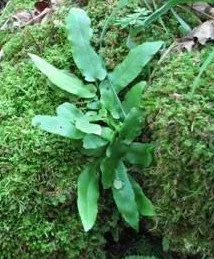
The Board acknowledged the significance of the world’s largest known colony of American Harts Tongue Fern on the quarry property.
Environmentalists are renewing their call to have the species listed as threatened or endangered under the Endangered Species Act.
-30-
For more information, or to arrange an interview, contact: Stephanie Kohls, Communications Director, Environmental Defence, 416-323-9521 ext. 232; 647-280-9521 (cell); skohls@environmentaldefence.ca
Sarah Harmer's Huffington Post Article: Singing for the Salamander
Huffington Post, The Blog Authored by Sarah Harmer
For the past three months, my dedicated lawyer David Donnelly, Protecting Escarpment Rural Land ("PERL"), and I have been trying to obtain a Ministry of Natural Resources (MNR) biologist's written opinion on whether a quarry company's mitigation plan would protect the breeding ponds and wetlands of the Federally Endangered Jefferson Salamanders that are on our family farm.
On March 27, 2012, I was compelled to appeal an absurd decision of the MNR to deny my earlier Freedom of Information (FOI) request for this opinion.
Only a few hundred metres away from these ultra-sensitive and ostensibly "protected" breeding ponds is the site of the proposed Nelson Aggregate Co. below-water-table quarry, which would very likely undermine the hydrogeology of the entire area, including the Grindstone Creek Headwaters Provincially Significant Wetland Complex. If the water goes away, so do the salamanders (the Jeffies, as they are affectionately known).
Our farm, atop the Niagara Escarpment's Mount Nemo in North Burlington, is part of a UNESCO World Biosphere Reserve. It is one of only 27 Jefferson Salamander habitats left in Ontario, indeed in all of Canada. Clearly this is the wrong place for a massive extraction industry.
But Nelson Aggregate Co. didn't even bother to ask us if they could come on our property to monitor the wetlands if the quarry gets approved. PERL's expert biologist Dave Stephenson is skeptical that a professional MNR Species-at-Risk biologist would have sufficient confidence in a mitigation strategy when access to the ponds has not been sought and is so uncertain.
What if the MNR biologist still has concerns? Shouldn't the joint board reviewing this quarry licence application hear them?
In their FOI decision of March 6, the MNR did show a record of the information we had requested, but decided to deny me access to it on the basis that "disclosure of the record would reveal recommendations of a public servant." When I read those words I thought, "How ironic to hide information from someone who is called a servant of the public." In the next few months I'll find out if Ontario's Information and Privacy Commissioner agrees with me: MNR bureaucrats should not be overriding the public interest and hiding information critical to the protection of an endangered species. Just as importantly, a government agency should not be having private meetings with a corporation to review remediation plans for other people's property without extending to the landowner the same participatory rights.
Seven years ago, citizens of the Mount Nemo area formed PERL, a community group that has represented the interests of the community and sponsored crucial science about what is at risk on Mount Nemo. After incredible amounts of volunteer work and dedication, these citizens, including my family, should not be in this position now: The MNR could have disclosed at the hearing the biologist's opinion without all this wasted time and energy. We filed a Motion to Disclose this evidence during the hearing, and I swore an affidavit stating how critical this evidence was to our case. When our motion was denied, our legal team had to file the FOI, involving more precious time and resources.
When this FOI request was just recently denied, I had to engage lawyer Alexandra Mayeski, an FOI appeal legal expert and, coincidently, a childhood schoolmate and neighbour whom I rode the school bus with as a kid. Synchronicity at work.
The story goes like this. PERL has been fighting the proposed Nelson Aggregate Co. quarry on Mount Nemo since 2005. For years, the MNR agreed with PERL that the Significant Woodlands, Threatened and endangered species habitats, Provincially Significant Wetlands, source water hydrogeology, and prime agricultural lands on the proposed site added up to a big negative for the quarry proposal. The Region of Halton, City of Burlington, Halton Region Conservation Authority and the Niagara Escarpment Commission all opposed the quarry too.
So did important allies like Environmental Defence, Lake Ontario Waterkeeper, David Suzuki Foundation, Coalition on the Niagara Escarpment (CONE) and many others.
Then, on the first day of the Joint Board Hearing, the MNR did an about-face and supported the quarry! Starting on November 19, 2010, the Joint Board Hearing heard evidence from dozens of experts from all the public agencies listed above, and experts from PERL. We all opposed the quarry proposal and provided testimony to the same.
But what of the independent MNR experts who had filed witness statements critical of the project? We decided to summons them, to cross-examine them on whether it was experts or policy "suits" that decided to do a "180" and support the quarry in this clearly inappropriate location.
One of the experts that was summoned was John Pisapio, species-at-risk biologist for the MNR. He's also on the Jefferson Salamander Recovery Team. At the time of his testimony, Nelson had no clear strategy for protecting the wetlands and breeding ponds on my family farm if something went wrong with the quarry. For example, if, as predicted by experts, the under-draining of the whole area lowered the water table so that the water in the wetlands leaked out from underneath and the wetlands dried up.
Pisapio's evidence at the hearing in October, 2011 was pretty devastating to the proposal -- he testified he had concerns about the inadequate monitoring and mitigation measures proposed in Nelson's Adaptive Management Plan (AMP) for the Harmer Wetlands and the Jefferson salamanders in particular.
This was a blockbuster moment!
Did Nelson and the MNR call PERL and my family to talk about what to do next? No.
Instead, MNR staff collaborated with Nelson to come up with a new mitigation plan involving the wetlands on our property without consulting me or my family. Nelson now says they'll install gauges (monitors) and run pipes onto our property, if the ponds go dry. Right, we're supposed to trust Nelson after they transplanted and subsequently killed endangered butternut trees, dredged and drained wetlands, and were convicted of illegally placing fill in the Grindstone Creek Provincially Significant Wetland Complex? I don't think so.
A very telling part of the situation is this: the planning expert for Nelson, Brian Zeman, testified at the hearing that when MNR officials were discussing the new Jefferson mitigation plan, he was the one who was the minute-taker. Separation between corporate interest and our own government has never been more difficult for me to discern.
Thankfully, the law may be on our side. Even if the Information and Privacy Commissioner says the biologist's opinion qualifies as being protected from disclosure, we can argue that the records are subject to the compelling public interest override provision under Section 23 of Ontario's Freedom of Information and Protection of Privacy Act. Since the records we're seeking relate to mitigation strategies for the Harmer Wetlands known to contain a provincially Endangered Species, this fits with previous Orders of the Information and Privacy Commissioner's Office that have recognized that the public has an interest, from the perspective of protecting the natural environment and protecting health and safety, in seeing that government institutions conduct a full and fair assessment before granting environmental approvals, including approvals under the Aggregate Resources Act.
Do we really need to wait months for this decision? C'mon Premier McGuinty, play fair! Give us the damn biologist's opinion.
http://www.huffingtonpost.ca/sarah-harmer/sarah-harmer_b_1400873.html?ref=canada
Ontario's Growth Plan Amendment for Simcoe County? #Fail
Huffington Post, Politics, January 31, 2012 Co-authored by Claire Malcolmson and David Donnelly
There are new rules for growth in Simcoe County. On January 19 the Ontario Ministry of Infrastructure enacted Amendment #1 to the Growth Plan for the Greater Golden Horseshoe, also known as the Simcoe Sub-area Amendment. The Amendment is hailed as awin for developers and the County, and signals that the province has tired of trying to curb Simcoe's taste for rapid, uncoordinated growth of low-density bedroom communities.
Lying just north of Southern Ontario's Greenbelt, Simcoe County faces massive growth pressures fuelled by developers' land speculation, and high housing and development prices in Toronto. Implementing the Growth Plan in Simcoe County, Barrie, and Orillia has been painful for all involved. Simcoe County's 2008 Official Plan was so far from the province's direction that the province stepped in, first with a "vision" for Simcoe in 2009, and finally, January's first amendment to the Growth Plan.
After receiving numerous complaints from all sectors about the draft amendment number one, the province appointed Provincial Development Facilitator Paula Dill to conduct a further consultation. The consultations covered 59 meetings with stakeholders and included 176 written submissions. Minister of Transportation and Infrastructure Bob Chiarelli said, "All we heard was protect the lake, protect the natural environment, and we paid special attention to that."
However, it is our opinion that it is the Lake Simcoe Protection Act and Plan, not the growth plan or this amendment, which protects the environment. For example, the province seems to be handing off responsibility for larger scale environmental planning in new strategic settlement employment areas by allowing the municipality to identify the natural areas for protection. This strategy does not guarantee a coordinated, regional approach to planning and protecting green space. On a positive note, the amendment "encourages" but does not require affected municipalities "to achieve greater efficiency and conservation in energy, water and wastewater management through building and community design." A little nod to a hopefully greener future.
Amendment one sticks to growth planning and clarifies important departures from the basic tenets of the growth plan. A significant change (and a win for developers) is that the county can determine how to distribute an additional 20,000 people, in approved settlement areas, above the 667,000 population target. A worrying implication is that a number of sprawling projects appear to be grandfathered without explanation, like the Midhurst Secondary Plan for 30,000 people north of Barrie in Springwater Township, which, under prior rules should have been stopped because its proposed population exceeded the township's population allocation from the growth plan.
Environmentalists have been alarmed for several years by two massive new development proposals that would pave prime agricultural land and Lake Simcoe watershed areas along Highway #400. We contend that this is unnecessary while tens of thousands of acres of lands already approved for employment purposes can be found elsewhere in Southern Ontario. Why, we have asked, build up the housing stock where there are no jobs? Why not concentrate housing in already built-up areas, closer to functioning employment areas, transit, and services? This was what the growth plan was supposed to do.
In the Simcoe sub-area, the province of Ontario has paved the way for new employment lands on agricultural land, and has effectively increased the population allocation. Panelists and local activists at AWARE Simcoe's January 21 anti-sprawl meeting agreed now that the Province has made the rules clear for Simcoe County, it is now time to focus on Councilors' and Mayors' decisions.
We must all insist that development decisions are made based on clear criteria such as reducing impacts on water and sensitive green spaces, the proximity of real, existing jobs, and the feasibility of public transit servicing. Part of the solution is for development to be as green as possible. People concerned about the Lake should oppose any new development in the Lake Simcoe watershed that does not reduce the traditional urban sprawl ecological footprint for water and energy consumption by at least 50 per cent. Were these criteria followed, much less development would leapfrog our beloved Greenbelt.
http://www.huffingtonpost.ca/claire-malcolmson/ontario-growth-plan-simcoe_b_1242721.html